



IB Design Technology and the math fear
The first time most students hear IB Design Technology, they picture sketching, prototyping, and sleek product ideas. Then someone mentions it sits in Group 4 and the brain does what it always does under stress: it jumps straight to Physics-level calculations.
Here’s the calmer truth: IB Design Technology does involve math, but it’s the kind of math that behaves. It shows up when you need evidence, when you’re comparing options, or when you’re proving that a design decision is sensible. In other words, the numbers are there to support thinking, not replace it.
If you’re revising for exams, this is good news. It means you can prepare strategically: build comfort with the common quantitative moments, and spend more energy on explanation, evaluation, and design reasoning.
Quick checklist: the math you actually use
Use this as a quick scan of what IB Design Technology math tends to look like:
-
Measurements: length, mass, volume, angles, tolerances
-
Ratios and scale: proportion, scale drawings, basic resizing
-
Graphs and data: reading results, trends, averages, simple comparisons
-
Efficiency and performance: interpreting “better” using numbers (not advanced formulas)
-
Materials and systems: comparing properties and trade-offs quantitatively
If you can handle these confidently, you can handle the math side of IB Design Technology.
What kind of math appears in IB Design Technology?
Functional math, not abstract math
In IB Design Technology, math is usually functional. You are using it as a tool to justify why something fits, lasts, or performs.
That could mean:
-
Defending a dimension: why this thickness, not a random one
-
Comparing two material choices using property data
-
Choosing a tolerance so parts don’t jam
-
Interpreting test data to show improvement across iterations
If you want a clear home base while you revise, start at the IB Design Technology resource hub. It’s the fastest way to jump between Study Notes, Flashcards, and the Questionbank without losing the thread.
The math is usually “small,” but the explanation is “big”
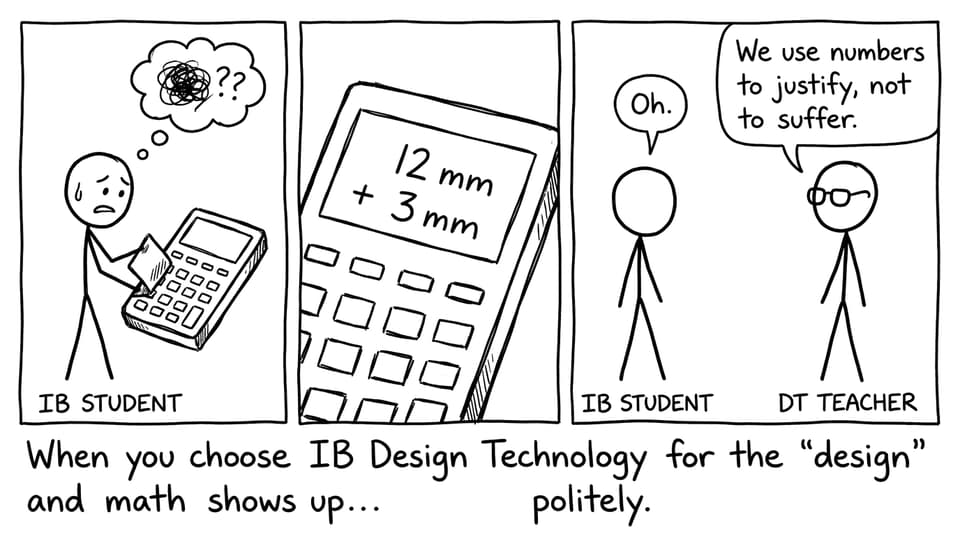
A common exam trap in IB Design Technology is thinking marks come from the calculation itself. Often, the marks come from what the number means.
Example: it’s rarely impressive to calculate a difference (say, 3 mm). What matters is explaining why 3 mm changes comfort, safety, stability, or manufacturability.
How math shows up in IB Design Technology exams
Math in IB Design Technology exams tends to appear quietly:
-
You interpret data in a table or graph
-
You compare values and argue which option is better
-
You discuss how size, force, or shape affects performance
-
You evaluate outcomes using simple quantitative reasoning
If you’re unsure what “exam-style” looks like, the IB Design Technology Questionbank is perfect for drilling these patterns. You can practise, get feedback, and learn how examiners reward justification.
For broader study structure, use How to Study for IB Design Technology Effectively and Best Study Strategies for IB Design Technology Students as your routine anchors.
Where math matters most: the IA design project
The IA is where IB Design Technology math feels most natural, because you’re building an argument over time.
You might use math to:
-
Define measurable success criteria (dimensions, weight, capacity, comfort range)
-
Record user testing data and show improvement
-
Compare prototypes across iterations
-
Explain clearances, tolerances, and why a part failed
And here’s the subtle advantage: math can make your writing look more “engineered” without being complicated. A few well-chosen numbers, explained properly, often outperform pages of vague description.
If your IA is still forming, these guides help keep it focused and testable:
SL vs HL: is the math harder?
Most students discover the difference isn’t “harder math,” it’s more frequent quantitative justification.
-
At SL, you use measurements and simple data to support decisions.
-
At HL, you may discuss systems, performance, or production considerations more often, which creates more chances to reference numbers.
But even at HL, IB Design Technology does not demand calculus, advanced algebra, or complex trigonometry. The main skill is still: use numbers as evidence, then explain them in design language.
Common mistakes students make with math in IB Design Technology
Avoiding numbers completely
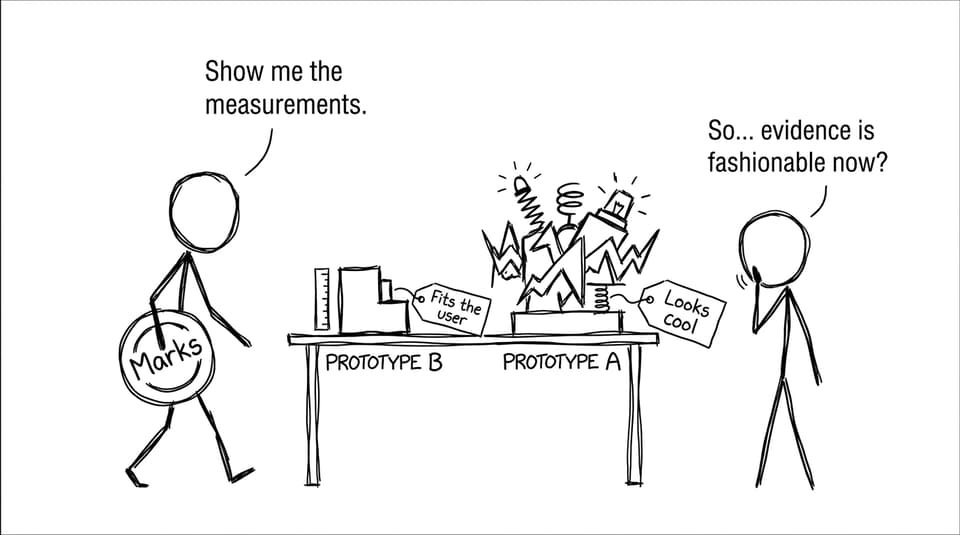
Some students write beautifully and never measure anything. In IB Design Technology, that often reads like opinion. Numbers turn opinion into evidence.
Calculating without justifying
A calculation with no interpretation is usually wasted space. Examiners reward relevance: what did the result change, prove, or improve?
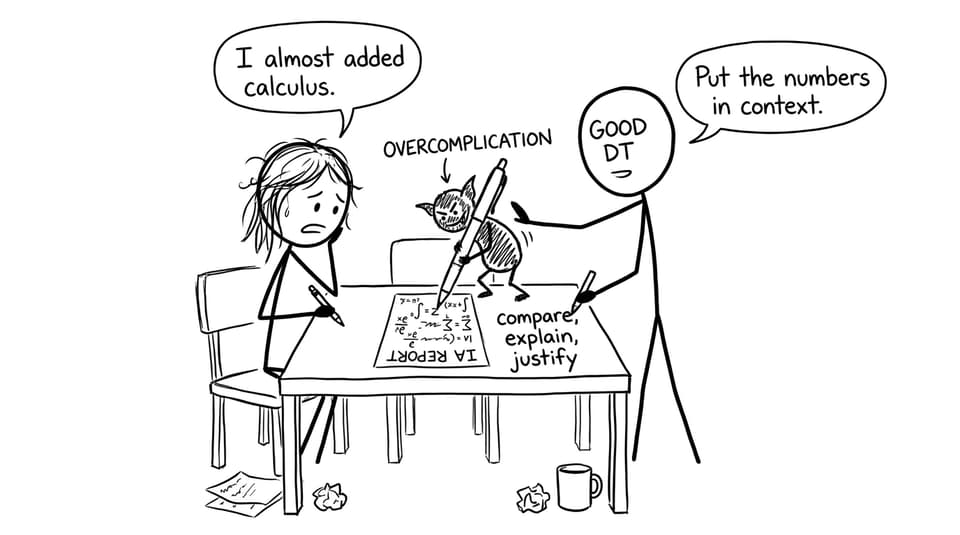
Overcomplicating the math
Students sometimes “decorate” with complex formulas to look impressive. It can backfire if it’s incorrect, irrelevant, or not linked to design requirements.
Bringing it together
So, how much math is in IB Design Technology? Enough to prove your thinking, not enough to drown it. The winning approach is simple: measure what matters, compare honestly, and explain what the numbers mean for the user and the product.
If you want one place to make that easier, use RevisionDojo as your DT command center: Study Notes for clarity, Flashcards for definitions, Questionbank for exam practice, Predicted Papers and Mock Exams for timing, AI Chat for stuck moments, and Grading tools to strengthen coursework drafts. The more you practise IB Design Technology with evidence-driven answers, the more the math stops feeling like a threat and starts feeling like support.