

A pattern hidden in a pea plant
There’s a moment in IB Biology where genetics stops feeling like vocabulary and starts feeling like a story. Not a story about peas, exactly--but about predictability. Mendel looked at messy-looking traits (yellow vs green, round vs wrinkled) and found something calm underneath: probabilities that behave.
If you’re preparing for exams, that calm matters. The questions are rarely “What is an allele?” They’re “What ratio do you expect?” and “Why did the recessive phenotype reappear?” Mendel’s Laws are the shortcut from confusion to clear, markscheme-ready reasoning.
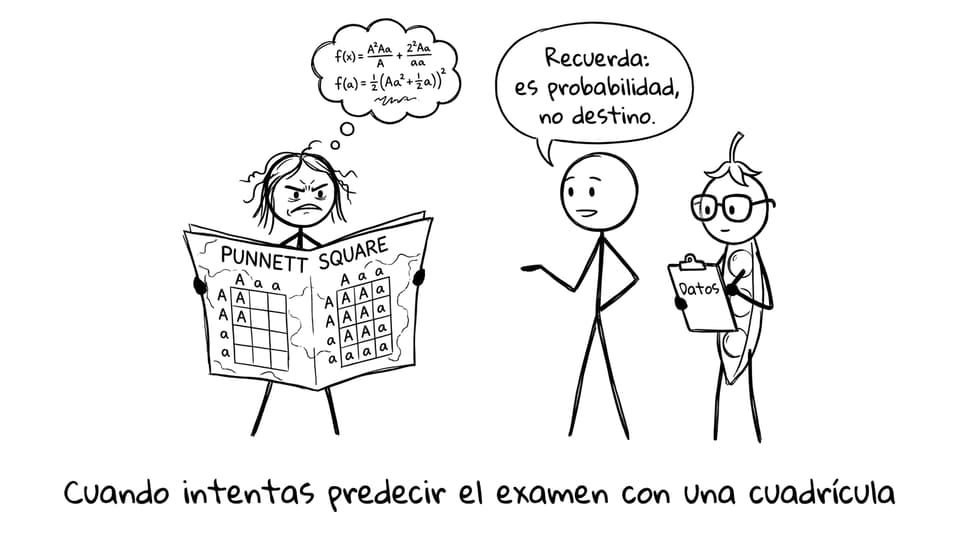
Quick exam checklist for Mendelian genetics (IB Biology)
-
Define allele, genotype, phenotype, dominant, recessive
-
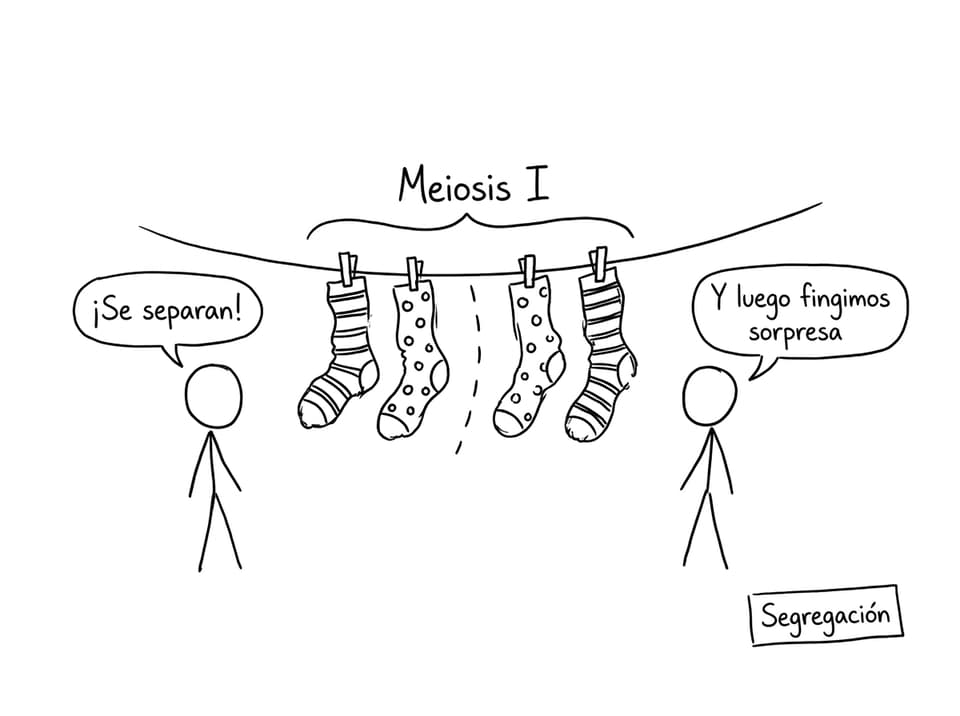
State Mendel’s Law of Segregation and connect it to meiosis I
-
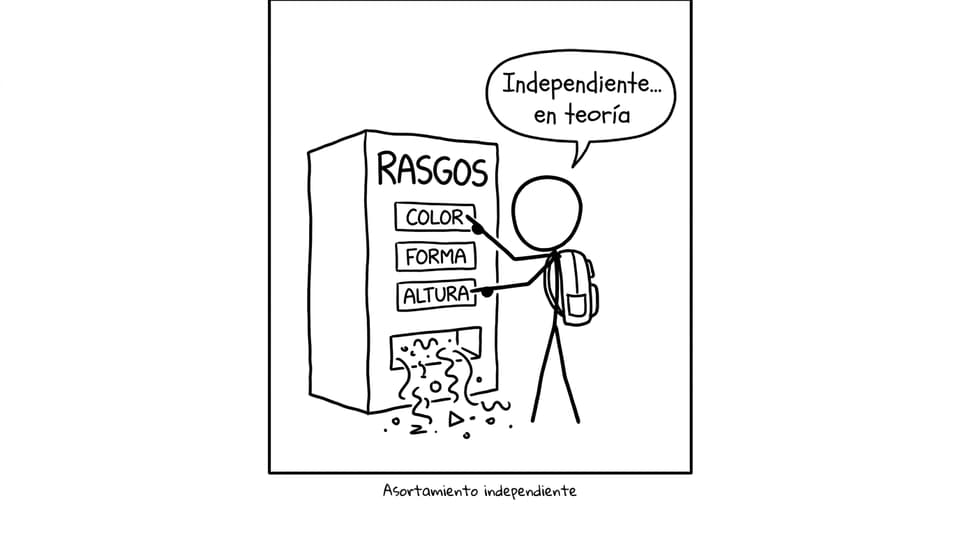
State Mendel’s Law of Independent Assortment and connect it to random orientation at metaphase I
-
Use Punnett grids to predict ratios (monohybrid: 3:1 phenotype in F₂; dihybrid: 9:3:3:1 for unlinked genes)
-
Use chi-squared when data doesn’t match expectations
For a syllabus-aligned route through this, start with D3.2 Inheritance Notes and then reinforce with the D3.2 Inheritance Cheatsheets.
Mendel’s Law of Segregation: why traits “vanish” then return
In IB Biology, segregation is your explanation for the classic plot twist: a recessive trait disappears in F₁ but returns in F₂.
Law of Segregation: an organism has two alleles for a gene, and these alleles separate during gamete formation. Each gamete gets one allele. Fertilization restores the pair.
In a simple monohybrid cross (e.g., Rr x Rr), the genotype ratio is 1 RR : 2 Rr : 1 rr, creating a 3:1 phenotype ratio if complete dominance applies.
The cellular anchor that examiners love: segregation matches homologous chromosomes separating in meiosis I. If that meiosis link feels fuzzy, revise reduction division with Meiosis as a reduction division (D2.1.9).
Mendel’s Law of Independent Assortment: the logic behind 9:3:3:1
Independent assortment is where IB Biology questions level up. Now you’re tracking two genes at once.
Law of Independent Assortment: alleles of different genes assort independently into gametes if the genes are unlinked (on different chromosomes or far apart on the same chromosome).
That “if” is everything. When the genes are unlinked, a dihybrid cross like RrYy x RrYy produces the famous 9:3:3:1 phenotype ratio in F₂.
Mechanism to mention for marks: random orientation of homologous pairs at metaphase I produces different combinations of maternal and paternal chromosomes. This is covered cleanly in Segregation and independent assortment of unlinked genes (D3.2.16).
What Mendel explains (and what he doesn’t)
Mendelian genetics is the baseline model in IB Biology: it explains dominant/recessive inheritance, carrier states, and predictable ratios from genetic crosses.
But real data sometimes refuses to behave. That’s usually your cue to consider:
-
Gene linkage (genes close together inherited as a package more often than expected)
-
Recombination (crossing over can create recombinant gametes)
-
Non-Mendelian patterns like incomplete dominance or codominance
When exam questions give observed vs expected numbers, you may need statistics to decide if deviations are due to chance. RevisionDojo’s Chi-squared test for dihybrid crosses (D3.2.21) is built for exactly that.
Bring it home with RevisionDojo
Mendel didn’t have microscopes powerful enough to watch chromosomes, but he had something just as useful: patience with numbers. That’s what you’re practicing now in IB Biology--turning traits into probabilities, then probabilities into marks.
To make that practice efficient, RevisionDojo gives you an exam-ready path: targeted IB Biology D3.2 Inheritance Questionbank practice, clear IB Biology topic navigation, and confidence builders like Biology Predicted Papers and Mock Exams. Use Study Notes, Flashcards, AI Chat for quick checks, and Grading tools to see what your explanations are missing. Finish with Tutors if you want feedback that feels like an examiner’s voice.
Mendel’s Laws are simple. That’s why they’re powerful. And with RevisionDojo, IB Biology genetics becomes less about memorizing ratios and more about knowing exactly why they appear.