

The moment you start counting pages, you lose
Somewhere around your third late-night “final draft,” you notice something odd: you’re not thinking about users anymore. You’re thinking about length. How many pages? How many screenshots? How many paragraphs before it “looks” impressive?
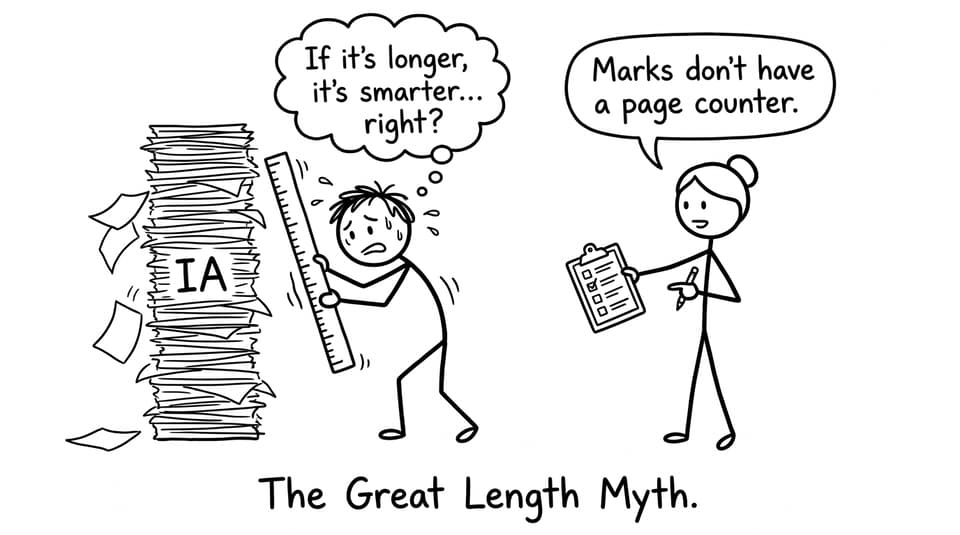
In IB Design Technology, that’s the most common trap. Students assume a longer design project equals a higher mark. But the IB doesn’t grade your stamina. It grades your design thinking. There is no fixed word count for the design project, and sheer length rarely helps.
The real goal in IB Design Technology is simple: make it easy for an examiner to see clear reasoning, evidence, iteration, and evaluation.
Quick checklist: what “the right length” actually means
Use this checklist instead of a page counter. Your IB Design Technology design project is “long enough” when:
-
Every section clearly links to the assessment criteria (not just the design cycle).
-
Each major decision is justified with evidence (user research, testing data, constraints).
-
Iteration is visible and explained (what changed, why, and what the test showed).
-
Evaluation is critical and specific (not a summary of what you did).
-
Visuals are annotated (screenshots and photos only earn marks when you explain them).
If you want one clean home base for the subject while you work, keep the IB Design Technology hub open as your “control panel.”
Is there an official word count for the IB Design Technology design project?
No. The IB does not publish a required word count or page limit for the IB Design Technology design project.
That can feel uncomfortable because students like clear rules. But it’s also freeing. It means you can write only what earns marks.
Examiners typically reward:
-
Quality of explanation (clear, not long)
-
Evidence-based decision making
-
Testing and iteration (and the thinking behind it)
-
Evaluation that uses results, not vibes
A concise design project that is focused, analytical, and well-structured will usually outperform a longer report that repeats itself.
For a practical structure you can model, read the step-by-step guide to writing a winning IB Design Technology IA.
Why length doesn’t boost marks in IB Design Technology
A helpful mental model: your examiner is not reading for entertainment. They’re scanning for evidence.
Long projects often become harder to mark because the best thinking gets buried. Extra pages can create three problems:
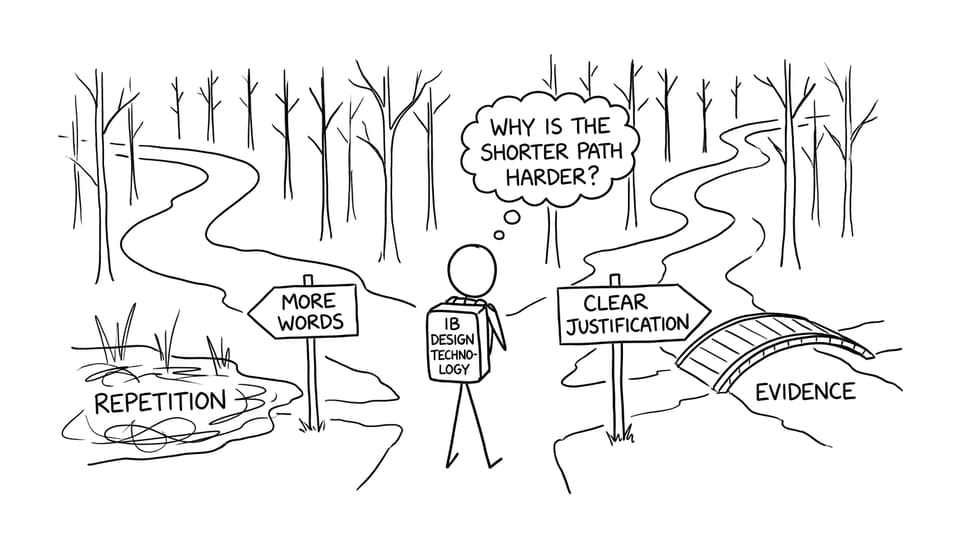
Repetition disguises weak justification
Saying the same justification in three different places doesn’t make it stronger. It just makes it harder to trust.
Description replaces analysis
Listing what you did (tools used, steps followed, what you “decided”) is not the same as explaining why it was the best decision under constraints.
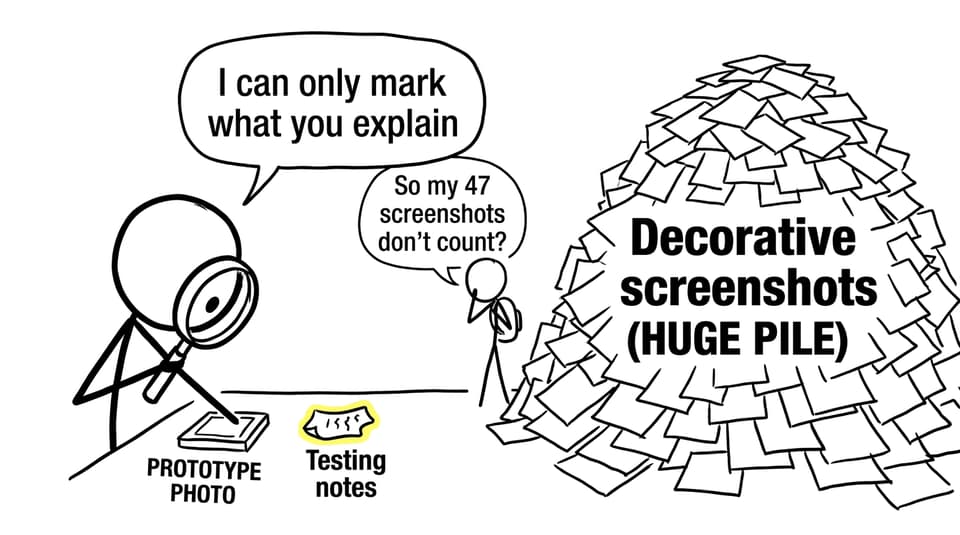
Visuals become decoration
A photo of a prototype is only useful if you explain what it demonstrates, what failed, and what you changed next.
If you want a clean rubric-aligned way to check whether your content is earning marks, use the IB Design Technology HL IA Grader or the IB Design Technology SL IA Grader.
What a well-balanced IB Design Technology design project looks like
High-scoring IB Design Technology work usually feels “balanced” because every stage does its job:
-
Problem + user: a precise design opportunity and a real user context
-
Research: only research that changes your requirements or decisions
-
Ideas: multiple options with selection justified using specs and constraints
-
Prototyping: purposeful models that answer specific questions
-
Testing: results you can reference later (tables, criteria, measurements)
-
Iteration: clear before/after changes connected to evidence
-
Evaluation: honest, data-driven judgement and realistic improvements
RevisionDojo makes this easier to manage because you can keep everything connected: use Study Notes to stay aligned with the syllabus, Flashcards for definitions you’ll need in exams, and AI Chat to sharpen weak justifications into markscheme-style language.
Length mistakes that quietly lower marks
Most “too long” projects aren’t long because the student has too many good ideas. They’re long because the student is trying to look thorough.
Common mistakes in IB Design Technology include:
-
Writing research sections that never feed into specifications
-
Adding screenshots/photos without analysis
-
Re-explaining the design cycle instead of showing thinking
-
Padding evaluation with summary instead of results
When you’re near submission, it can help to do a ruthless cut. The guide on how to finalise and submit the IB Design Technology IA walks through exactly what to remove and what to keep.
How to tell if your project is “too short” or “too long”
Instead of asking “How many pages?”, ask four sharper questions:
-
Can an examiner find your evidence in under 20 seconds per section?
-
Does each paragraph either justify a decision or evaluate a result?
-
Is iteration unmistakable (not implied, not hinted at)?
-
Could you delete any page and lose nothing important?
If the answers are strong, your IB Design Technology design project is likely the right length.
If you’re balancing coursework with exam prep, the article on how to balance the IA and exams in IB Design Technology is worth reading before you plan your next week.
Bring it back to what IB Design Technology rewards
The best way to choose the right length is to stop thinking in pages and start thinking in proof. In IB Design Technology, marks come from visible design thinking: justified decisions, purposeful testing, and honest evaluation.
If you want a simple system, use RevisionDojo as your workspace: build exam confidence with the Questionbank, tighten knowledge with Study Notes and Flashcards, stress-test explanations with AI Chat, and use Mock Exams plus Predicted Papers to connect your IA thinking to exam-style responses. When you’re ready, run your draft through the Grading tools and compare with the Coursework Library. If you need human guidance, Tutors can help you cut clutter and sharpen your evidence.
Your design project doesn’t need to be long. It needs to be impossible to misunderstand. That’s the standard that scores well in IB Design Technology.