

Inflation is one of those concepts that feels obvious until you try to pin it down. You notice it when your usual snack costs more, when a bus ticket jumps, or when a subscription “quietly updates” its price. But IB Economics asks a sharper question: how do we measure inflation in a way that’s fair, consistent, and useful for policy and exams?
In this IB Economics macroeconomics guide, you’ll learn the three core tools examiners expect you to know--CPI, PPI, and the GDP deflator--plus the evaluation points that turn a definition into a high-mark paragraph.
Inflation measurement checklist (exam-ready)
Before you write anything in IB Economics, make sure you can do these quickly:
-
Define inflation as a sustained rise in the general price level.
-
Explain how inflation is measured (CPI steps + formula).
-
Calculate an inflation rate from CPI data.
-
Compare CPI with PPI and the GDP deflator.
-
Evaluate limitations (substitution bias, quality changes, regional variation).
If you want the bigger macro context around inflation, growth, and unemployment, anchor this topic inside IB Economics 3: Macroeconomics Notes.
The main measure in IB Economics: Consumer Price Index (CPI)
In IB Economics, the Consumer Price Index (CPI) is the headline tool for measuring inflation because it approximates changes in the cost of living for households.
How CPI is constructed
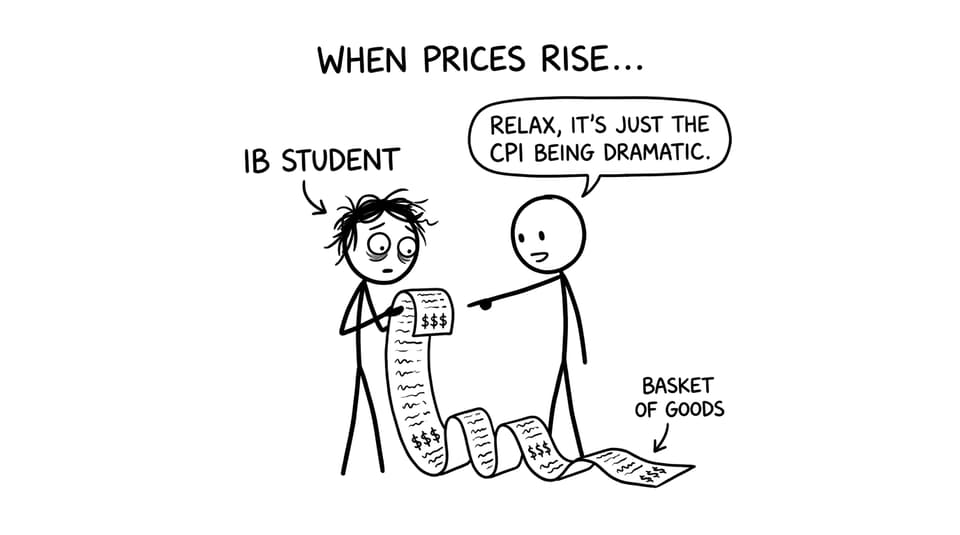
CPI begins with a basket of goods and services that a typical household buys (food, housing, transport, etc.). Statisticians track what that basket costs today compared with a base year (which always equals 100 as an index).
A standard CPI relationship you should know:
CPI = (Cost of basket in current year ÷ Cost of basket in base year) × 100
Then, to get the inflation rate:
Inflation rate = × 100
For a step-by-step, syllabus-aligned walkthrough (including weighting and common pitfalls), use Low and Stable Rate of Inflation Notes.
Beyond CPI: PPI and the GDP deflator
CPI is essential in IB Economics, but it’s not the only way to measure inflation. Examiners love when you show range.
Producer Price Index (PPI)
PPI tracks price changes received by domestic producers. In plain language: it measures inflation pressures earlier in the pipeline. If firms face higher input costs, those costs often feed into consumer prices later.
In essays, PPI is a great evaluation tool: “PPI can signal future inflationary pressure, but it does not directly measure household cost of living.”
GDP deflator
The GDP deflator measures price changes across all domestically produced final goods and services. That makes it broader than CPI (which focuses on consumer purchases). A key relationship:
GDP deflator = (Nominal GDP ÷ Real GDP) × 100
This is a powerful IB Economics point: CPI includes imports (because households buy imported goods), while the GDP deflator excludes imports (because it counts domestic production). If an exam question hints at exchange rates and import prices, this distinction can unlock evaluation.
To link deflators to real output measurement, see Real GDP and GNI Notes.
What inflation measurement can get wrong (evaluation points)
Every measurement is a story told with rules. In IB Economics, your evaluation marks often come from naming those rules and their consequences.
-
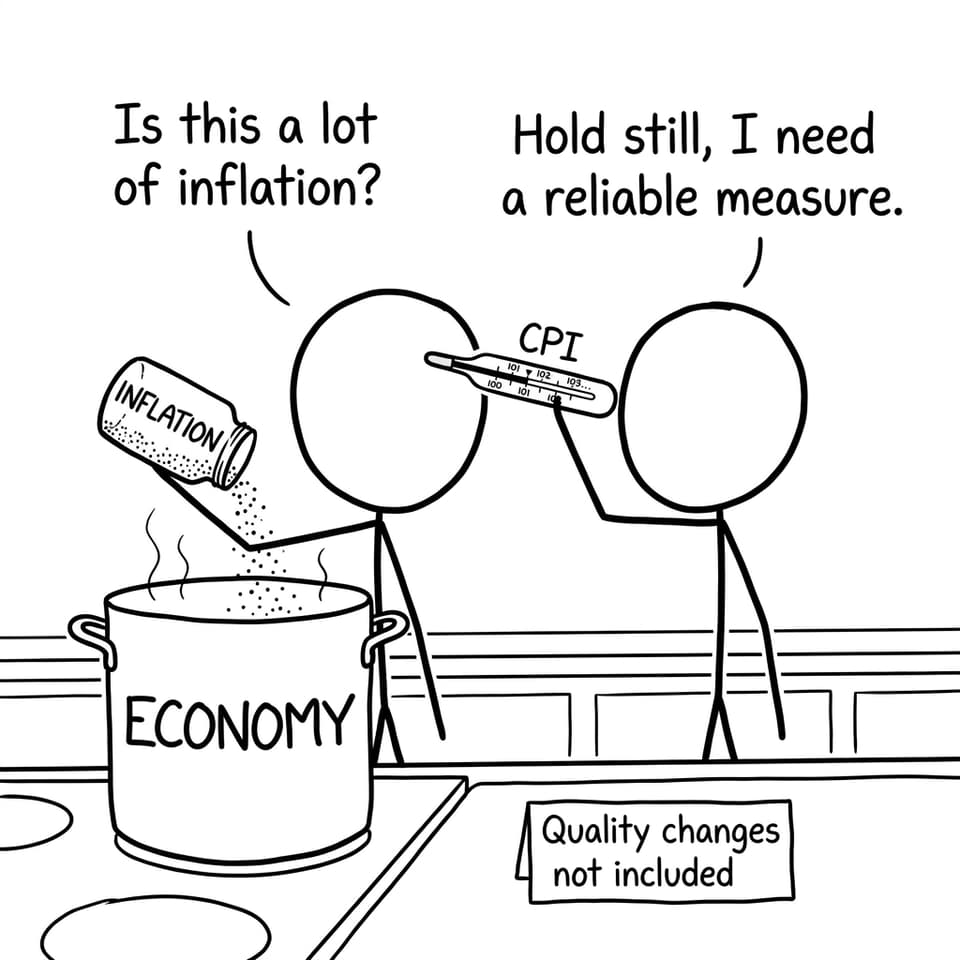
Substitution bias: CPI uses fixed weights, but consumers switch to cheaper substitutes when prices rise.
-
Quality changes: if products improve (better phone, safer car), higher prices may reflect better quality rather than “pure” inflation.
-
Regional and household differences: a national CPI may not match the experience of students, retirees, renters, or different cities.
A fast way to sharpen definitions and evaluation language is RevisionDojo’s IB Economics Glossary.
How to use this in IB Economics exam answers
When a Paper 1 prompt asks about inflation or price stability, structure your response like this:
-
Define inflation clearly.
-
Explain how inflation is measured (CPI mechanics + formula).
-
Add depth by comparing CPI to PPI and/or the GDP deflator.
-
Evaluate accuracy using 2 limitations.
-
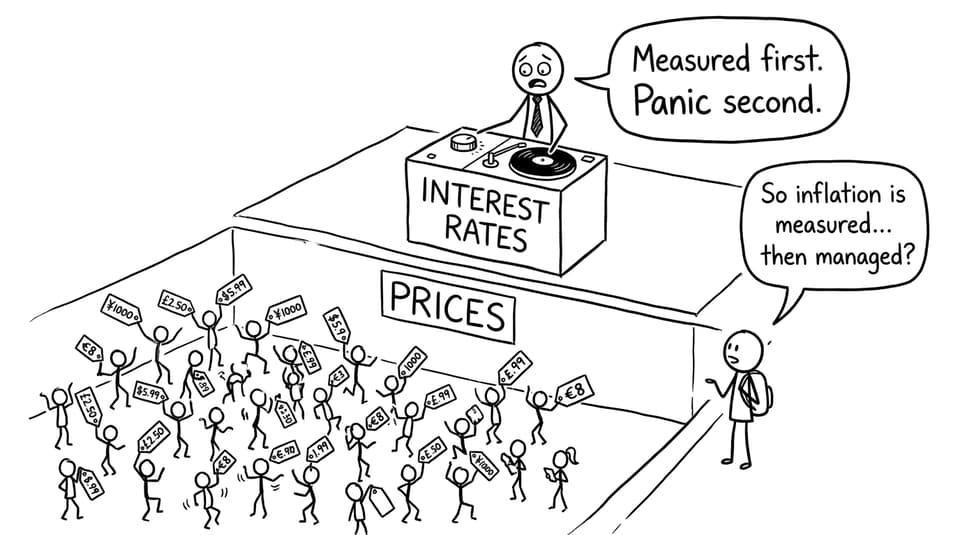
Link to policy: why central banks care (interest rates, inflation targeting).
To practice exam-style application, use the IB Economics 3: Macroeconomics Questionbank and the Monetary Policy Questionbank.
Conclusion: Measure first, then explain
Inflation feels personal, but IB Economics makes it measurable: CPI for household living costs, PPI for producer pressures, and the GDP deflator for economy-wide price changes in domestic output. Learn the formulas, then practice the evaluation language that explains why the numbers can mislead.
If you want to turn this into exam performance, RevisionDojo is built for it: study with Study Notes, drill definitions with Flashcards, test yourself in the Questionbank, and refine explanations with AI Chat and Grading tools. Start from the IB Economics resources hub and make inflation measurement one of the easiest marks you pick up in macroeconomics.