

You don’t notice it at first.
You’re just trying to finish a response about algorithms, or sharpen a paragraph on the digital divide, or make your Internal Assessment question feel less vague. But somewhere in that process, something changes: you stop waiting to be told what to think.
That shift is the quiet advantage of IB Digital Society. It doesn’t just prepare you to sit exams. It prepares you for the kind of learning university actually rewards: independent research, careful argument, and the confidence to say “it depends” -- then prove why.
If you’re revising for exams right now, the best news is this: the skills you build in IB Digital Society are the same skills that make first-year university feel less like a cliff and more like a staircase.
Quick checklist: what IB Digital Society gives you for university
-
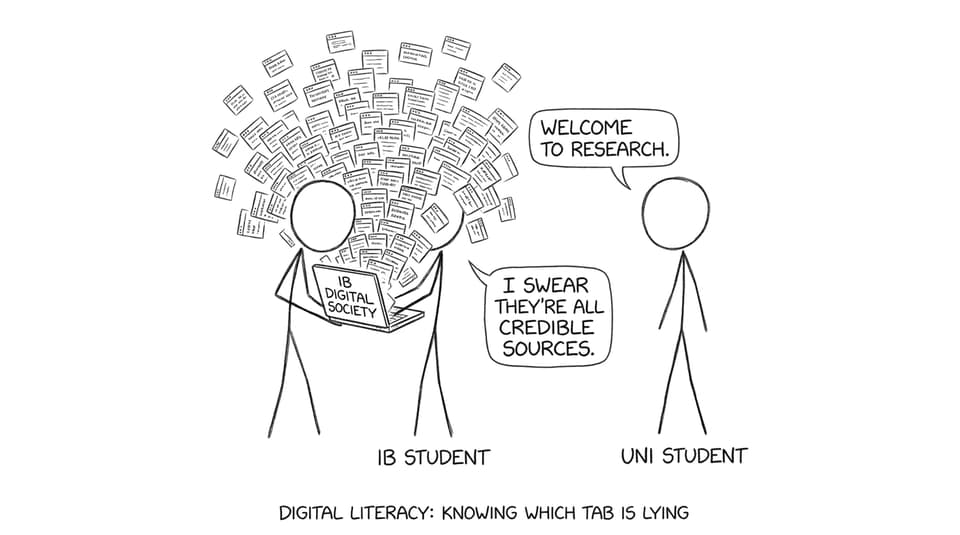
The ability to judge whether sources are credible (and why)
-
Practice building arguments, not just repeating content
-
Essay structure that survives tough feedback
-
Research habits from the IA that mirror university projects
-
Comfort with ethics, bias, and competing perspectives
-
A flexible “learn new systems fast” mindset
For targeted revision, start from the IB Digital Society hub and build your plan from the resources you actually need.
IB Digital Society and university research confidence
In university, nobody checks that your sources are “good enough” before you write. You choose them. You defend them. And if they’re weak, your whole argument collapses quietly.
IB Digital Society trains that instinct early. You practice evaluating reliability, spotting bias, and noticing how digital systems shape what information even reaches you. That’s the same mental muscle you’ll use in university libraries and databases.
A practical way to turn this into exam prep: revise a theme, then immediately apply it with exam-style questions. RevisionDojo’s Questionbank feature helps you do exactly that, so your knowledge becomes usable under time pressure.
To strengthen core content quickly, pair practice with focused notes like Digital Society Topic 3 -- Content and Digital Society Topic 4 -- Contexts.
Critical thinking in IB Digital Society: the real university currency
Most students arrive at university thinking “smart” means “knowing lots.” Then the first seminar happens, and they realize it’s more like this: smart means you can weigh trade-offs without panicking.
That’s the DNA of IB Digital Society. You’re asked to examine impacts across politics, culture, economics, identity, and inequality. You learn to argue from multiple perspectives and still land somewhere clear.
If you want a theme-based refresher that also helps with exam writing, read Key Themes in IB Digital Society Explained. And if you’re wondering why the subject sometimes feels “hard,” this breakdown is reassuringly honest: Is IB Digital Society Hard? Honest Expectations Explained.
Writing and communication: IB Digital Society as essay training
University writing is not about sounding fancy. It’s about being clear while handling complexity.
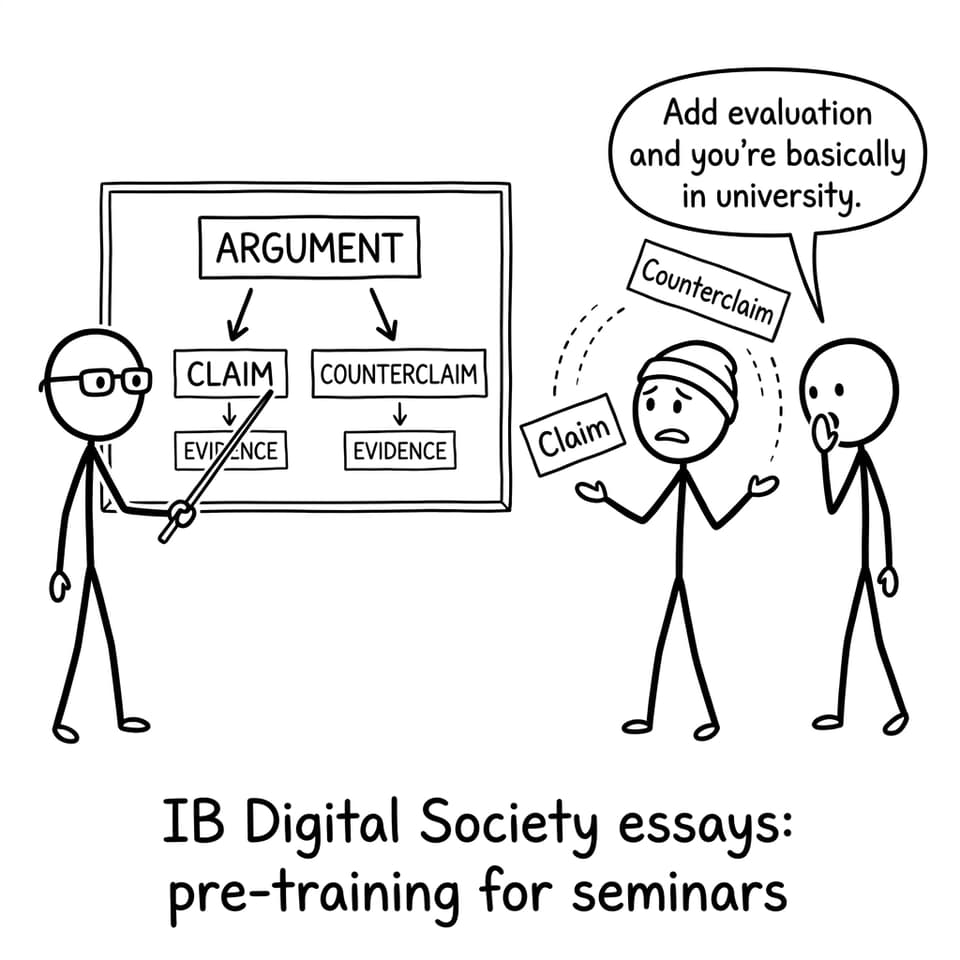
Because IB Digital Society is argument-heavy, you get repeated reps in:
-
Structuring essays around command terms
-
Using evidence without just summarizing it
-
Making evaluative judgments (and justifying them)
Those are the same moves you’ll need across degrees -- from politics to media to business.
To tighten your day-to-day revision workflow, borrow these systems: Effective Note-Taking Tips for IB Digital Society and Using Case Studies for Better Learning in Digital Society. Case studies become your “proof” in both exams and university essays.
The IA: why IB Digital Society makes university projects feel normal
Your IB Digital Society IA is one of the closest things in the diploma to a university mini-dissertation. You learn how to narrow scope, define a system, pick methods, analyze evidence, and admit limitations without undermining your whole argument.
If you do it well, you arrive at university already understanding something many students learn the hard way: research is mainly about decisions.
To get your IA question sharp, use How to Write a Strong IB Digital Society IA Research Question. For wider IA context, this helps with planning across subjects too: IB Internal Assessment: A Complete Guide.
RevisionDojo also supports the full workflow around coursework: Coursework Library, Grading tools, and Tutors when you need real feedback, not guesses.
Ethics and global awareness: the skill universities can’t teach fast
A lot of students think ethics is “extra.” University quickly teaches you it’s foundational.
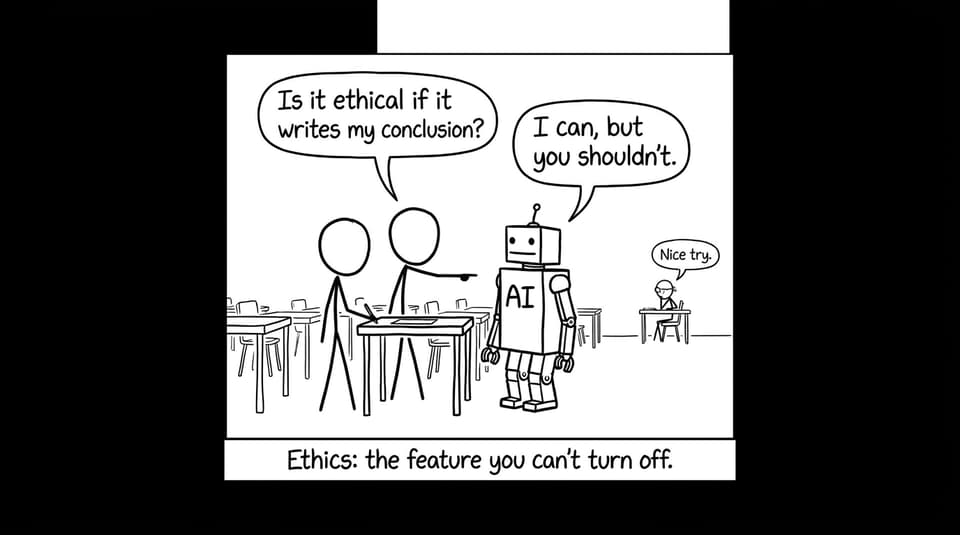
IB Digital Society pushes you to confront privacy, surveillance, misinformation, AI bias, and unequal access. You learn to ask: Who benefits? Who is harmed? Who gets to decide what “responsible” means?
That awareness carries into university debates, research proposals, and even group projects where technology choices affect real people.
Closing: turn IB Digital Society into a university advantage
The best part about IB Digital Society is that it teaches you how to think when the answer isn’t obvious. That’s the job at university. It’s also the job in a world shaped by digital systems you didn’t design but still have to live with.
If you want to turn IB Digital Society into both stronger exam performance and a smoother university transition, build a simple routine inside RevisionDojo: revise with Study Notes, lock in terms with Flashcards, practice with the Questionbank, use AI Chat when you get stuck, and lean on Mock Exams, Predicted Papers, and Grading tools when you need exam-ready feedback.
Your future self will thank you for starting now.

