
A quick story about value (and why the 4Ps matter)
On the night before a mock, most IB Business Management students don’t panic because they’ve forgotten a definition. They panic because the definitions don’t connect. “Product, Price, Promotion, Place”… fine. But how do these actually create value for customers?
The marketing mix is the bridge between what a business wants to sell and what customers feel is worth buying. In exam terms, it’s one of the cleanest ways to show application: you can take any case study detail and translate it into choices that increase perceived value, convenience, and trust.
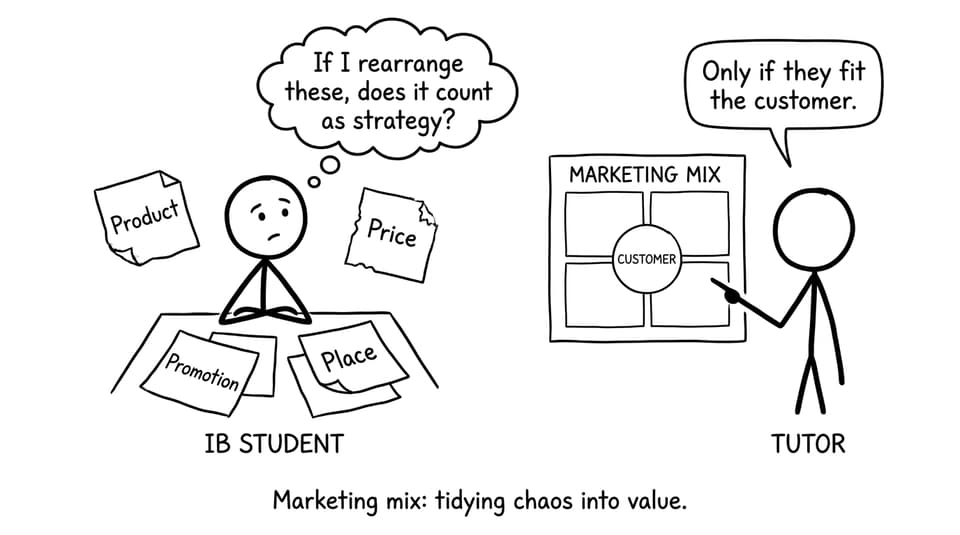
Marketing mix value checklist (exam-friendly)
Use this mini-checklist in IB Business Management responses to prove the marketing mix creates value:
-
Fit: Do the 4Ps/7Ps match the target market’s needs?
-
Consistency: Do the choices reinforce the same positioning (budget vs premium)?
-
Access: Can customers easily find, buy, and use the product?
-
Communication: Do customers understand the benefits quickly?
-
Perceived value: Does the offer feel worth the money, time, and risk?
For syllabus-aligned revision, keep Unit 4 close: IB Business Management Unit 4: Marketing Management.
Product: value starts with solving a real problem
In IB Business Management, “Product” is never just the physical item. It includes quality, features, design, branding, packaging, and the customer experience. Value is created when the product reduces a customer’s effort or risk (it works reliably), or increases satisfaction (it looks good, feels good, lasts longer).
Exam tip: link Product to differentiation and USP. If you need practice phrasing, drill application questions like “How does the product meet customer needs?” using RevisionDojo’s 4.2.4 Importance of Having a Unique Selling Proposition (USP) Questionbank.
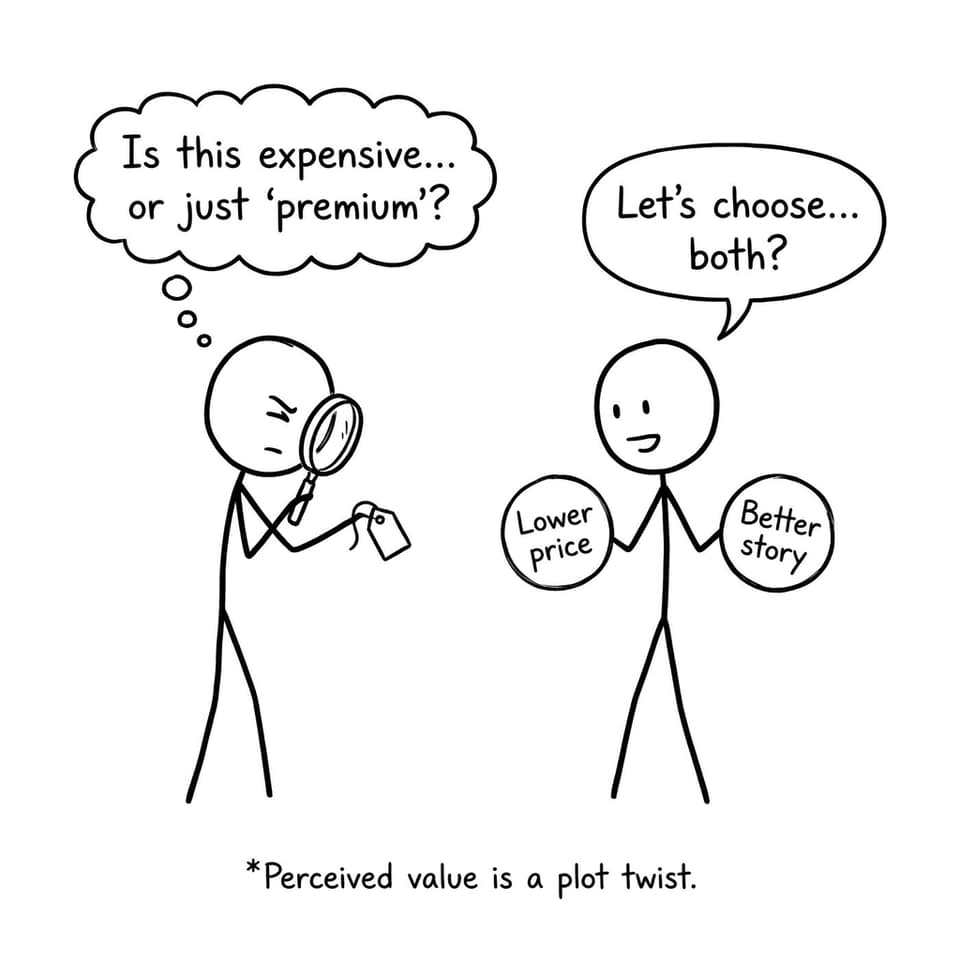
Price: value is a feeling, not a number
Price influences customer value in two directions at once:
-
Affordability value: lower price reduces sacrifice.
-
Perceived quality value: higher price can signal premium positioning.
That’s why pricing must match the story the product is telling. In a case study, if the brand is positioned as premium, a sudden discount can weaken perceived value even if sales rise short term.
Promotion: communicating value so it actually lands
A business can create real customer value and still fail if nobody understands it. Promotion builds awareness, explains benefits, and reduces uncertainty (“Is this legit? Will it work for me?”). In IB Business Management, it helps to describe promotion as communication of value.
To revise exam-ready promotion language and examples, use: Promotion (4.5.4) Study Notes.
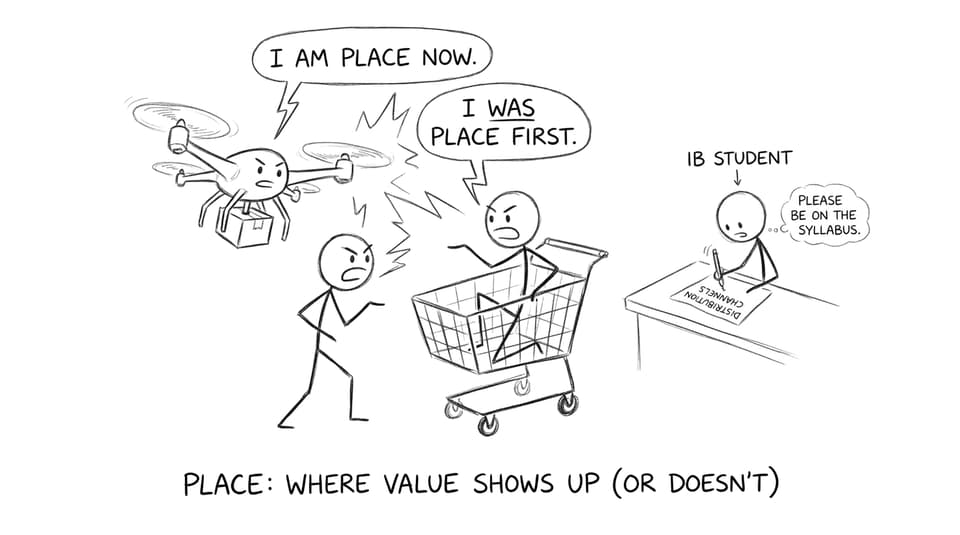
Place: value shows up when customers can access it
“Place” is about distribution channels and availability: online store, retail location, delivery speed, intermediaries, and convenience. Customers experience value when access is easy and friction is low. A great product with poor distribution creates frustration, which destroys perceived value.
If you want a broader view of how “Place” fits into the whole marketing chapter, revise from: 4.1 Introduction to marketing Questionbank.
Why alignment matters (and where students win marks)
The biggest insight in IB Business Management is that the marketing mix elements must reinforce each other. If one P contradicts the others, customers get mixed signals.
A premium skincare brand, for example, creates value by pairing:
-
high-quality Product (trust + results),
-
premium Price (signals quality),
-
credible Promotion (dermatologist-led content),
-
selective Place (high-end retailers, controlled experience).
This is exactly what examiners reward: a coherent argument that links decisions to customer value and business outcomes.
To go deeper into how businesses choose an effective combination, see: Appropriate marketing mixes (4.5.9) Notes.
Final takeaway (and your next step)
The marketing mix creates value because it makes a business’s promise real: the right Product, at the right Price, communicated through the right Promotion, delivered through the right Place. For IB Business Management, that’s not just theory--it’s a reliable way to build application, analysis, and evaluation in almost any marketing question.
To lock it in, revise the core content using IB Business Management Resources and then practise marketing mix questions with RevisionDojo’s Questionbank, Flashcards, AI Chat, Grading tools, Predicted Papers, and Mock Exams.
