That difference matters for IB Global Politics because global security is not only about tanks, borders, and troops. It is also about perception, legitimacy, and how quickly fear can rewrite policy. A single attack can change airport rules, election outcomes, alliance priorities, and the everyday freedoms people assume are permanent.
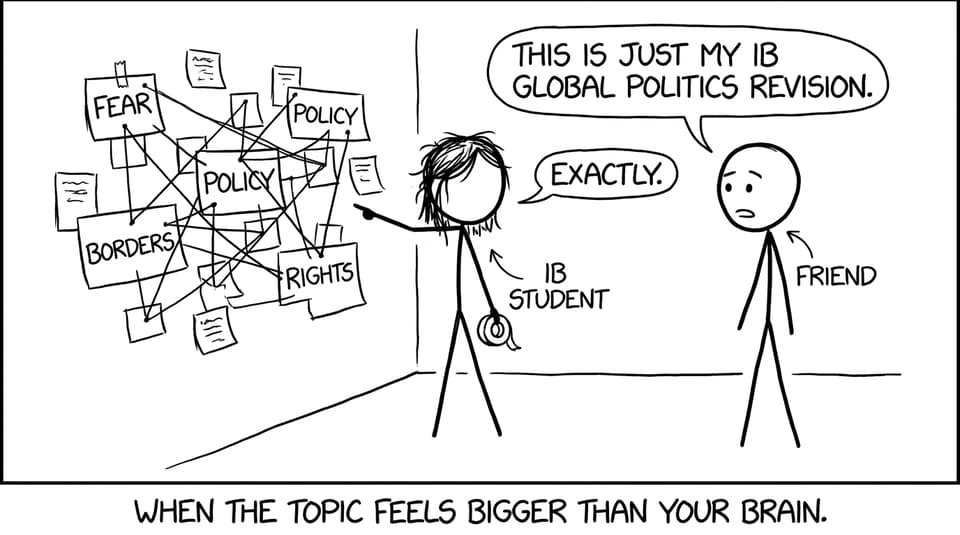
IB student linking security concepts on a wall
Quick exam checklist for IB Global Politics
Use this mini-checklist when a question asks how terrorism affects global security:
Define terrorism as a political strategy aimed at influencing behavior through fear
Explain how it shifts threat perception and public opinion
Evaluate how states expand security powers (and the rights trade-offs)
Show how it changes international cooperation (and disagreements)
Link to destabilization in fragile states and spillover effects
End with judgement: do responses improve security, or create new insecurity?
To sharpen this quickly, start with RevisionDojo’s IB Global Politics resources hub and build a timed plan using Questionbank, Study Notes, Flashcards, AI Chat, and Mock Exams.
How terrorism changes threat perception and security priorities
A core idea in IB Global Politics is that security threats are not only measured, they are interpreted. Terrorism is designed to be unpredictable and symbolic, often targeting civilians or public spaces that represent “normal life.” That makes risk feel personal, even when the probability of being directly affected is statistically low.
In practice, this perception shift pushes governments to re-rank priorities. Budgets move toward policing, intelligence, border security, and military capacity. Political leaders also face pressure to “do something,” and fast. In exams, the high-mark move is to show how fear can become a policy driver, not just an emotional reaction.
A strong supporting link for actor analysis is RevisionDojo’s notes on state and non-state actors, which helps you frame terrorist groups as violent non-state actors operating alongside states, NGOs, and global institutions.
Expanded state power: security vs rights in IB Global Politics
Terrorism often produces a predictable pattern: expanded surveillance, tougher policing powers, stricter borders, and broader definitions of “extremism.” These measures can reduce immediate risk, but they also create a long-running IB Global Politics debate about rights, accountability, and legitimacy.
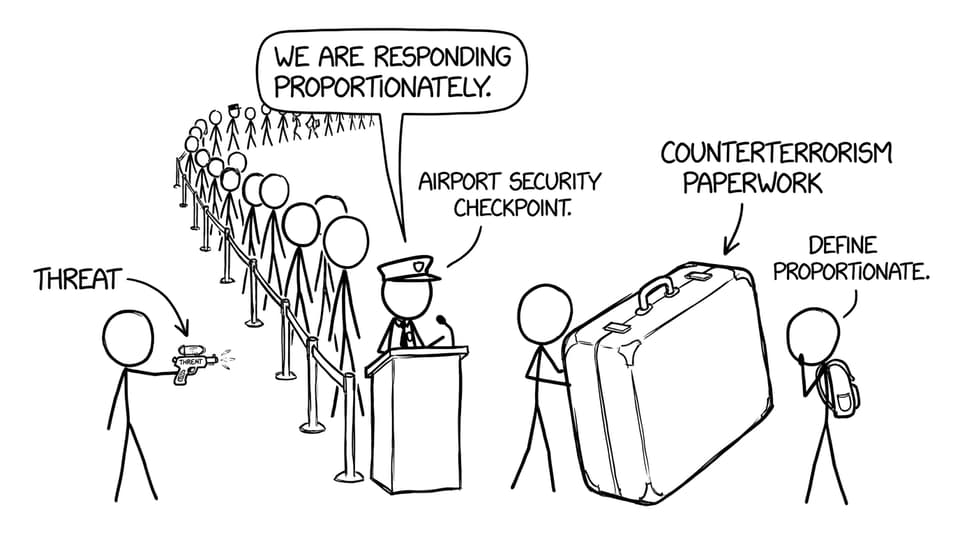
The exam-ready evaluation is proportionality. Are policies temporary and targeted, or permanent and wide? Do they reduce violence, or increase grievances that can feed radicalization? To deepen this lens, compare with RevisionDojo’s explainer on human rights in global politics and the debate post Is Security More Important Than Human Rights?. Those links give you vocabulary for trade-offs: privacy, due process, freedom of movement, and non-discrimination.
Airport security line with a joke about proportionality
International effects: cooperation, conflict, and spillover
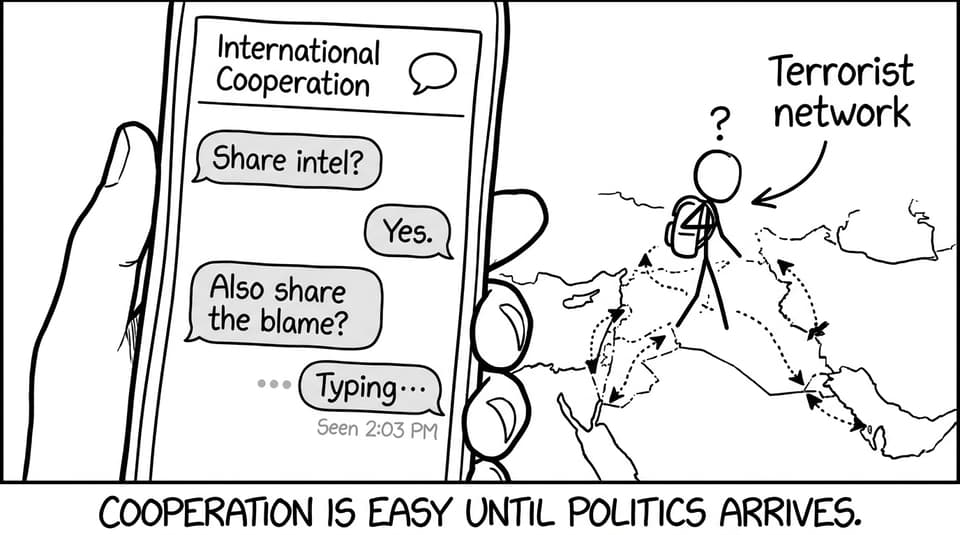
Terrorist networks rarely respect borders, so states respond through intelligence-sharing, joint policing, sanctions, and sometimes military intervention. That is the “cooperation” side of global security.
But terrorism also creates friction. States disagree about definitions (terrorist vs freedom fighter), about who is responsible, and about which interventions are legitimate. In IB Global Politics, this is where sovereignty, global governance, and strategic interest collide.
RevisionDojo’s Paper 2 guide notes are useful here because they reinforce evaluation structures (claims, counterclaims, judgement), which is exactly what examiners reward on security questions.
International cooperation group chat joke
Destabilization and the long shadow on regions
In fragile states, repeated attacks can weaken state authority, disrupt investment and schooling, and deepen cycles of violence. Terrorism interacts with existing drivers: corruption, exclusion, poverty, and ongoing conflict. That matters for global security because instability spills over through refugee flows, transnational crime, arms trafficking, and regional militarization.
To connect the rights angle, you can also draw from RevisionDojo’s discussion of state behavior in Why Do States Violate Human Rights?, especially where “national security” becomes a justification.
How to turn this into marks (fast)
For IB Global Politics essays and short answers, aim for one clear line of argument:
Terrorism affects global security less through battlefield power and more through fear-driven policy change.
Then evaluate: some counterterrorism improves safety, but overreach can damage rights and legitimacy, creating new insecurity.
On RevisionDojo, you can practise this with the Rights and Justice Questionbank and build timed practice using Predicted Papers and Grading tools.
Conclusion: make the fear measurable
Terrorism affects global security by turning fear into policy, and policy into lasting changes in rights, borders, and international relations. For IB Global Politics, your edge is showing that counterterrorism can protect people while also creating new risks when oversight and legitimacy collapse.
If you want to write faster, argue more clearly, and practise like it’s exam day, use RevisionDojo’s Questionbank, Study Notes, Flashcards, AI Chat, Mock Exams, and Grading tools to turn this topic into repeatable marks.