




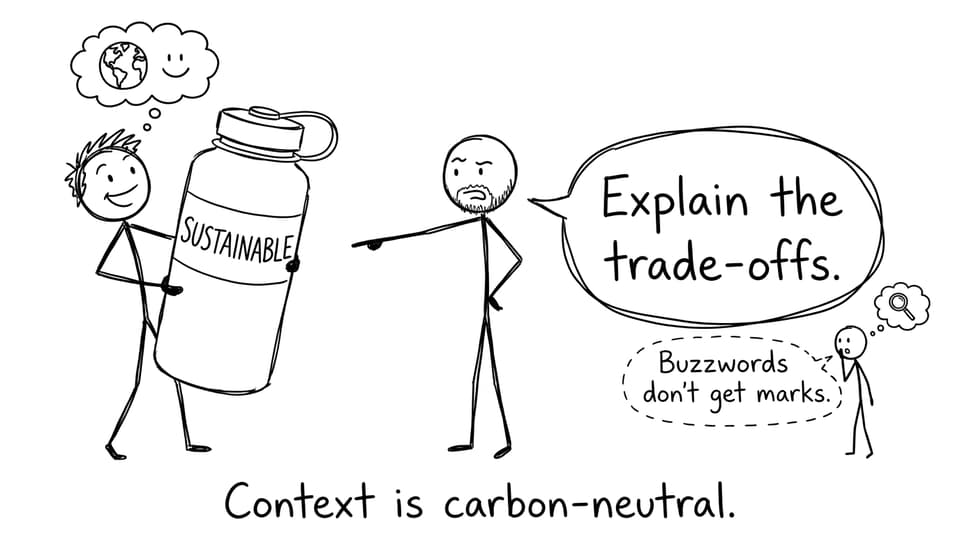
Sustainability can feel like the safest word in IB Design Technology. You can write it in almost any answer and it sounds correct.
But examiners have seen that trick before.
In IB Design Technology, sustainability is less about saying “eco-friendly” and more about showing that you can think like a designer: weighing impacts, spotting constraints, and explaining trade-offs with the scenario right in front of you.
What sustainability means in IB Design Technology (in examiner terms)
Sustainability in IB Design Technology is the long-game question: What does this design decision cost the environment, society, and resources over time? That means your answer needs evaluation, not slogans.
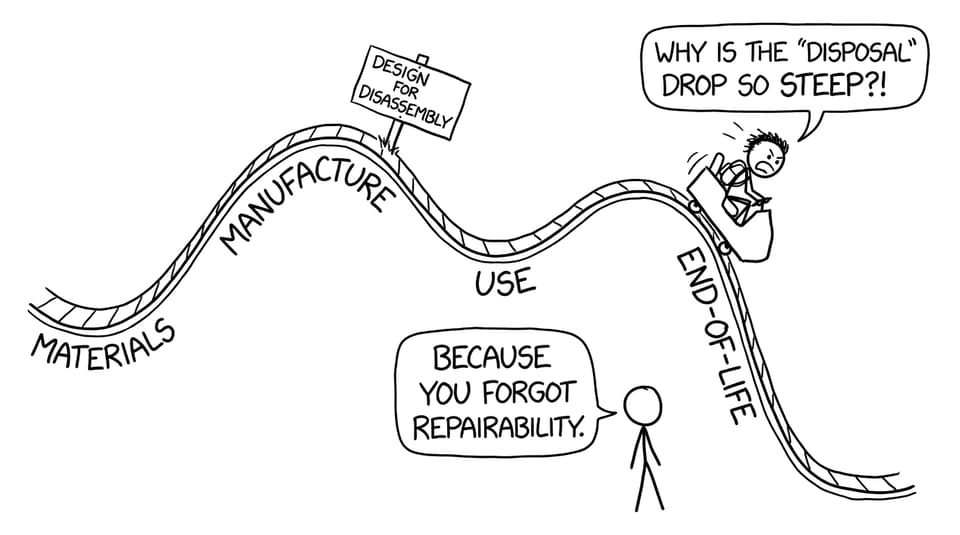
A simple way to remember what examiners want is the “design decision trail”:
-
Materials: source, renewability, embodied energy, toxicity
-
Manufacture: energy use, waste, clean technology, scale of production
-
Use: durability, maintenance, efficiency, behaviour change
-
End-of-life: repair, disassembly, recycling, disposal impact
If you want a syllabus-aligned home base for this, start with the IB Design Technology hub and branch into the sustainability subtopics.
Where sustainability appears in IB Design Technology questions
Sustainability shows up most often when a question asks you to analyse, evaluate, discuss, or justify. In IB Design Technology, those command terms are basically an invitation to talk about impact.
You’ll commonly see it in:
-
Scenario-based prompts (a product in context, with constraints)
-
Extended responses (argue both sides, then decide)
-
Responsibility/ethics framing (designer obligations and consequences)
To practise this in the same style as exam questions, RevisionDojo’s topic lessons for sustainability are a clean starting point: C2.1 Design for sustainability lessons.
The sustainability themes exam questions love (and how to score on them)
Materials and resource use (IB Design Technology sustainability hotspot)
A high-scoring IB Design Technology answer won’t just label a material “renewable.” It will connect the choice to this user, this product, and this manufacturing reality.
Strong moves include:
-
Compare renewable vs non-renewable in context
-
Mention durability and how lifespan changes total impact
-
Note extraction impacts (habitat loss, processing energy) without drifting into generic essays
For quick, markscheme-friendly phrasing, revise from C2.1.1 Design for sustainability notes.
Manufacturing and production methods
Sustainability questions in IB Design Technology often hide inside production decisions: injection moulding vs batch manufacturing, local vs global supply, high precision vs high waste.
What gets marks:
-
Energy use (and why it matters for the given scale)
-
Waste streams (offcuts, rejects, packaging)
-
A balanced line like: “More efficient per unit at scale, but higher upfront tooling and potential overproduction.”
If you’re revising manufacturing links, pair sustainability with the bigger system: C4.1 Design for manufacture strategies questionbank (HL).
Product lifespan, maintenance, and end-of-life
Examiners reward students who remember that sustainability doesn’t end when the customer starts using the product.
In IB Design Technology, talk about:
-
Repairability (fasteners, modular parts, standard components)
-
Recyclability (material separation, contamination, labels)
-
Disassembly (designed to come apart without destroying parts)
A good phrase is: “Designing for repair extends lifespan, reducing replacement demand, but may increase initial cost or thickness.” That’s the trade-off mindset.
Circular economy thinking (in plain, usable language)
Circular design appears more and more in IB Design Technology questions, but naming it is not enough.
Explain the mechanism:
-
Reuse reduces raw material extraction
-
Remanufacture reduces total embodied energy across product generations
-
Closed-loop systems reduce landfill and pollution risk
RevisionDojo’s syllabus notes help here: Datchefski’s principles notes.
A fast checklist for writing better sustainability answers
Use this 5-line structure when you feel stuck:
-
Name the design decision (material/process/feature)
-
Identify one impact (environmental/social/resource)
-
Explain why it happens (mechanism, not vibes)
-
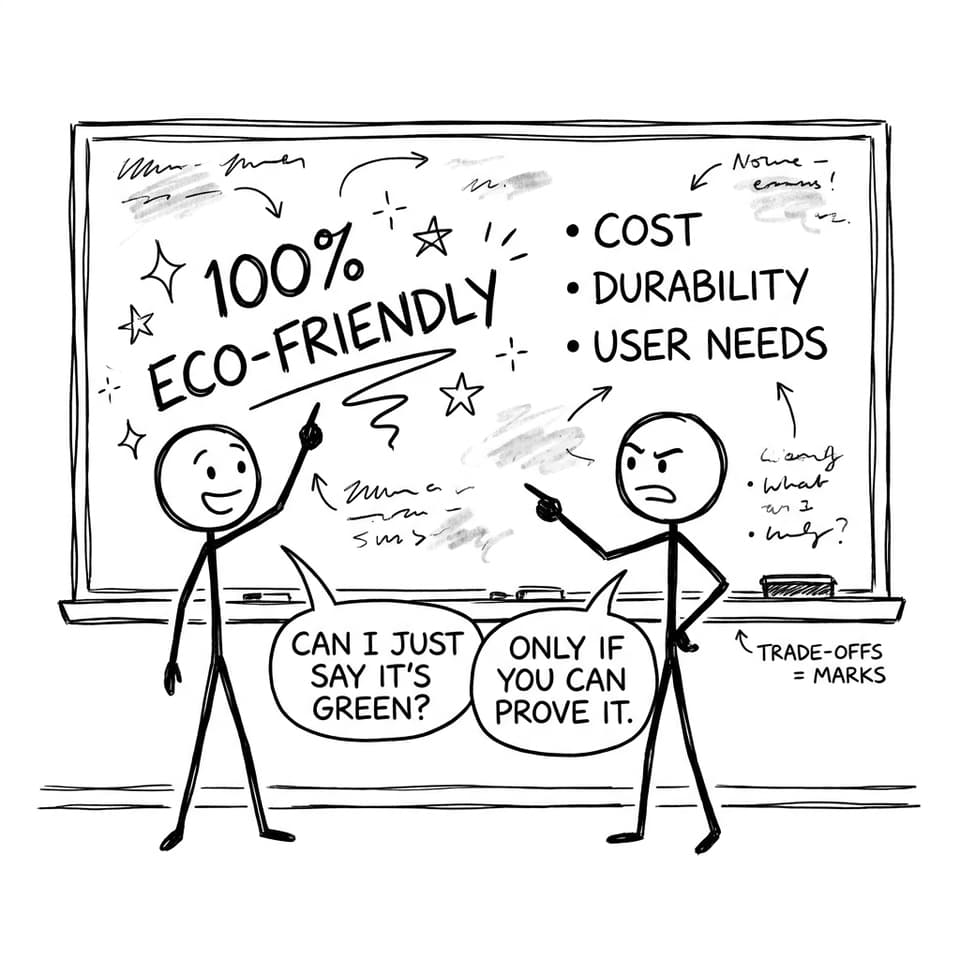
Give a trade-off (cost, performance, safety, user needs)
-
Conclude with a contextual judgement (“best given the scenario constraints”)
To drill this consistently, build practice sets from the Design in theory questionbank and then use RevisionDojo’s AI Chat to rewrite your evaluation more like a markscheme.
Closing: make sustainability your reliable mark-booster
Sustainability is a gift topic in IB Design Technology because it rewards thinking over memorising. When you treat it as a chain of decisions: materials to manufacture to use to end-of-life, your answers stop sounding like posters and start sounding like design.
If you want a focused way to train that skill, use RevisionDojo’s Questionbank for exam-style prompts, Study Notes and Flashcards for precise terminology, AI Chat for instant feedback on evaluation, plus Mock Exams, Predicted Papers, and Grading tools to pressure-test your structure before the real thing. Start from the IB Design Technology hub and build your sustainability confidence one scenario at a time.