
A map never lies, but it doesn’t tell the whole truth
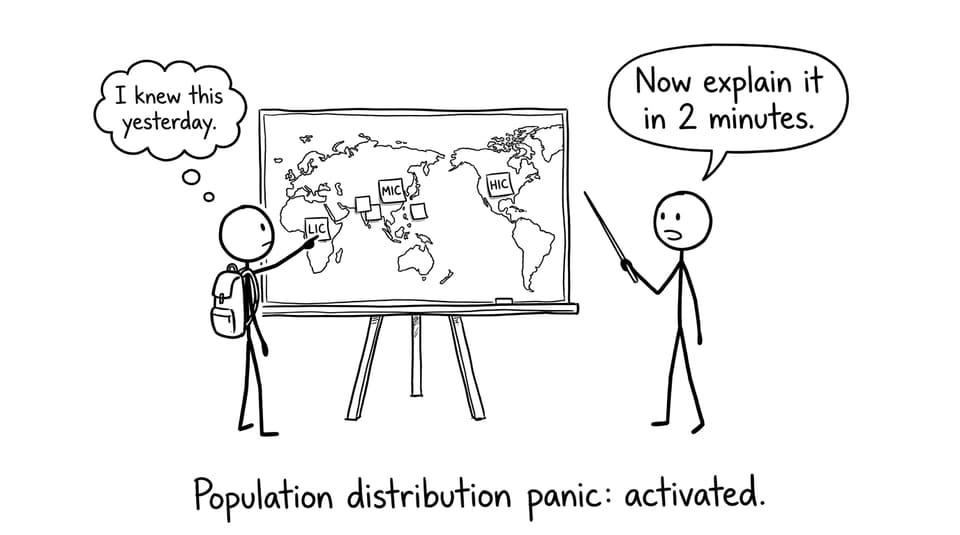
Open a world population density map and you’ll notice something strange: humanity seems to “prefer” coastlines, river valleys, and a handful of giant cities. In IB Geography, that pattern is the starting point. The real marks come from explaining why the pattern changes as countries move from low to high levels of economic development, and how to write it clearly under exam pressure.
Quick checklist: what examiners want for IB Geography
Use this fast structure whenever a question asks how population distribution varies by development:
-
Define population distribution (spread of people across space) and scale (global/national/local).
-
Compare LICs, MICs, and HICs with a clear “because” chain.
-
Link distribution to employment, infrastructure, services, and mobility.
-
Add one or two process terms: rural-to-urban migration, suburbanisation, counter-urbanisation.
If you’re revising Topic 1, start with 1.1 Population and economic development patterns and keep the definitions tight with the Topic 1 flashcards.
LICs: survival-first distribution (physical geography matters more)
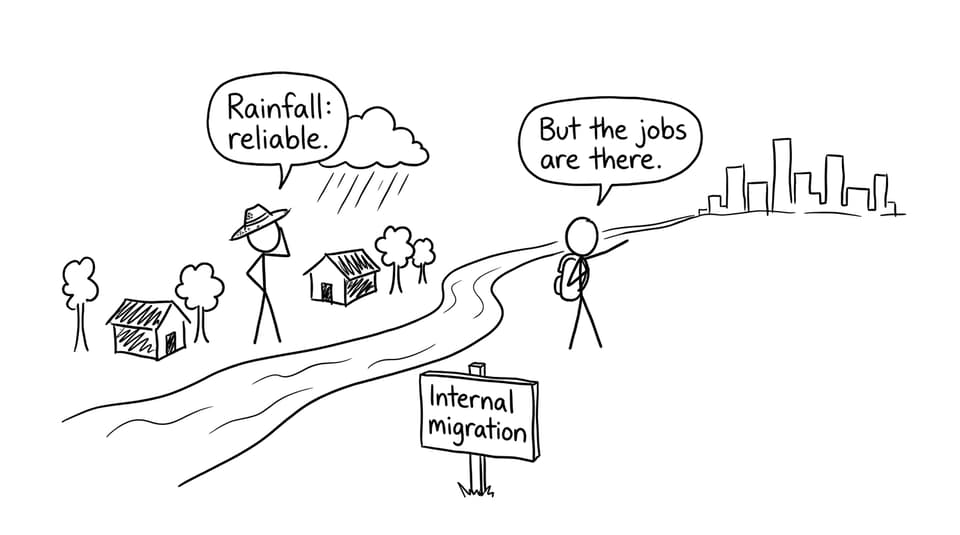
In many low-income countries (LICs), population distribution still leans heavily on the basics: fertile soils, water supply, and reliable rainfall. That’s why dense settlement often clusters in river valleys, coastal plains, and productive agricultural zones. When livelihoods depend on subsistence farming, physical geography is not background detail; it’s the main plot.
But development also shapes imbalance. Limited formal-sector jobs and weaker transport networks can funnel opportunity into one primate city. The result is often a sharp contrast: extremely high density in the capital and very low density in peripheral rural regions.
To strengthen this explanation in IB Geography, connect the physical base layer to human overlays using Factors affecting global population distribution notes.
MICs: industry and infrastructure start to rebalance the map
In middle-income countries (MICs), distribution patterns often shift as economies diversify from agriculture into manufacturing and services. New jobs appear in industrial corridors, ports, and secondary cities. As road and rail networks improve, internal migration becomes easier, and population spreads beyond one dominant capital.
At the same time, many MICs still experience rapid urban growth and expanding metropolitan regions. In exam responses, show both sides: a more connected national system (more nodes of growth) but also continued concentration in major urban areas.
A good reference point is 1.1.2 Economic development and population patterns notes, then practise writing with timed prompts from Changing populations and places questionbank.
HICs: choice-first distribution (mobility and lifestyle dominate)
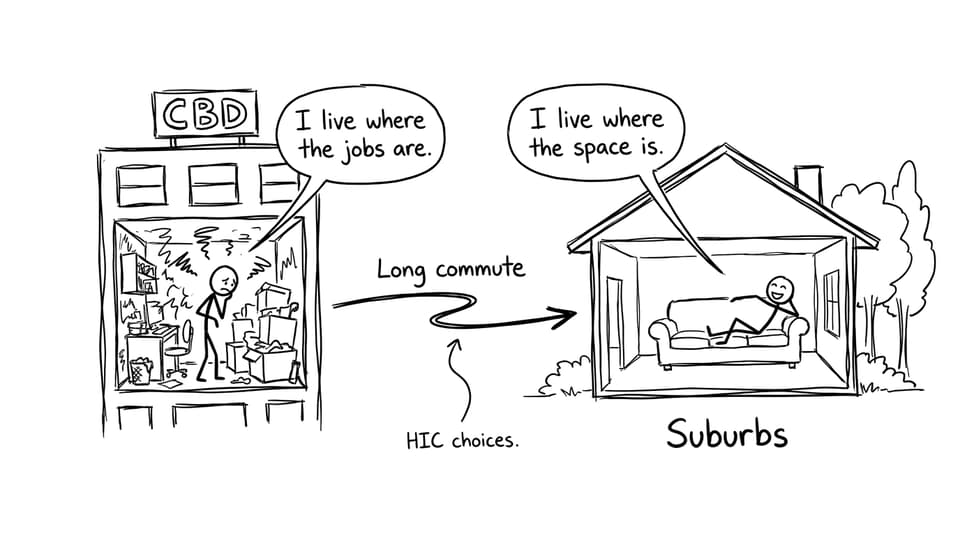
In high-income countries (HICs), population distribution is less constrained by survival needs and more shaped by accessibility, preferences, and planning. Advanced infrastructure and high car ownership allow people to live further from workplaces, supporting suburbanisation. In some regions, counter-urbanisation follows, with people moving to smaller towns or rural areas while staying economically connected through commuting or remote work.
Major cities still act as economic hubs, but the overall pattern is often more evenly spread across an urban network. To deepen your urban links in IB Geography, pair Topic 1 with G.2 Changing urban systems and the process explanations in Urbanization and population movements notes.
How RevisionDojo turns this into exam marks
Reading the theory is step one. Turning it into reliable marks is repetition with feedback. RevisionDojo helps you do that with:
-
Study Notes for clean chains of reasoning across IB Geography topics
-
Flashcards for definitions (distribution vs density, urbanisation, migration)
-
Questionbank to practise exam-style responses under time pressure
-
AI Chat to refine explanations and fix vague links (“development causes cities”)
-
Grading tools to match your structure to examiner expectations
-
Mock Exams and Predicted Papers for realistic full-paper practice
-
Tutors when you want targeted help on case-study phrasing
Start from the full IB Geography resources hub and branch into the exact subtopic you’re revising.
Conclusion: turn patterns into predictable marks
Population distribution isn’t random. In IB Geography, it’s a story about constraints and choices, and economic development changes which chapter dominates. If you can compare LIC, MIC, and HIC patterns with clear mechanisms (jobs, infrastructure, services, mobility), you’ll write answers that sound inevitable.
To lock it in, revise the core content with RevisionDojo’s notes, drill it with the Questionbank, and use AI Chat and grading feedback to make your explanations sharper each time.