


Design thinking in IB Design Technology looks simple on paper. Then you sit down to write a Paper response or document your project, and the simplicity disappears. Suddenly you’re staring at a “great idea” that doesn’t fit the user, a prototype that didn’t fail enough to teach you anything, and an evaluation that sounds like a product advert.
That’s the quiet trap of IB Design Technology: you don’t get rewarded for having an idea. You get rewarded for proving how you think your way to a better solution, using evidence, trade-offs, and iteration.
Design thinking in IB Design Technology (the exam-friendly meaning)
In IB Design Technology, design thinking is a user-centred, iterative approach to problem-solving. It starts with people, not products, and it stays honest about constraints: time, materials, ergonomics, sustainability, manufacturing, cost, and context.
In practice, design thinking shows up as:
-
Empathy and user research that produces specific insights
-
A focused problem definition grounded in evidence
-
Multiple ideas explored and compared (not just “the first good one”)
-
Prototyping and testing that generates usable feedback
-
Iteration that clearly explains what changed and why
If you want a solid home base for the subject, keep the IB Design Technology hub open while you revise: IB Design Technology Resources.
Quick checklist: how to show IB Design Technology design thinking
Use this checklist before you submit a project section or write a long exam response in IB Design Technology:
-
Can I name a specific user and context (not “teenagers” or “people”)?
-
Do I have evidence that the problem is real (interview, observation, testing)?
-
Did I create design requirements that actually control my decisions?
-
Did I generate alternatives and justify my choice using trade-offs?
-
Did I test a prototype and extract actionable feedback?
-
Did I iterate and explain the improvement using evidence?
For sharper research habits (and better marks), pair that checklist with: What Counts as Effective User Research in IB Design Technology?.
The stages of design thinking in IB Design Technology
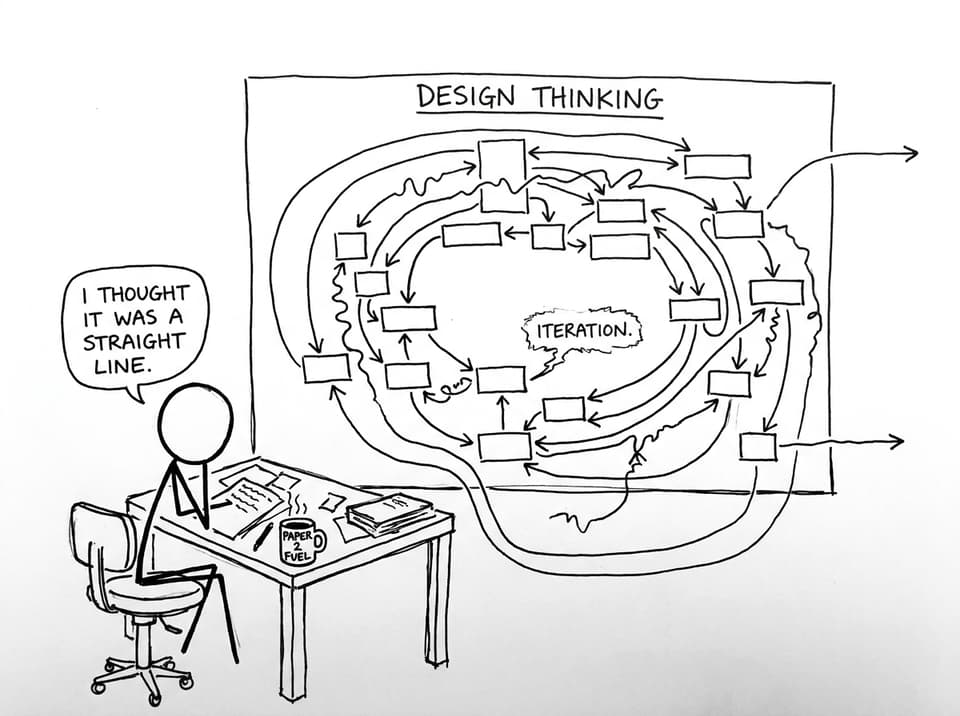
Different classrooms draw the loop differently, but the logic stays consistent. Design thinking in IB Design Technology is not linear. It’s a loop you can justify.
Start with empathy (research that changes your mind)
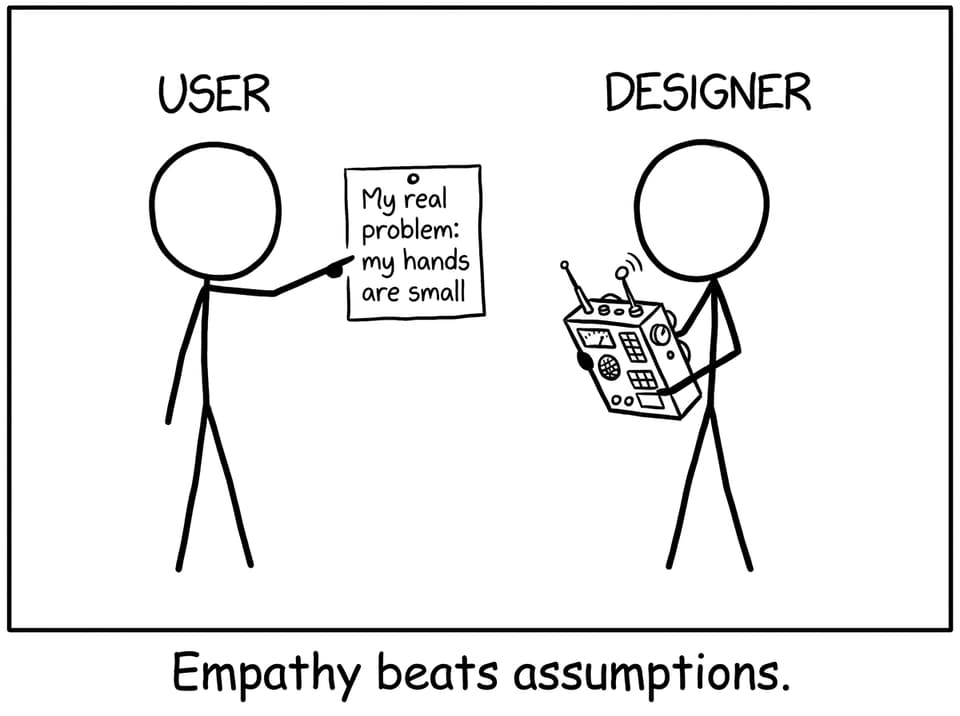
Empathy isn’t “being nice.” In IB Design Technology, empathy means your research reveals constraints and priorities the designer didn’t initially see.
A high-mark empathy section tends to include:
-
One clear user group (with a reason they matter)
-
Evidence from the user’s real situation
-
Specific needs and limitations (size, strength, environment, habits)
When you want to review the official language of innovation, the design process, and iteration, use: Innovation and Design Notes.
Define the problem (tight enough to design for)
A common IB Design Technology mistake is writing a problem statement that is either too broad (“plastic waste is bad”) or already a solution (“design a reusable bottle”).
A strong definition is:
-
Specific (one user, one context)
-
Evidence-based (directly linked to research)
-
Open to multiple solutions (so you can compare ideas)
If you’re unsure how exams reward this kind of thinking, read: How Is IB Design Technology Assessed in the New 2027 Syllabus?.
Ideate (multiple paths, clear trade-offs)
Ideation in IB Design Technology is where you prove you can think in options. Examiners don’t need 20 sketches. They need evidence that you explored alternatives and chose based on requirements.
What helps most:
-
3-5 distinct concepts
-
A comparison method (pros/cons, decision matrix, weighted requirements)
-
Justification that uses user needs, sustainability, and feasibility
Prototype and test (learn fast, not perfect)
In IB Design Technology, a prototype is a question you can hold in your hands.
Testing earns marks when it includes:
-
A method (what you tested, how, with what measures)
-
Results (data, observations, user quotes)
-
Reflection (what worked, what failed, what surprised you)
To build confidence with prototyping language and exam-style phrasing, practise with: B2.2 Modelling and Prototyping Questionbank.
Iterate (the mark-making step)
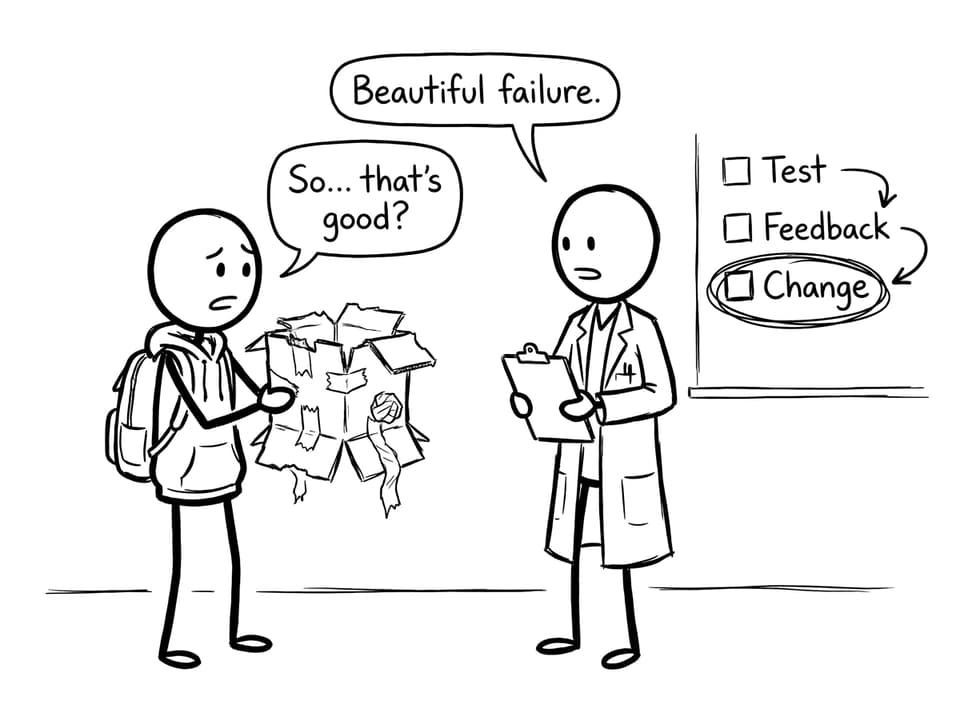
Iteration is where IB Design Technology becomes “scoreable.” Many students avoid iteration because it makes the work look messy. But messy is often honest, and honesty is persuasive.
Show iteration by:
-
Making a change based on test results
-
Explaining why that change better meets requirements
-
Testing again (even lightly) to confirm improvement
If you’re worried your idea isn’t “original enough,” this is a useful mindset reset: Can You Reuse Products or Ideas in IB Design Technology?.
How IB Design Technology exams test design thinking
Exams in IB Design Technology often give you an unfamiliar scenario and then ask you to apply designer logic under time pressure.
High-scoring answers usually:
-
Use user needs as the anchor (not just technical features)
-
Justify decisions with trade-offs (cost vs durability, usability vs aesthetics)
-
Evaluate impacts (sustainability, ethics, inclusive design, lifecycle)
To build that skill quickly, run short sets from the RevisionDojo Questionbank, then ask AI Chat to rewrite your justification in markscheme-style language. When you’re ready to simulate the pressure, add Predicted Papers: Design Technology Predicted Papers.
For broader strategy, this pairs well with: Best Study Strategies for IB Design Technology Students.
Common IB Design Technology design thinking mistakes
These patterns cost marks because they hide thinking:
-
Treating design thinking like a checklist, not a reasoning chain
-
Doing “research” that never changes the design requirements
-
Writing evaluations that describe features instead of judging effectiveness
-
Skipping iteration to keep the project looking perfect
If your notes feel heavy but not useful, rebuild them around the design loop: How to Create Effective IB Design Technology Revision Notes.
Closing: make IB Design Technology feel predictable
The best part of design thinking in IB Design Technology is that it turns stress into a process. You don’t need a genius idea. You need a clear user, a focused problem, evidence-driven decisions, and at least one honest iteration.
If you want one system that supports the whole loop: Study Notes for clarity, Flashcards for definitions, Questionbank for exam practice, AI Chat for fast explanations, Grading tools for better writing, Predicted Papers and Mock Exams for timed rehearsal, plus a Coursework Library and Tutors when you want human feedback, start here: IB Design Technology Resources.
Design thinking is the skill that connects everything. And in IB Design Technology, connected thinking is what earns marks.