



In IB Design Technology, testing is the moment your project stops being a story you tell and starts being a story you can prove.
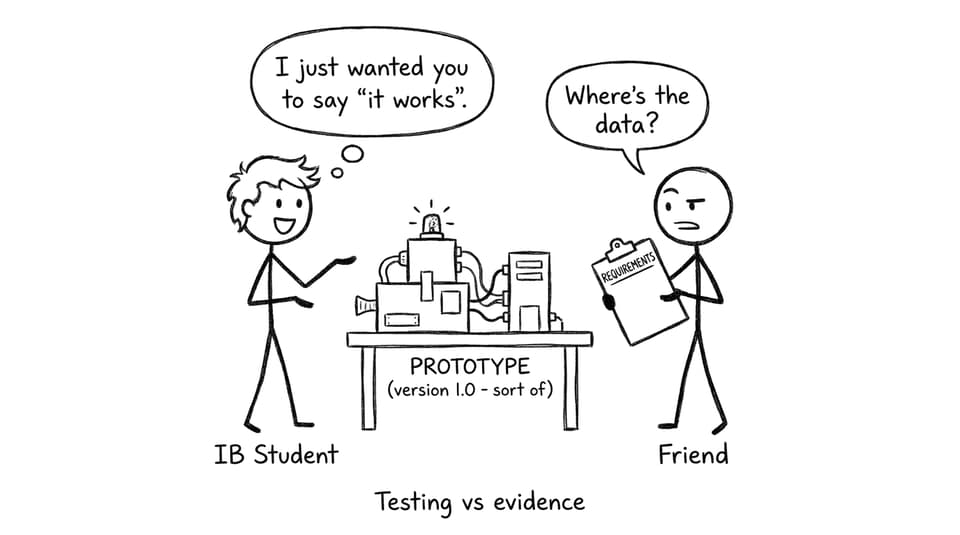
Most students learn this the hard way: you spend weeks building, you hand your product to a user, they smile, and you write, “It works well.” It feels like a win. But in IB Design Technology, that kind of “testing” is basically a compliment wearing a lab coat.
High-scoring testing is quieter and more honest. It gathers evidence. It invites friction. It creates a paper trail of decisions that an examiner can follow without guessing.
A quick IB Design Technology testing checklist
Use this as your baseline whenever you plan IB Design Technology testing for an IA product:
-
Link every test to a specific design requirement
-
Define what “success” looks like before you test
-
Collect evidence (numbers, photos, quotes) that can be checked
-
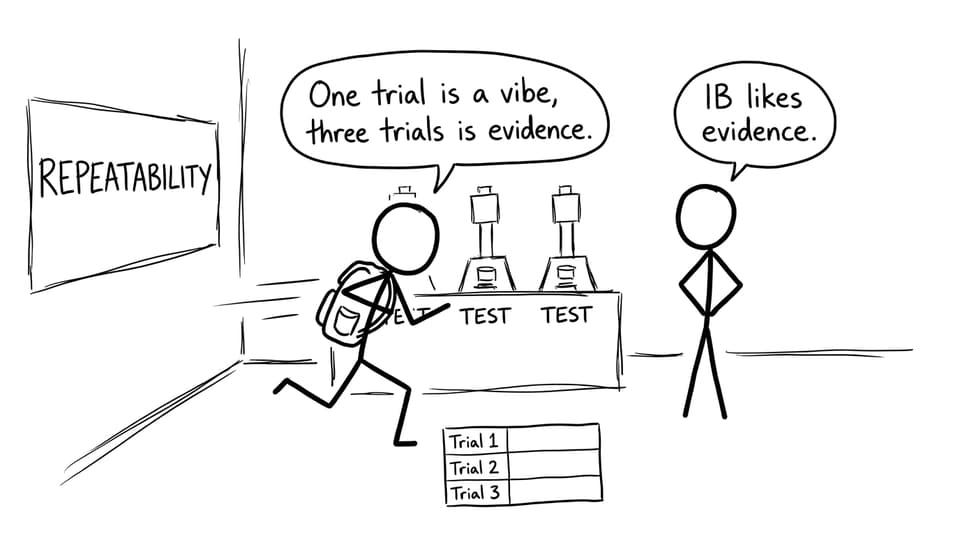
Repeat tests when results could vary
-
Test early prototypes, not just the final product
-
Turn results into iteration (change something, then test again)
If you want a clear home base while you plan, keep the IB Design Technology hub open: IB Design Technology Resources.
What testing really means in IB Design Technology
In IB Design Technology, testing is not the same thing as showing off. It is the process of measuring performance against your specification, collecting feedback from real users, and identifying limitations you can act on.
That is why testing sits at the bridge between development and evaluation. When you test well, your evaluation almost writes itself: requirement, evidence, conclusion.
A useful way to frame it is: testing is where your design requirements become measurable. If your requirements are vague, your testing becomes vague. If your requirements are precise, your testing becomes easy to justify.
For the broader IA structure (and where testing fits), this guide helps: Step-by-Step Guide to Writing a Winning IB Design Technology IA.
The most common testing mistake (and how to avoid it)
The classic mistake in IB Design Technology is leaving all testing until the end. Students do one user trial, add one photo, and declare victory.
The problem is simple: late testing only confirms. It rarely improves. And the IB rewards improvement.
Instead, test earlier than feels comfortable. Test rough mock-ups. Test components. Test the risky part of the product before you invest time polishing everything else. Early testing produces the best kind of evidence: the kind that changes what you do next.
If you want to see how examiners think about “clear thinking” and “honest evaluation,” read: What Do IB Design Technology Examiners Look For?.
Build requirement-based tests that score
Strong IB Design Technology testing is requirement-based. Each test should answer three questions in plain language:
-
Which design requirement am I testing?
-
What method will I use?
-
What evidence will I collect?
Example (short and examiner-friendly):
-
Requirement: “The latch must withstand 15N of pulling force without opening.”
-
Method: Spring scale pull test, three trials.
-
Evidence: Table of forces, photo of setup, note of failure point.
When your tests are built like this, your IA reads like engineering rather than opinion.
If you are unsure whether your requirements are actually testable, the fastest fix is to check your wording against an IA rubric breakdown: IB Design Technology HL IA Grader.
Testing types that work well in IB Design Technology
Most high-quality IB Design Technology projects mix a few test types. Not because “more” is better, but because each type answers a different kind of requirement.
User testing (behavior + feedback)
User testing works when it is structured. Give the user tasks, time them, observe errors, and collect targeted feedback tied to requirements (comfort, ease of use, accessibility).
This pairs naturally with user-centred design content: Best Study Strategies for IB Design Technology Students.
Performance testing (numbers)
Measure what can be measured: mass, dimensions, strength, stability, battery life, accuracy, speed. Numbers make evaluation clearer and reduce the need for “I think.”
Comparative testing (against an existing solution)
Comparisons are persuasive in IB Design Technology because they show context. If your product claims to improve something, test it next to a real alternative and present the difference.
Context testing (real environment)
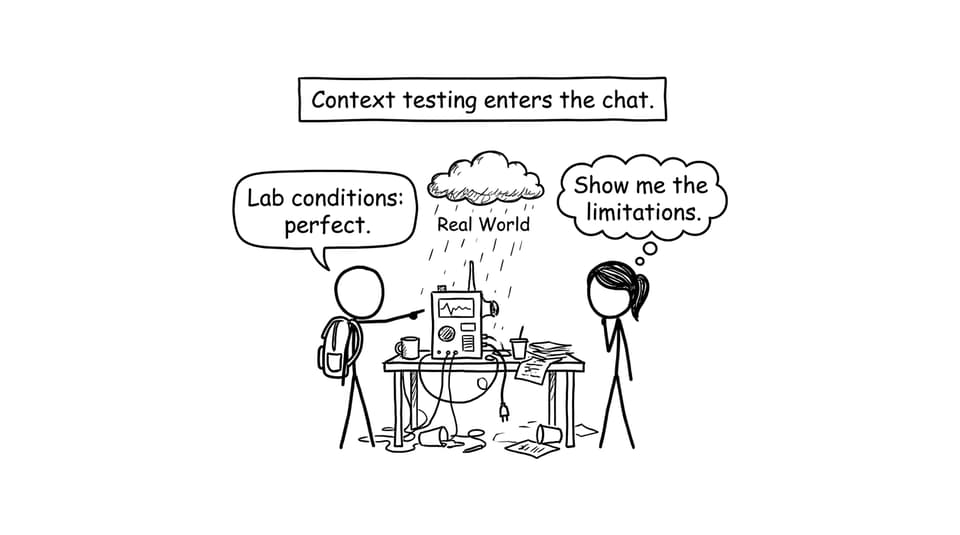
This is where many IAs quietly level up. Put the product in the environment it is actually used in: a backpack, a wet sink area, a crowded classroom, a dim room. Context reveals limitations you can discuss with maturity.
For prototyping fundamentals that support better testing, use: Modeling and Prototyping in IB Design Technology and Physical prototypes for design testing (B2.2.2).
Turn results into iteration (the part that earns trust)
In IB Design Technology, a test that leads nowhere is usually a missed opportunity.
A strong iteration loop looks like this:
-
Finding: The hinge loosens after repeated opening.
-
Why it matters: Violates durability requirement.
-
Change: Switch to a different fastener or add a spacer.
-
Retest: Same method, same criteria, show improved results.
That “retest” detail matters. It tells the examiner you are not just changing things randomly. You are responding to evidence.
To keep your whole IA aligned before submission, this is worth bookmarking: How Do You Finalise and Submit the IB Design Technology IA?.
Bring your testing together with RevisionDojo
Good IB Design Technology testing is not about proving you were right. It is about showing you were willing to check.
If you want that process to feel simpler, RevisionDojo gives you the structure students usually miss: Study Notes for the testing and prototyping content, Flashcards for key definitions, a DT Questionbank to practice examiner-style thinking, and AI Chat to help you rewrite requirements into measurable language. When you’re ready to sanity-check your draft, the Grading tools make your testing-and-evaluation links easier to spot. And if exam prep is looming, Predicted Papers, Mock Exams, and Tutors help you practise under realistic pressure.
Testing is where your IA becomes believable. In IB Design Technology, believable is what earns marks.