


Time disappears in exams the way pencils disappear in your bag: slowly, then all at once.
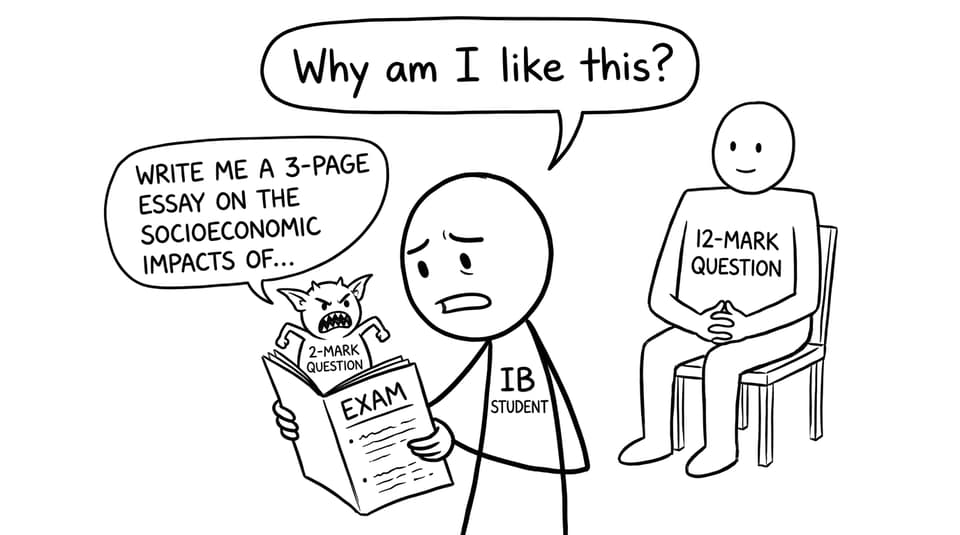
In IB Design Technology, that vanishing act is brutal because the paper doesn’t just test what you know. It tests whether you can show it clearly, in the right shape, under pressure. Many students lose marks not from weak understanding, but from spending eight minutes proving they can write… on a two-mark question.
This guide gives you a practical way to manage time in IB Design Technology exams so your best thinking actually reaches the page.
A quick IB Design Technology timing checklist
Use this as your default routine for IB Design Technology:
-
Convert marks to minutes (roughly 1 mark == 1 minute).
-
Read the command term first, then the scenario.
-
“Micro-plan” extended responses for 30-60 seconds.
-
Keep low-mark answers tight: one idea per mark.
-
If stuck, bank partial marks and move on.
-
Save 3-5 minutes at the end to patch gaps.
If you want one home base for practice, start from the IB Design Technology resources hub and work outward.
Why time management matters so much in IB Design Technology
The tricky part of IB Design Technology is that marks often sit in thinking moves: applying a concept to a new product, explaining a mechanism, evaluating trade-offs, or justifying a decision.
When timing slips, your answer shape collapses. You stop signposting. You skip evaluation. You forget the “therefore.” And your work becomes hard to mark, even if your ideas are good.
A helpful companion skill here is decoding questions quickly. Keep a command-term refresher open during revision like How to Use Command Terms Effectively in IB Exams so you stop writing the wrong kind of response.
The one rule that fixes most timing problems
In IB Design Technology, a simple rule prevents most disasters:
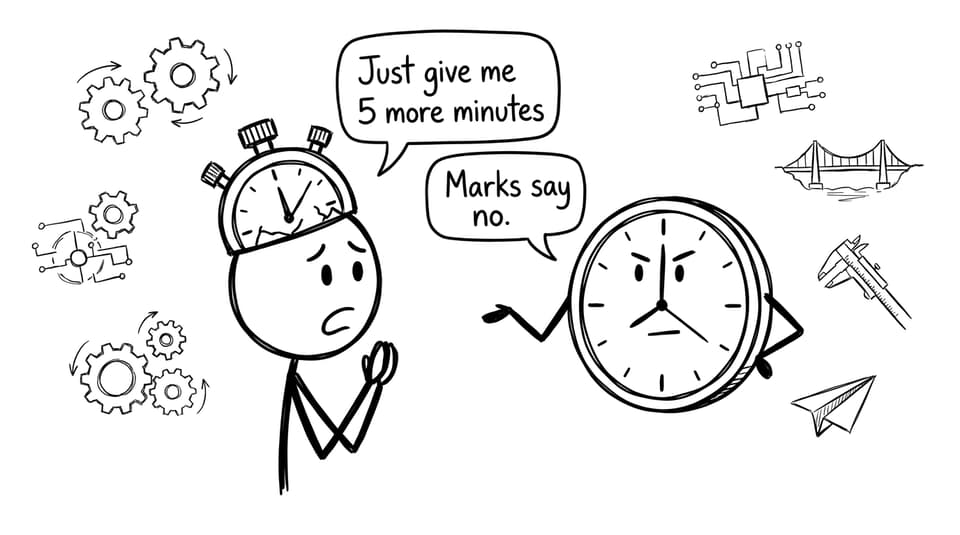
Marks ≈ minutes.
So if you see:
-
2 marks: aim for ~2 minutes
-
8 marks: aim for ~8 minutes
-
12 marks: aim for ~12 minutes
This doesn’t need to be perfect. It needs to be consistent. The goal is to protect high-mark questions from getting rushed at the end.
To train this, do timed sets using RevisionDojo’s Questionbank so you learn what “2 minutes of quality” actually looks like.
Paper 1 time management in IB Design Technology
Paper 1 tends to punish one habit: overwriting.
Keep answers mark-sized
For short questions in IB Design Technology, aim for one clear point per mark. Use crisp terminology. If the question asks to state, don’t explain. If it asks to outline, don’t evaluate.
A good way to build this instinct is doing small topic drills. For example, pick a subtopic and do rapid practice in a focused area like Properties of Materials Questionbank.
Don’t “design cycle” everything
Students sometimes respond to every prompt like it’s coursework documentation. In Paper 1, the examiner wants the shortest correct route to the mark.
If you struggle with speed and accuracy together, layer in the approach from How to Improve Speed and Accuracy in IB Design Technology Exams.
Paper 2 time management in IB Design Technology
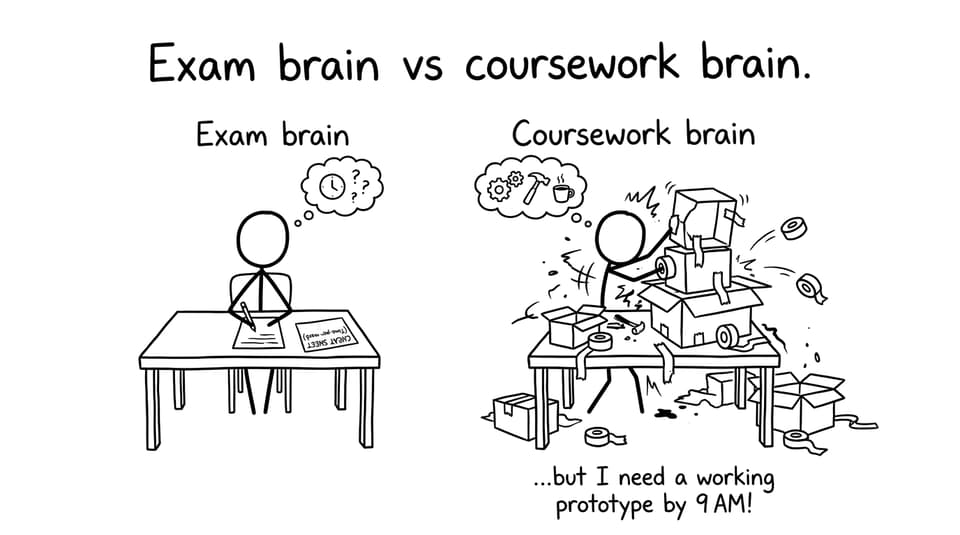
Paper 2 is where planning saves time, not costs it.
Use the 45-second micro-plan
Before you write an extended response in IB Design Technology, pause briefly:
-
Identify the command term (evaluate, discuss, explain).
-
List 2-4 points in the order you’ll write them.
-
Add one real product example or design context.
-
Add one limitation or counterpoint if it’s evaluative.
That tiny plan stops you from looping, repeating, and “thinking on paper” for three minutes.
Prioritise the marks that move your grade
High-mark questions need structure: claim, reason, example, judgement. Rushing a 10-12 marker is one of the fastest ways to leak points.
To learn what strong structure looks like across subjects, borrow the patterns in Structure IB Answers to Maximize Marks and apply them to IB Design Technology contexts.
When you’re stuck: move on without losing marks
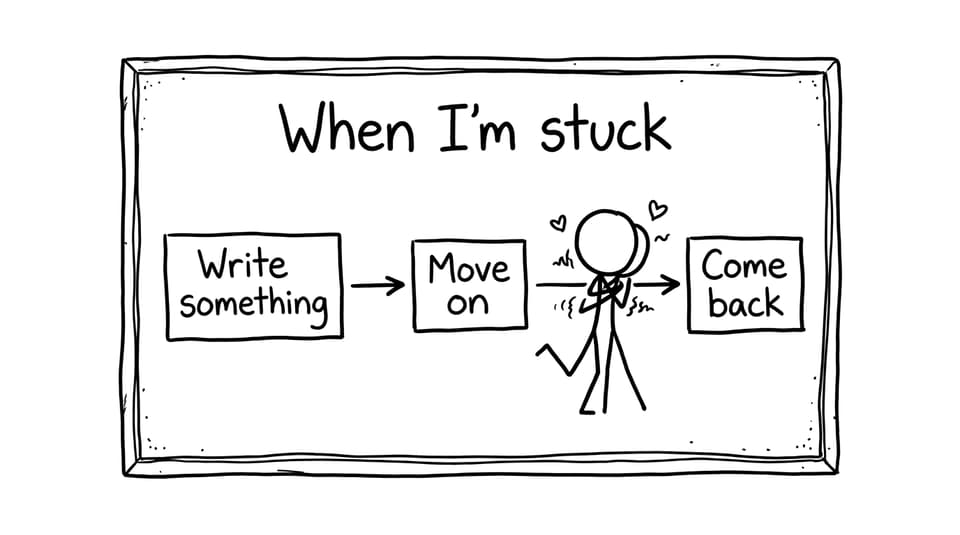
Getting stuck is normal in IB Design Technology because scenarios can be unfamiliar. The mistake is freezing.
Do this instead:
-
Write the safest correct statement you can.
-
Add one relevant example or implication.
-
Put a symbol next to the question.
-
Move on and return later.
This is also where RevisionDojo’s AI Chat can help during revision: paste your practice response, ask what the markscheme would reward, and train your “minimum viable answer” instinct.
If you want a full panic-proof routine, read IB Exam Panic: What to Do If You Don't Understand.
Practice that actually improves IB Design Technology timing
Timing is a skill, not a personality trait. Build it like you’d build a prototype: quick iterations with feedback.
-
Do 15-25 minute timed blocks from the Questionbank.
-
Use RevisionDojo Grading tools to spot where marks are being missed due to structure, not knowledge.
-
Rotate in Flashcards for definitions that slow you down.
-
Use Study Notes to rebuild weak topics quickly.
-
Simulate pressure with Mock Exams and Predicted Papers as you get closer to exams.
If your overall routine feels messy, anchor it with Best Study Strategies for IB Design Technology Students and keep practice measurable.
Closing: turn IB Design Technology knowledge into marks
Managing time in IB Design Technology isn’t about writing faster. It’s about spending your minutes where the marks actually are, then moving on with discipline when they aren’t.
If you want that discipline to feel natural, build your timing loop on RevisionDojo: learn with Study Notes, lock in key terms with Flashcards, apply under pressure in the Questionbank, then simulate real conditions with Mock Exams and Predicted Papers. Add AI Chat, Tutors, and the Coursework Library when you need fast feedback or a clearer next step.
Your goal isn’t a perfect answer to one question. It’s a complete paper full of markable thinking in IB Design Technology.