


A quiet truth about IB Design Technology
The night before a deadline, it’s tempting to treat “design ideas” like a race: more sketches, more pages, more arrows. It looks productive. It feels productive. But in IB Design Technology, that kind of speed can be expensive.
Because design idea development isn’t a creativity contest. IB Design Technology rewards something calmer and rarer: evidence that your thinking moved forward, that choices were justified, and that your final direction didn’t appear out of nowhere.
If you’re preparing for exams or shaping your IA, this matters. Examiners can spot “busy work” instantly. What they’re looking for is progress you can explain.
What “develop design ideas” really means in IB Design Technology
In plain terms, developing design ideas means you:
-
Generate a few clearly different concepts (not tiny variations)
-
Link each concept to the problem and user needs
-
Use research and design requirements to justify features
-
Compare ideas honestly (trade-offs included)
-
Show how you refine toward a final solution
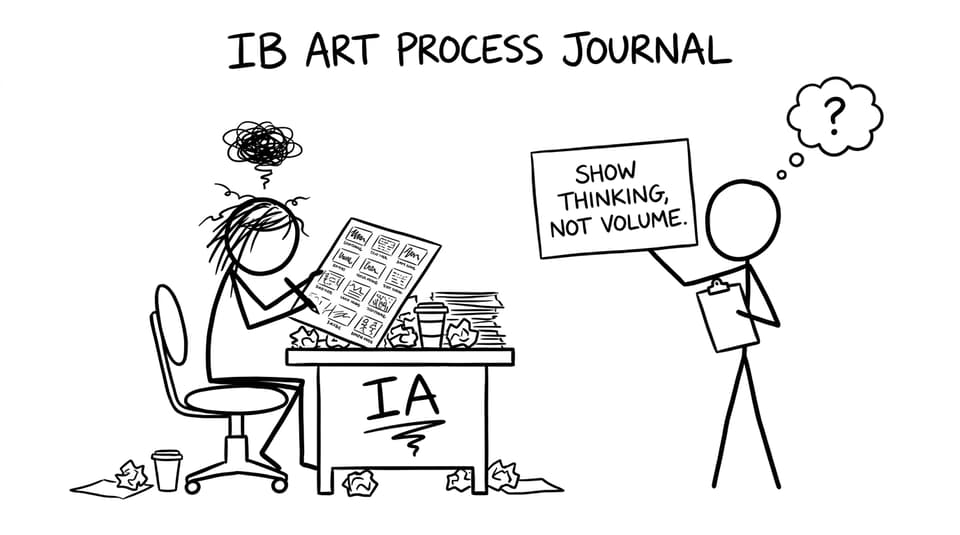
This is why many students do better with three thoughtful ideas than six unexplained sketches. In IB Design Technology, marks come from reasoning, not volume.
If you want an IA-wide view of what strong work looks like, it helps to skim IB Design Technology IA examples and notice how the “story of decisions” stays visible.
A simple checklist you can use today
Before you call an idea “developed,” check that you can answer:
-
What is the idea, in one sentence?
-
Which requirements does it meet best?
-
Which requirement does it struggle with (and why)?
-
What research influenced at least one feature?
-
What would you test first if you prototyped it?
When you practice this repeatedly, you start thinking like the subject expects you to think. That’s useful in the IA and in IB Design Technology exam questions.
The biggest mistake: sketches without decisions
A common weak pattern in IB Design Technology looks like this:
-
Several neat sketches
-
A few labels
-
Then: “Idea 3 is best”
The missing piece is the decision trail. Examiners want to see how you narrowed down options. Even a rough sketch can score well if the thinking is clear.
If you’re unsure how exam questions reward this same skill, practice with the Design Technology Questionbank to see how justification and evaluation show up in markschemes.
How many ideas should you create in IB Design Technology?
There’s no magic number. The better question is: “Do my ideas represent genuinely different approaches?”
A strong set often includes:
-
One idea optimized for simplicity and feasibility
-
One idea optimized for user experience/ergonomics
-
One idea optimized for sustainability/material efficiency
That variety gives you something real to compare. And comparison is where the high-value marks live in IB Design Technology.
If you’re still choosing a direction, browsing IB Design Technology project ideas can help you see how different constraints naturally create different concepts.
How to write explanations that earn marks
For each design idea, write like you’re defending it to a skeptical but fair reader.
Include:
-
Purpose: what the concept is trying to do
-
User fit: how it addresses user needs in context
-
Requirements mapping: which specs it meets and how
-
Limitations: where it fails (be specific)
-
Next iteration: what you would change and why
This is also where RevisionDojo’s tools can quietly change your workflow: use AI Chat to pressure-test your justifications (“Is this a real requirement link or just a claim?”), then turn your requirement language into quick Flashcards for exam recall.
For revision structure across the course, the guide on best study strategies for IB Design Technology students pairs well with this IA-focused skill.
Use research like a lever (not a decoration)
Research in IB Design Technology should change your ideas, not just sit beside them.
Examples of research that actually develops ideas:
-
User feedback changes layout, dimensions, or controls
-
Product analysis reveals common failure points you redesign
-
Ergonomic data justifies grip size, reach, angles, or spacing
-
Materials research rules out unrealistic manufacturing choices
If you’re worried your project is “too similar” to existing products, read Can you reuse products or ideas in IB Design Technology?. It reframes originality the way the course actually treats it: improvement, specificity, and evidence.
Comparison: where your marks quietly accumulate
A good comparison does two things:
-
It uses a consistent set of requirements.
-
It admits trade-offs.
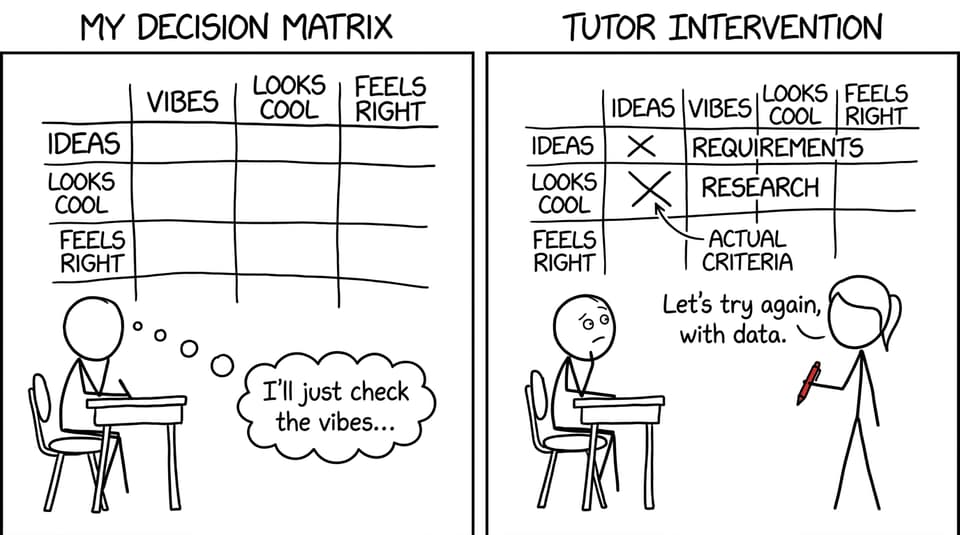
Try a short decision matrix or bullet comparison against your top requirements. If you want to go further, link it to testing plans (what you’d prototype first, what success looks like).
This is also where RevisionDojo’s Grading tools (for IA drafts) and Coursework Library (exemplars and annotated models) can help you calibrate your level. If you haven’t explored them yet, start from the IB Design Technology resources hub.
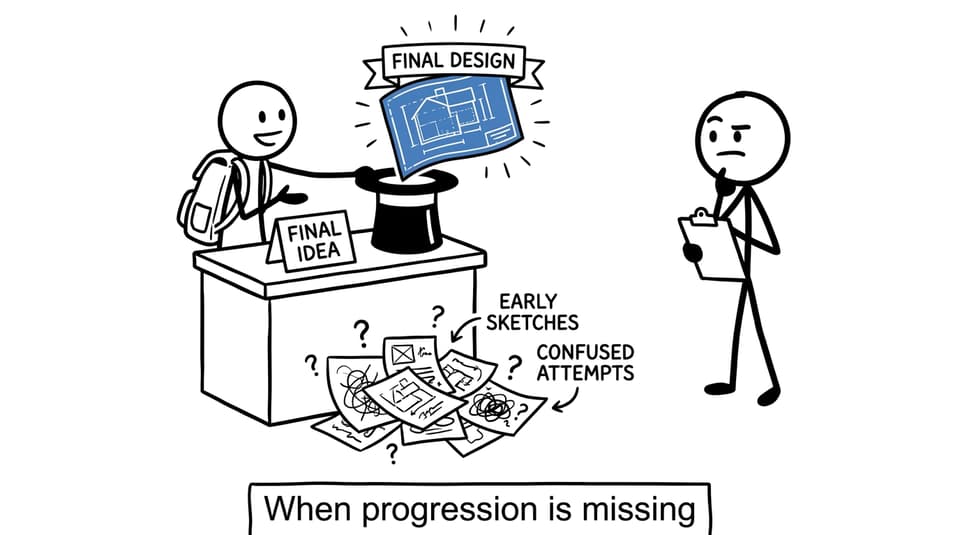
Show progression so your final idea doesn’t “teleport”
The final design should feel inevitable. Not magic.
A clean progression in IB Design Technology usually looks like:
-
Idea 1 reveals a key constraint
-
Idea 2 fixes that but introduces a new trade-off
-
Idea 3 merges strengths or resolves the trade-off
-
Final design is a justified evolution (with explicit changes)
When you start prototyping, the same logic continues. If you need a refresher on the language and expectations, see Modeling and prototyping in IB Design Technology.
Closing: treat IB Design Technology like a story of decisions
When you develop design ideas well, your IA stops being a collection of sketches and becomes a narrative: a problem, a few plausible solutions, and a justified path toward one that fits the user and the requirements.
If you want that process to feel simpler, build your workflow around RevisionDojo: use the Study Notes to keep requirement language precise, drill decision-making with the Questionbank, refine wording with AI Chat, and pressure-test your drafts with the Grading tools. Add Mock Exams and Predicted Papers closer to exam season, and lean on Tutors when you need fast, specific feedback.
In IB Design Technology, you don’t need to look like a genius. You need to look like someone who can think clearly, compare honestly, and improve on purpose.