


In IB Design Technology, the client decision is the quiet hinge your whole project swings on.
Most students think the hard part is the final prototype or the CAD. But marks usually rise or fall earlier, in a moment that feels almost boring: picking a person who will actually answer your questions, challenge your assumptions, and give you evidence you can use.
A good client makes your justification clean, your testing honest, and your evaluation easy to prove. A weak client does the opposite. And in IB Design Technology, that difference tends to echo through every criterion.
What a “client” really means in IB Design Technology
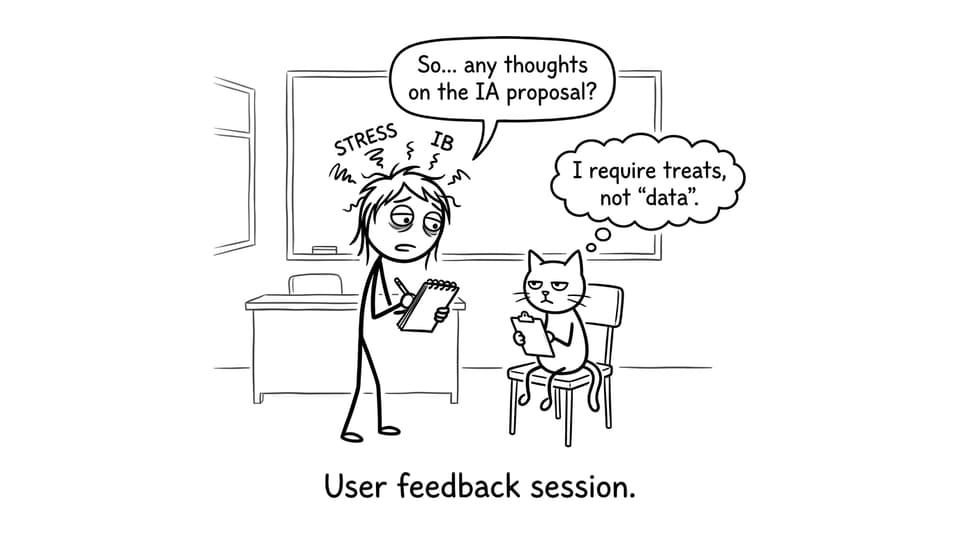
In IB Design Technology, a client is the specific person (or realistic organization) who experiences the problem you’re designing for. They are not a decorative name on your cover page. They are the source of:
-
Real needs and constraints (the reason the problem matters)
-
Primary feedback during testing (the reason your iteration is believable)
-
Evidence for evaluation (the reason your conclusion is more than opinion)
If you want your project to feel user-centred rather than hypothetical, start by grounding your thinking in user-centred design. RevisionDojo’s DT hub is a good place to orient yourself: IB Design Technology resources.
Quick checklist: how to spot a strong client fast
Use this before you commit. In IB Design Technology, you want a client who is:
-
Specific: one person with a real context, not a broad group
-
Accessible: you can speak to them multiple times
-
Genuinely constrained: their problem affects usability, safety, comfort, efficiency, or inclusion
-
Right-sized: solvable with your time, tools, and school resources
-
Testable: you can measure improvement using clear success criteria
If you’re revising DT alongside the project, pair this with a consistent routine: Best study strategies for IB Design Technology students.
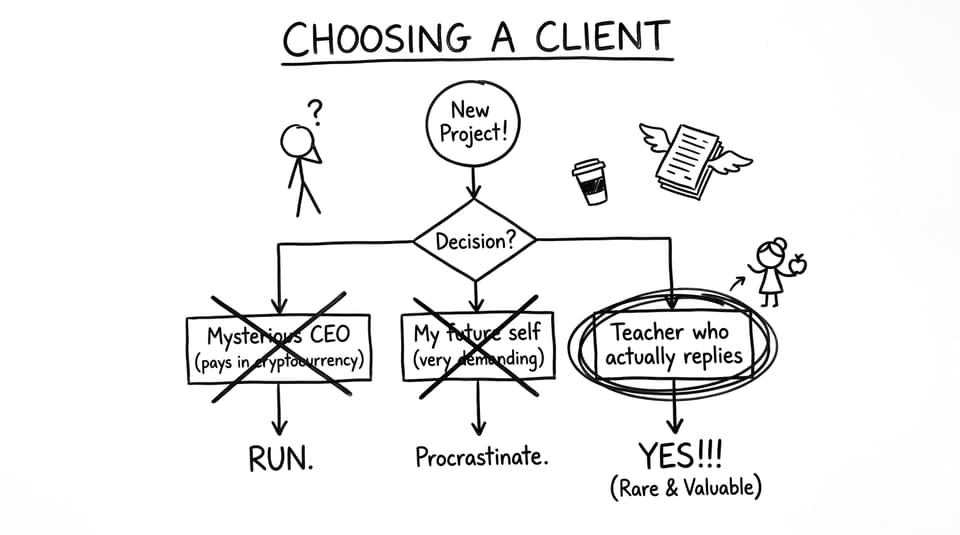
Why client choice affects marks more than you think
In IB Design Technology, examiners reward projects that show a visible chain of reasoning:
Client need, then research, then design requirements, then development decisions, then testing, then evaluation
A strong client makes that chain easy to show. A weak client forces you to “fill gaps” with assumptions, and assumptions are hard to defend.
This is also why understanding user-centred design matters for both coursework and exams. If you need a clear definition and what it looks like in assessed work, read: What is user-centred design in IB Design Technology?.
Traits of a good IB Design Technology client
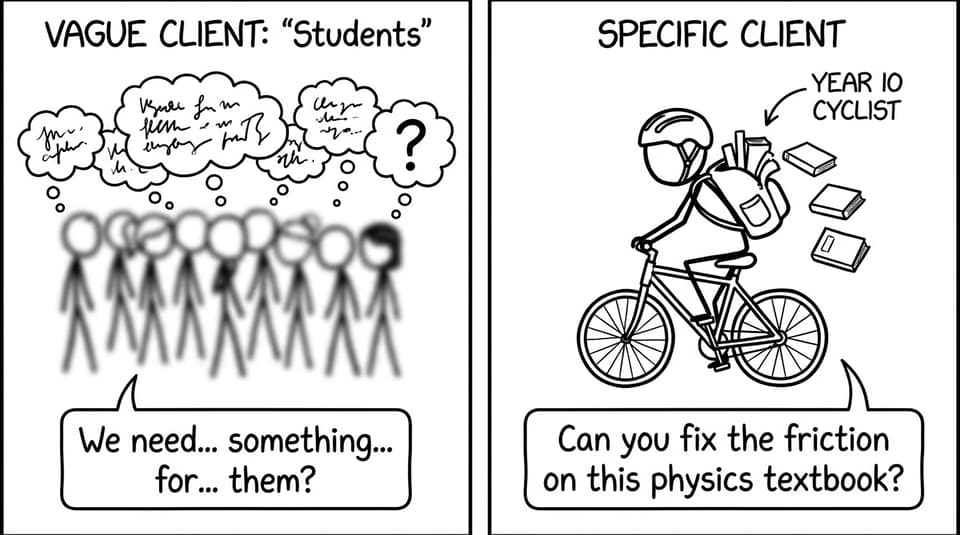
They are real and specific, not a vague audience
Weak client descriptions sound like marketing:
-
“Students”
-
“Gym users”
-
“Office workers”
Strong clients sound like a case you can picture:
-
“A Year 10 student who cycles to school and struggles to carry books securely in the rain”
-
“A teacher who changes classrooms six times a day and has no reliable storage for supplies”
Specificity does something magical in IB Design Technology: it automatically creates design constraints. Constraints create decisions. Decisions create marks.
They are accessible for repeated feedback
Your client needs to be reachable throughout the timeline. In IB Design Technology, a client who replies once and disappears forces you into generic testing.
Accessible clients typically include:
-
Teachers and school staff
-
Family members
-
Club leaders, coaches, librarians
-
Students with a clearly defined need (not “students in general”)
They have a problem with depth (not just aesthetics)
Choose a problem that lets you research and test meaningfully. Strong IB Design Technology problems often involve:
-
Ergonomics and comfort
-
Safety and risk reduction
-
Accessibility or inclusive design
-
Organization and efficiency
-
Durability and sustainability
If your “problem” is basically “I don’t like how this looks,” it’s harder to generate serious evaluation evidence.
They fit the scope of your tools and time
A good client problem should be complex enough to justify design thinking, but not so complex you end up writing promises you cannot test.
A simple rule: if solving it requires specialized manufacturing you can’t access, or professional certification, it’s probably too big for your IB Design Technology project.
Common client-selection mistakes (and how to avoid them)
Picking a client to match a pre-decided solution
Students sometimes fall in love with an idea first, then hunt for a client who “needs” it. In IB Design Technology, this usually leads to forced justification.
Instead, start with the client’s context. Then let research shape the solution.
Changing clients halfway through
Swapping clients mid-project creates inconsistent data. Your early research no longer matches your later testing. In IB Design Technology, inconsistency is expensive.
Choosing an unreachable organization
“Local company,” “sports brand,” or “hospital department” can sound impressive. But if you can’t interview someone, observe a task, or run a realistic test, you lose the evidence you need.
If you’re unsure what strong research looks like, use this as your standard: What counts as effective user research in IB Design Technology?.
How to pressure-test your client in 10 minutes
Before you commit, ask your potential client:
-
Can I ask you 5 questions this week?
-
Can we do a quick follow-up after I draft requirements?
-
Can you test a model or prototype (even a low-fidelity one)?
-
Are you comfortable with photos/notes if I anonymize data?
-
What would “success” look like for you in one sentence?
If they hesitate at every step, your IB Design Technology testing and evaluation will be harder than it needs to be.
Bringing it home: make your client choice work for you
A strong IB Design Technology project doesn’t start with a flashy idea. It starts with a client you can return to again and again, gathering proof that your design thinking is real.
If you want to build that proof efficiently, RevisionDojo can carry the weight: practise exam technique with the IB Design Technology Questionbank, lock in terminology with IB Design Technology notes, and sanity-check your reasoning with AI Chat. When your client is solid, every tool, including Flashcards, Study Notes, Mock Exams, Predicted Papers, Grading tools, and even Tutors, helps you turn feedback into marks.
Start by choosing the client who will still be there when you need the second interview. Your future evaluation section will thank you.