


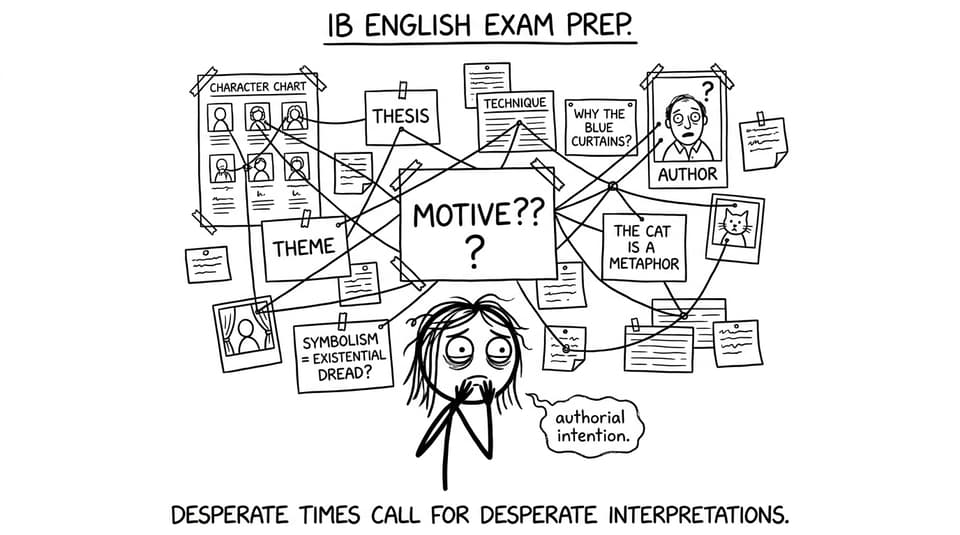
In the last five minutes of an exam, a character can feel like a real person you somehow failed to meet properly. You remember what they did. You remember one quote. But when the question asks how the writer constructs them, your mind goes blank.
That tiny gap between “what happened” and “how it’s built” is where top marks live in IB English. Character analysis is not a personality test. It is craft analysis: the choices an author makes (language, structure, narrative perspective, symbolism) to create a person who carries the text’s biggest ideas.
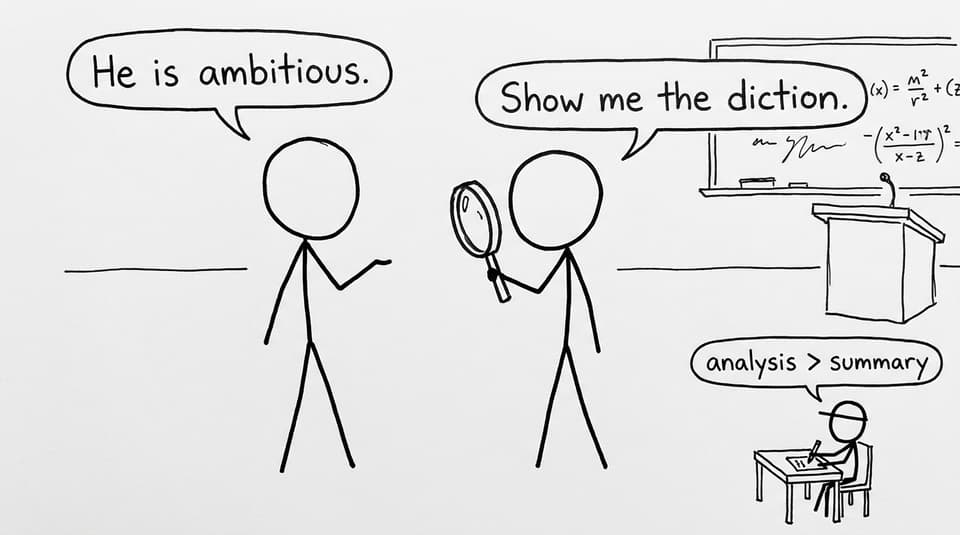
If you can turn “He is ambitious” into “Shakespeare shapes ambition through violent imagery and fractured soliloquies, so the audience experiences desire as self-destruction,” you are doing IB English the way examiners reward.
IB English character analysis: a fast checklist
Use this when you’re planning a paragraph in IB English, especially under timed conditions:
-
Name the character’s function (foil, symbol, moral test, plot engine, victim, witness).
-
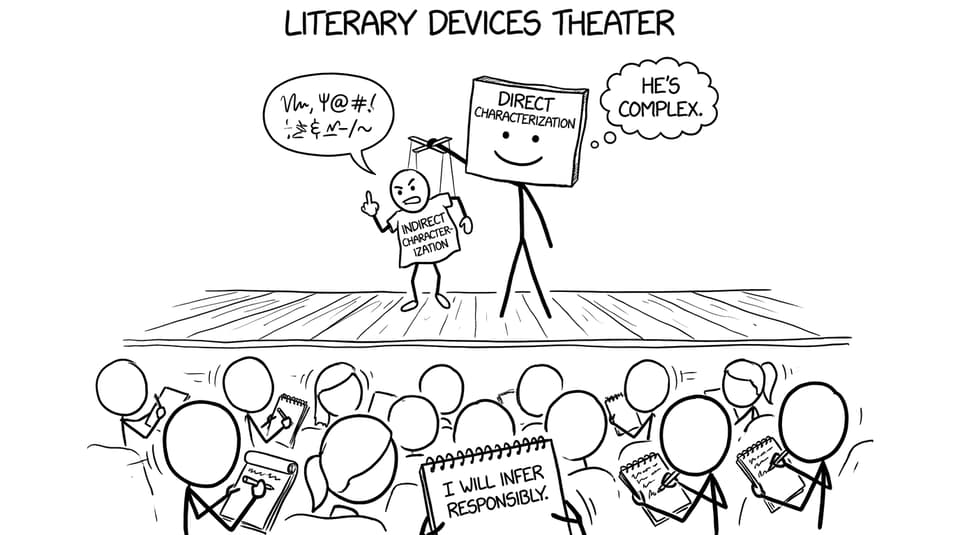
Decide whether the text uses more direct characterization or indirect characterization.
-
Track methods: dialogue, action, narration, description, silence, setting, symbolism.
-
Spot patterns (repeated images, recurring contradictions, consistent tone shifts).
-
Prove change (dynamic) or deliberate stagnation (static).
-
Link everything to theme + authorial purpose + context.
For broader exam strategy, pair this checklist with Mastering IB English Paper 1 and the Step-by-Step Guide to Revising IB English Paper 1.
What characterization means in IB English
Characterization is simply how writers make characters on the page (or stage). In IB English, you’re rewarded for explaining the mechanism.
Direct characterization
The narrator or another character tells you what someone is like. This can feel “easy,” but it’s not automatically trustworthy. The key IB English question: Who is describing, and why should we believe them?
Indirect characterization
You infer traits from behavior, dialogue, tone, contradictions, and symbols. This is where analysis becomes powerful because you’re interpreting, not copying.
For a technique refresher you can lean on in exam planning, see Notes for Characterization & Dialogue.
How to analyze a character (the method that actually scales)
This approach works across Paper 1, Paper 2, and the IO in IB English.
Start with role, not traits
Before you list adjectives, ask: what job does this character do in the text?
-
Are they a protagonist whose choices generate conflict?
-
A foil designed to sharpen someone else’s qualities?
-
A symbol that carries a theme (class, gender, power, identity)?
In Paper 2, role often becomes your comparative “bridge.” If you need structure support, use Structuring Your IB English Paper 2 Essay and How to Structure a Comparative Essay in IB Literature.
Track motivation, then pressure-test it
In high-scoring IB English, motivation is not a label (“ambition”). It is a force that gets tested.
Ask:
-
What does the character want, fear, or protect?
-
When do words and actions clash?
-
What “cost” do their choices create?
If you want a focused framework for this, Reading for Motive: Why Characters Do What They Do is a strong companion.
Use relationships to reveal power
Relationships are shortcuts to theme in IB English. The way a character speaks to someone lower status, avoids silence, interrupts, or performs politeness can expose ideology.
In essays, a useful sentence stem is:
Through the character’s interactions with ___, the writer exposes ___ (power dynamic/value) which reinforces ___ (theme).
Prove development (or deliberate lack of it)
Dynamic characters change through insight, trauma, or consequence. Static characters can be just as meaningful when they represent an unmovable social force or illusion.
To deepen this angle, Tips for Analyzing Character Development in IB English Literature gives a clean way to track turning points.
Anchor every claim in technique
This is the IB English differentiator. Each paragraph should connect:
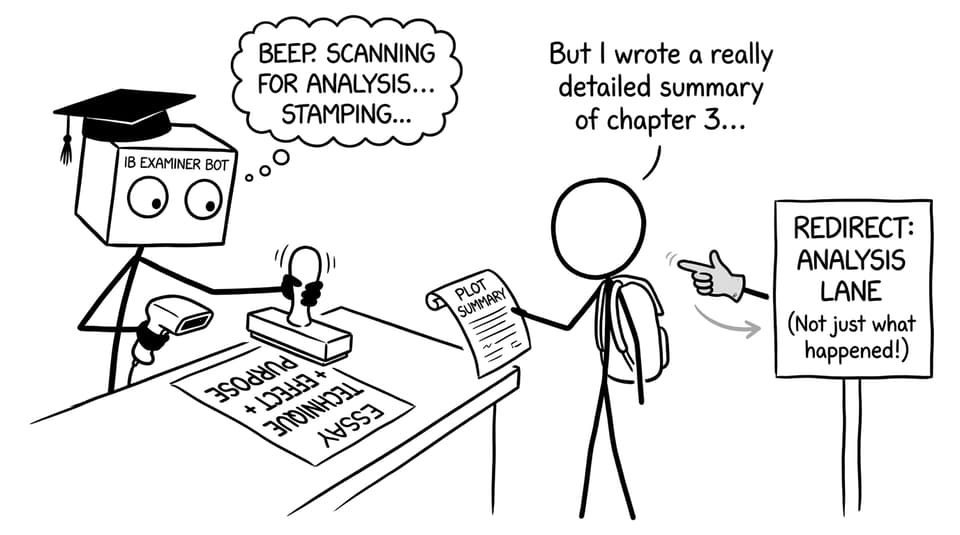
Technique (diction, imagery, narrative perspective, symbolism, structure) + Effect (reader/audience response) + Purpose (why it matters to theme).
For organization and clarity, keep Writing Effective Introductions and Conclusions in IB English Essays nearby while practicing.
Where character analysis shows up in Paper 1, Paper 2, and the IO
Character analysis is a scoring lever across IB English:
-
Paper 1: you infer character from language choices and perspective quickly. Use the Paper 1 tools inside IB English A Lang & Lit Resources.
-
Paper 2: you compare how two writers build characters to explore similar ideas.
-
Individual Oral: character becomes evidence for a global issue, especially through voice, tone, and representation. See How to Approach the IB English Individual Oral (IO) and the Comprehensive Guide to the IB Individual Oral (IO).
Closing: turn characters into evidence, not description
The calm secret of IB English is that character analysis becomes easy when you treat characters as evidence machines. Every choice they make, every silence, every image attached to them is a clue about what the writer believes matters.
If you want to practice this the efficient way, RevisionDojo gives you the full system: Questionbank prompts to drill characterization, Study Notes and Flashcards to lock in technique language, AI Chat to sharpen thesis statements, Grading tools to catch summary, Predicted Papers and Mock Exams for realistic timing, and the Coursework Library plus Tutors when you want human feedback on the same skills. Build the habit now, and IB English character analysis stops being a mystery and starts becoming your most dependable path to top bands.


