


If you have ever stared at your subject list at 1:00 a.m. and wondered whether IB Group 6 Arts is a “real” academic signal or just a colorful side quest, you are not alone. The worry usually sounds like this: Will universities take me less seriously if I pick an arts subject?
The calmer answer is that universities are not ranking you by vibes. They are looking for readiness. And IB Group 6 Arts can show readiness beautifully when it matches your course choice, your portfolio, and your overall academic profile.
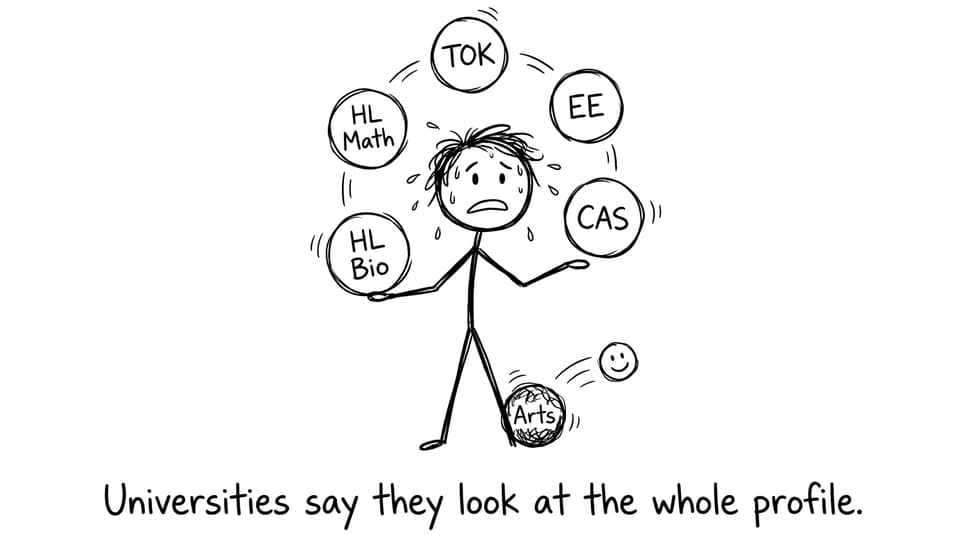
What counts most in admissions (quick checklist)
Use this as a fast filter when thinking about IB Group 6 Arts:
-
Prerequisites first: do you need specific HLs for your intended degree?
-
HL strength: are your Higher Levels coherent for your course?
-
Overall grades: consistency across six subjects still matters.
-
Evidence of fit: for creative degrees, your work (portfolio, performances, film projects) is often the loudest signal.
If you want a deeper look at your options inside Group 6, start with Choosing Your Group 6 Subject: A Comprehensive Guide.
Group 6 vs Groups 1-5: what universities typically prioritize
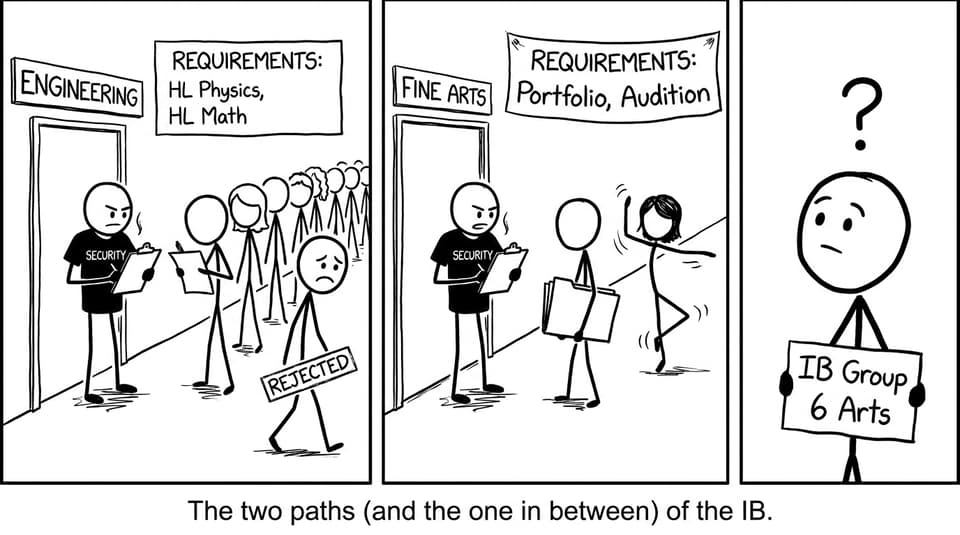
In most non-arts admissions contexts, universities place more weight on Groups 1-5 because those subjects are more likely to contain prerequisites and because HLs there map directly onto first-year degree demands.
That does not mean IB Group 6 Arts is ignored. It is usually treated as an elective signal: valuable, but rarely the deciding factor for entry into engineering, medicine, or economics.
To see this idea discussed from a different angle, compare how universities interpret levels in How Important Are HL Subjects Compared to SL Subjects?.
When IB Group 6 Arts can actively boost your application
IB Group 6 Arts matters more than students expect in three common situations:
You are applying to a creative degree
Fine Art, Film Production, Music Performance, Theatre, Design, and related courses often care less about which science you took and more about whether your work shows craft, ambition, and reflection. In these cases, the arts subject is not “extra”; it is aligned evidence.
If you are choosing between creative pathways, IB Film vs IB Theatre: Which Group 6 Subject Is Right for You? can help you think like an admissions reader.
You can show a serious body of work
A strong portfolio or performance record turns IB Group 6 Arts into proof of long-term discipline. Universities recognize sustained projects because they resemble real university work: planning, iteration, critique, and revision.
If you are aiming for top marks, pair your practice with Scoring in IB Group 6 Subjects: Strategies and Insights.
Your arts subject supports a “two-lane” story
Sometimes the arts is not your major, but it strengthens your narrative: architecture + Visual Arts, media studies + Film, psychology + Theatre, computer science + music tech interests. Done well, IB Group 6 Arts becomes a differentiator.
For the skills angle, see Can IB Group 6 Help Build Skills for Creative Careers?.
The substitution question: should you replace Group 6?
The IB lets many students replace Group 6 with another subject from Groups 1-5. This is not “better” or “worse”; it is strategic.
Replace IB Group 6 Arts when:
-
your target degree has strict prerequisites (common in STEM)
-
you need an extra science, humanities, or math to signal readiness
Keep IB Group 6 Arts when:
-
you are applying to arts-based programs
-
you will produce strong work and document it well
-
it protects your overall score by keeping your subject mix sustainable
For a grounded discussion of this choice, read Should You Take a Group 6 Subject or a Second Subject From Another Group in IB?.
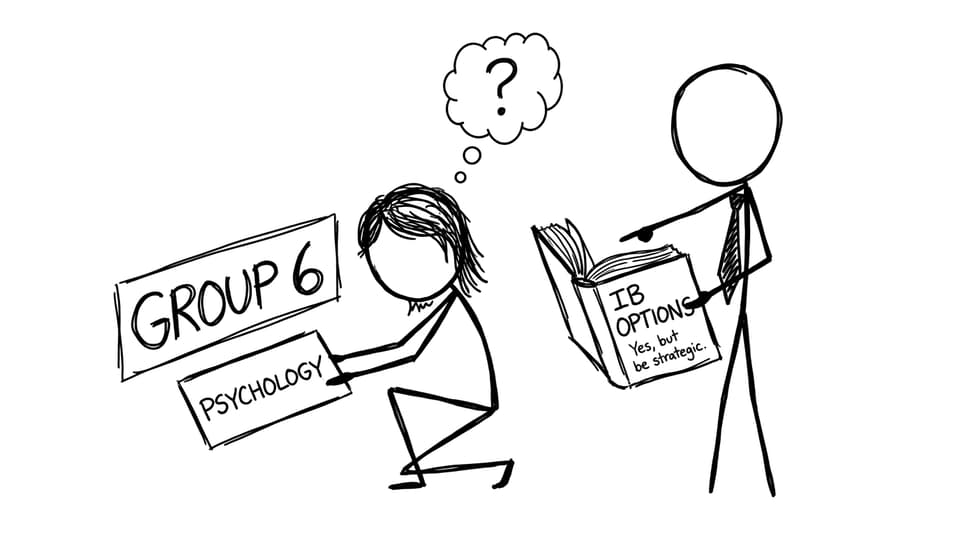
How to make universities take your arts subject seriously
The easiest mistake is to treat IB Group 6 Arts like a “break.” It can be joyful, yes. But it is also assessed, moderated, and judged against criteria.
Three practical moves:
-
Learn how the assessment actually works using Understanding Assessment in IB Group 6 Subjects.
-
Ask for precise, criterion-based critique with How to Get Feedback on Your IB Group 6 Work.
-
Plan your workload so arts work does not get squeezed by exam-heavy subjects. A simple weekly rhythm helps: one practical session, one reflection/editing session.
A final way to think about IB Group 6 Arts
Universities usually treat IB Group 6 Arts as an elective signal, unless you are applying to a creative degree, where it can become central evidence. Either way, the winning strategy is the same: meet prerequisites, build a coherent HL profile, and make sure your arts work shows real process, not last-minute polish.
If you want to tighten your plan before exams, RevisionDojo is built for exactly this mix of decisions and execution: use Study Notes to clarify criteria, Flashcards to keep concepts active, AI Chat to pressure-test your choices, and Grading tools to understand what “top band” work looks like. Then rehearse under time with Mock Exams and Predicted Papers, and fill gaps with the Questionbank. When you need human direction, RevisionDojo Tutors can help you turn effort into marks.
Your goal is not to defend IB Group 6 Arts. Your goal is to make it make sense.