



You can feel it in the room when predicted grades come up.
Someone gets quiet. Someone gets loud. Most people start doing math in their head like the number itself will change if they stare at it long enough.
For IB Design Technology, the anxiety can be sharper because the subject is half thinking-on-paper, half long-term making. When the work is spread over months, a predicted grade can feel… personal. But the truth is less emotional and more practical: teachers predict IB Design Technology grades by collecting evidence that you can repeatedly hit the assessment criteria under realistic conditions.
What a predicted grade is (and what it isn’t)
A predicted grade in IB Design Technology is a teacher’s best professional estimate of what you’re likely to achieve at the end of the course.
It is not:
-
A reward for effort
-
A promise
-
A “vibe check” of your potential
It is evidence-based judgement. Teachers are expected to be realistic because predictions influence university applications and internal school decisions. The grade is meant to reflect what you can do reliably, not what you might do on a perfect day.
If you want a grounded way to translate performance into outcomes, use the IB Grade Calculator to sanity-check what different mark ranges usually mean.
Quick checklist: what teachers usually use to predict IB Design Technology grades
Teachers typically pull from two main buckets:
-
IA evidence: quality of thinking, documentation, iteration, evaluation
-
Exam-style evidence: timed responses, command terms, scenario application
Then they apply a third filter that matters more than students expect: consistency over time.
The two pillars behind IB Design Technology predicted grades
IA progress: not polish, but proof
In IB Design Technology, the IA carries a lot of weight in how teachers feel about your ceiling because it shows sustained design thinking.
What raises predictions is not a glossy document. It’s visible reasoning:
-
A clear problem definition that feels real, not generic
-
Design requirements that are testable and clearly justified
-
Iteration that is explained (what changed, why it changed, what evidence forced the change)
-
Evaluation that uses results, not opinions
If you’re unsure what “good” looks like in practice, start with RevisionDojo’s Step-by-Step Guide to Writing a Winning IB Design Technology IA, then compare your draft to the rubric language using the IB Design Technology HL IA Grader. Those tools make your thinking legible, which is exactly what predicted grades rely on.
Exam-style performance: the reality check
Even if your IA is strong, teachers often cap a predicted grade if timed performance is weak.
In IB Design Technology, teachers look for:
-
Accurate use of command terms (analyse vs evaluate vs justify)
-
Answers that apply theory to the scenario (not just definitions)
-
Evaluation that weighs trade-offs and constraints
-
Structure: clear points, clear evidence, clear conclusion
A useful self-diagnosis is to practise the question types that appear most often, then review where your marks disappear. RevisionDojo’s IB Design Technology Resources hub is a good starting point, and the Design Technology Predicted Papers are ideal for building exam realism without guessing what to practise.
Why “I worked really hard” doesn’t move predicted grades much
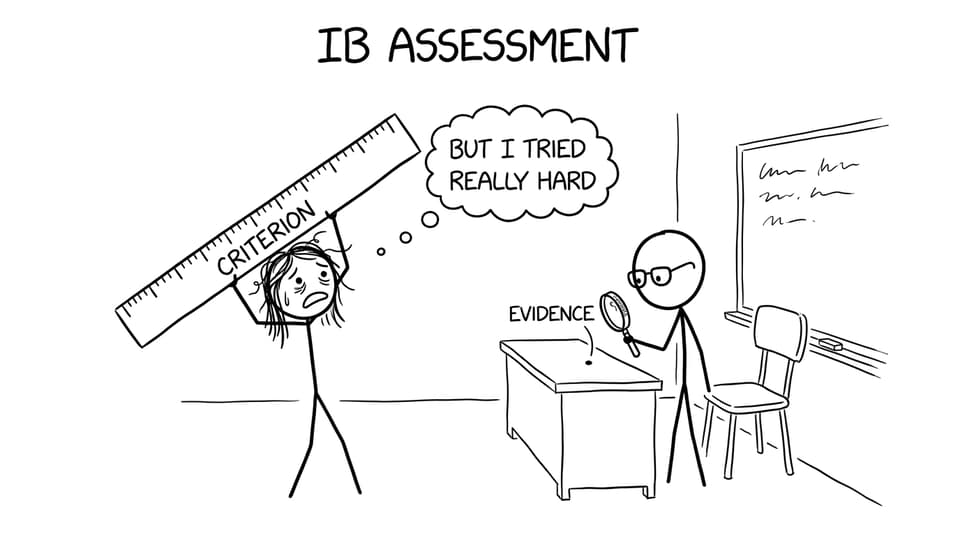
Teachers notice effort. They also like you. But predicted grades in IB Design Technology are anchored to criteria.
So the questions they’re silently answering are closer to:
-
Does this student consistently meet top-band descriptors?
-
Can they justify choices with evidence?
-
Do they evaluate limitations honestly and propose realistic improvements?
Effort matters only when it produces visible changes in the work. That’s why tools that create fast feedback loops help so much: RevisionDojo’s Questionbank, Study Notes, Flashcards, and AI Chat are basically an “evidence engine” you can run weekly.
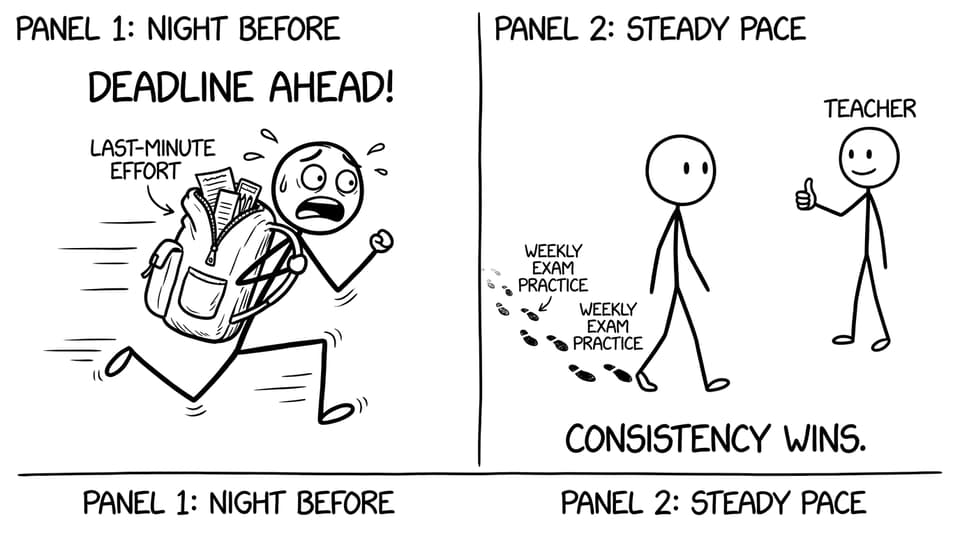
Consistency beats peaks (and teachers predict what repeats)
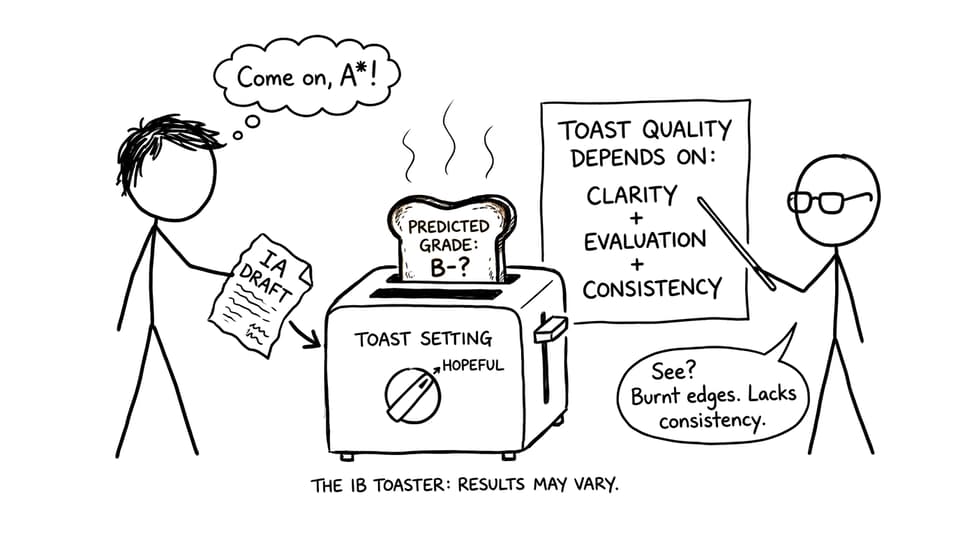
One great prototype photo, one brilliant evaluation paragraph, one strong test score: these are encouraging, but they are not a pattern.
Predictions in IB Design Technology usually rise when teachers can point to repeatable proof, like:
-
Similar marks across multiple timed tasks
-
An IA draft that improves in the same direction after feedback
-
Fewer “implicit leaps” (you explain your reasoning instead of assuming it’s obvious)
If you want a calm plan for building consistency, the article Best Study Strategies for IB Design Technology Students pairs well with How to Use RevisionDojo for IB Design Technology Success.
Common reasons your IB Design Technology prediction is lower than you expected
Most “surprise” predicted grades come from fixable gaps:
-
IA looks detailed, but requirements and evaluation are vague
-
Research is included, but it doesn’t change design decisions
-
Exam answers define terms but don’t apply them
-
Performance swings from week to week
For IA-specific fixes, What Counts as Effective User Research in IB Design Technology is one of the fastest ways to turn “lots of info” into “usable evidence.”
Closing: make your predicted grade predictable
Predicted grades feel mysterious when you treat them like a verdict. They become predictable when you treat them like a trail of evidence.
In IB Design Technology, teachers are essentially asking: Can this student demonstrate clear thinking, honest evaluation, and consistent performance when it counts?
If you want to raise that confidence, build an evidence loop with RevisionDojo: Study Notes for clarity, Flashcards for retention, Questionbank for exam-style practice, AI Chat for fast explanations, Predicted Papers and Mock Exams for realism, plus Grading tools, the Coursework Library, and Tutors when you need expert feedback. The goal is simple: make your strengths repeatable, and your teacher’s prediction has only one reasonable direction to go.