


States don’t usually announce, “Today we will protect human rights.” They pass a law. Fund a service. Appoint a judge. Or quietly expand surveillance and call it “security.” In IB Global Politics, that messy gap between principle and practice is the point: states are the primary duty-bearers, and rights only become real when the state chooses (and is forced) to act.
This article breaks down how states protect human rights in ways you can directly use in IB Global Politics exam responses.
Quick checklist: what to mention in IB Global Politics answers
-
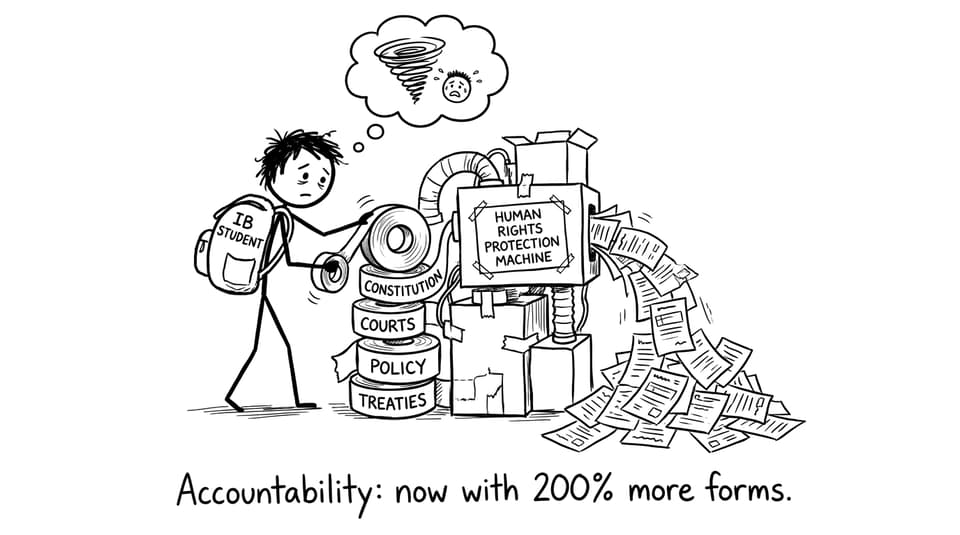
Domestic law + constitution (codified rights, legal remedies)
-
Independent institutions (courts, commissions, ombudsman)
-
Public policy (education, healthcare, welfare, equal access)
-
International commitments (treaties, reporting, review)
-
Evaluation (capacity, political will, security trade-offs)
For definitions and the bigger “why it matters,” see What Are Human Rights in Global Politics?.
Domestic law and constitutions: where rights become enforceable
In IB Global Politics, a strong starting claim is simple: rights protection begins with codification. Constitutions and domestic legislation can guarantee civil and political rights (speech, due process, equality before the law) and also support economic and social rights (education, health).
But examiners reward more than listing. Explain how law protects: it creates standards, procedures, and consequences. It also gives citizens a route to challenge abuses. For deeper coverage of codification and protection mechanisms, use Rights and justice codification notes.
Independent institutions: courts, watchdogs, and real accountability
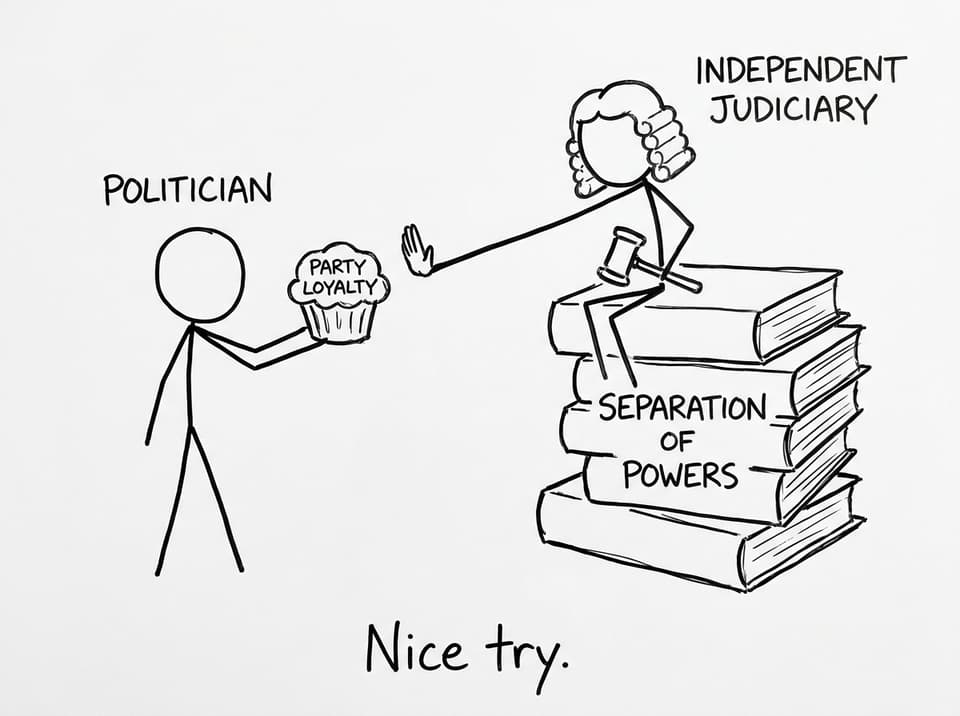
A constitution is only paper unless institutions can enforce it. In IB Global Politics, highlight how an independent judiciary enables citizens to challenge the state without political interference. Add other oversight bodies: national human rights commissions, ombudsmen, electoral authorities, and auditing institutions.
A high-scoring twist: institutions also shape legitimacy. When courts are credible, rights claims feel possible. When courts are captured, rights exist mostly as slogans. RevisionDojo’s key concepts of rights and justice notes help you connect institutions to legitimacy and justice.
Public policy: protecting rights by delivering services
Some rights require the state to do things, not just “not interfere.” In IB Global Politics, this is where you connect human rights to governance: budgets, access, and outcomes.
Education policy, healthcare systems, anti-discrimination programs, and housing strategy can turn rights into daily reality. Good evaluation asks: Who benefits? Are services equal across regions and groups? Are there accountability mechanisms when policy fails? These points let you move beyond idealism into evidence-based analysis.
International human rights systems: pressure, standards, and limits
Treaties and global monitoring create shared standards and reputational pressure. In IB Global Politics, you can discuss signing vs ratifying, reporting obligations, and how international scrutiny can push domestic reform.
But you should also judge limits: international law often lacks direct enforcement. Implementation still depends on domestic capacity and political will. For the debate angle, Are Human Rights Dominated by Western Values? can give you evaluative language about power and selective enforcement.
The hard part: security, emergencies, and trade-offs
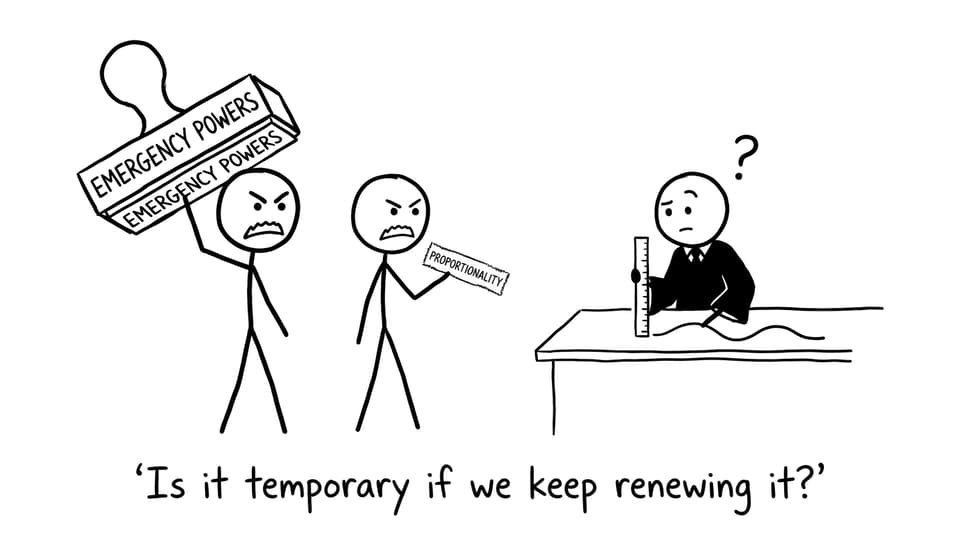
States often justify restrictions using national security, public order, or emergencies. In IB Global Politics, don’t treat this as automatically evil or automatically necessary. Instead, weigh it.
Ask: Are restrictions legal, necessary, and proportionate? Are they time-limited? Is there oversight? This is the difference between a descriptive answer and an analytical one.
How to revise this fast with RevisionDojo
If you want this topic to feel automatic in exam conditions, build a loop:
-
Read the core module: Understanding Human Rights hub
-
Drill terminology with Understanding Human Rights flashcards
-
Practice structured responses in the Rights and Justice Questionbank
RevisionDojo also supports the rest of your IB Global Politics workflow: Study Notes when you’re building foundations, Flashcards for recall, AI Chat when you’re stuck, and Grading tools for tightening evaluation.

Conclusion: turn “mechanisms” into judgement
In IB Global Politics, the best answers show how states protect human rights through law, institutions, policy, and international engagement, then judge effectiveness under real constraints. If you want to write that kind of response quickly, build practice around the same four pillars until they feel like second nature.
Use RevisionDojo’s IB Global Politics resources to make that repetition efficient: Questionbank for exam-style practice, Study Notes for structure, Flashcards for definitions, and AI feedback to sharpen evaluation. When your argument is clear, rights stop being abstract and start reading like politics.