



You can usually tell what kind of political system a state has by watching how it says “yes.”
Some governments arrive at “yes” slowly, with minutes, hearings, and kompromat-free PowerPoints. Others arrive at “yes” instantly, because one person can make the call, and everyone else’s job is to make it look inevitable. That difference is not just domestic trivia. In IB Global Politics, it is one of the cleanest ways to explain why states facing the same global problem choose wildly different paths.
In other words: political systems don’t just shape politics at home. They shape global decision-making.
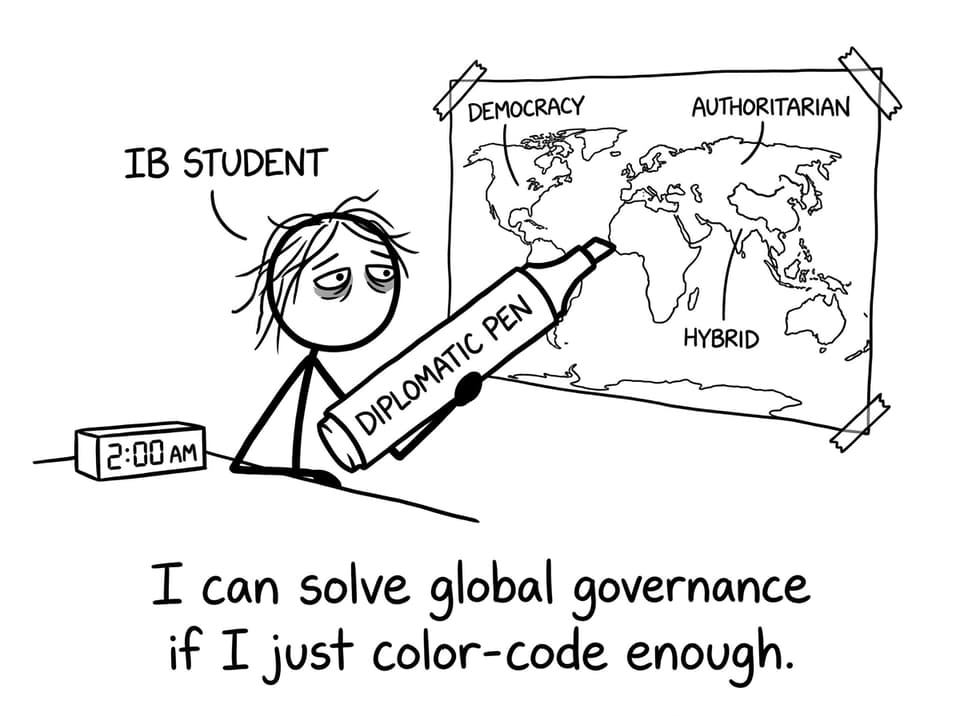
Quick checklist: what to look for in IB Global Politics
Use this mini-framework when an exam question asks why a state behaves the way it does internationally:
-
Who holds authority? (leader, cabinet, parliament, military, party)
-
What constraints exist? (elections, courts, media, elites, constitution)
-
What incentives dominate? (public approval vs regime survival)
-
How strong is the bureaucracy? (capacity to implement commitments)
-
How does crisis decision-making work? (speed vs accountability)
To practise applying this to real prompts, start with the IB Global Politics resources hub and pull a few timed prompts from the Questionbank.
Who decides? Authority and accountability in IB Global Politics
A political system is the structure through which power is organised and exercised: institutions, leadership selection, and the rules of decision-making. In IB Global Politics, “who decides” is often the hidden variable behind foreign policy.
Democratic systems
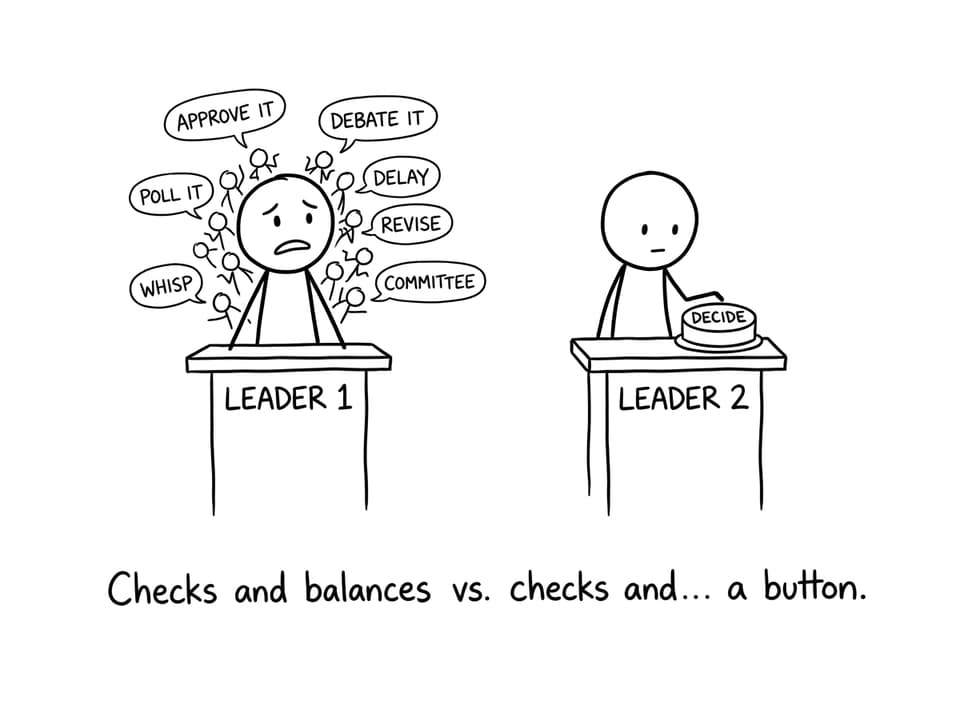
In many democracies, authority is distributed across institutions. Leaders face oversight from legislatures, courts, media, and civil society. That means global decisions can be slower, more debated, and more exposed to public opinion. Choices about war, sanctions, migration policy, or climate commitments often involve political bargaining and reputational costs.
This is why democracies may prioritize legitimacy and rule-based cooperation: those values also play well domestically, where accountability matters.
Authoritarian systems
Authoritarian systems concentrate authority within a small group or a single leader. With fewer formal checks, decisions can be fast and tightly coordinated. But speed comes with trade-offs: lower transparency, higher unpredictability, and decisions shaped by elite interests or regime survival rather than voter approval.
In exam writing, avoid simplistic claims like “authoritarian states are always more effective.” A higher-scoring IB Global Politics answer evaluates what is gained (speed, cohesion) and what is risked (rights, quality control, legitimacy).
What gets prioritized? Values, ideology, and policy agendas
Political systems influence what governments treat as “non-negotiable.”
-
Some systems emphasize human rights language and multilateralism because leaders need domestic legitimacy and international reputations.
-
Other systems stress sovereignty and non-interference because external scrutiny can threaten regime stability.
This is why states vote differently in international institutions and negotiate treaties with different red lines. If you need clean concept definitions to anchor your paragraphs, RevisionDojo’s notes on Framing Global Politics help you connect “power” and “stakeholders” to real decisions.
Can a state follow through? Institutional capacity and credibility
Global influence is not only about making promises. It is about implementing them.
States with stable institutions, professional bureaucracies, and predictable policy processes tend to comply more consistently with international agreements. That reliability builds credibility, which quietly increases bargaining power.
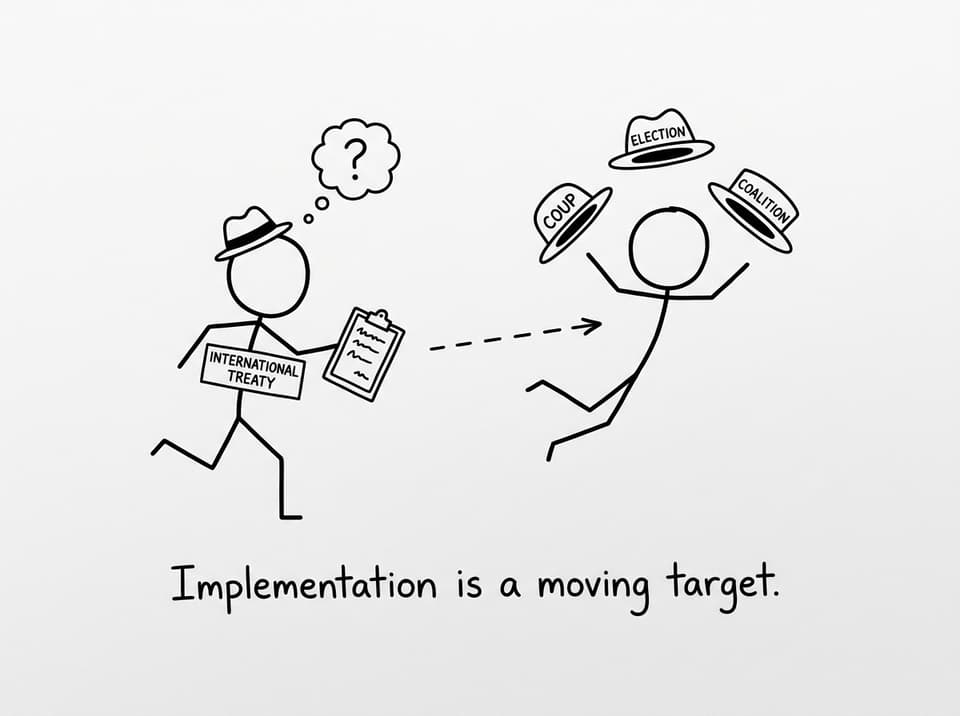
By contrast, weak or unstable political systems may struggle to deliver on commitments because leadership changes, corruption, or institutional fragmentation disrupt policy continuity. In IB Global Politics, this is a strong evaluation angle: capacity can matter as much as intentions.
If you want examples that fit the syllabus themes, explore RevisionDojo topic hubs like Peace and Conflict and Development and Sustainability.
How do systems respond under pressure? Crisis decision-making
Global crises reveal political systems the way stress reveals character.
Democracies can face delays because debate is part of the machinery. Opposition parties, courts, and media scrutiny may slow action, but they can also improve decision quality and reduce abuses.
Authoritarian systems may act quickly, mobilize resources fast, and control messaging. But fewer checks can mean policy mistakes scale faster, and rights costs can be higher. The best IB Global Politics responses make this a balanced judgement rather than a moral slogan.
Exam boost: how to turn this into marks
In Paper 2 and Paper 3 style questions, examiners reward structure and evaluation.
Try this simple paragraph formula:
-
Claim: Political system shapes decision speed/legitimacy.
-
Concept link: sovereignty, legitimacy, power, accountability.
-
Example: a relevant state response to a global challenge.
-
Counterclaim: acknowledge exceptions or hybrid systems.
-
Judgement: weigh which factor mattered more and why.
For essay structure support, see How to Structure IB Global Politics Paper 2 Essays and RevisionDojo’s IB Global Politics Paper 2 Guide. HL students can build stimulus-to-evaluation technique using the IB Global Politics Paper 3 Guide Notes.
Conclusion: your IB Global Politics takeaway
When a state makes a global decision, it is rarely just “national interest” floating in the air. It is national interest filtered through a political system: who holds authority, what constraints bite, what values are rewarded, and whether the state can implement what it promises.
If you want to practise this skill efficiently, build a tight revision loop on RevisionDojo: review Study Notes, drill the Questionbank, lock in definitions with Flashcards, and pressure-test your timing with IB Global Politics Predicted Papers or the broader Predicted Papers hub. When you get stuck, use AI Chat and the grading tools to turn vague feedback into specific upgrades. That’s how IB Global Politics moves from “content I read” to “analysis I can score with.”