


International courts rarely look like movie scenes. Most of the time, justice moves slowly: documents, jurisdiction arguments, procedural rules, and long waits. But for IB Global Politics students, that slow machinery is the point. International courts promote global justice not by fixing the world overnight, but by building a system where power is supposed to answer to law.
A quick IB Global Politics checklist: what courts actually do
Use this as a fast planning frame in IB Global Politics essays:
-
Accountability: prosecute or judge violations of international law
-
Clarify norms: interpret treaties and legal principles
-
Deterrence: raise the expected cost of atrocities or illegal actions
-
Legitimacy: create transparent records, recognition, and procedural fairness
-
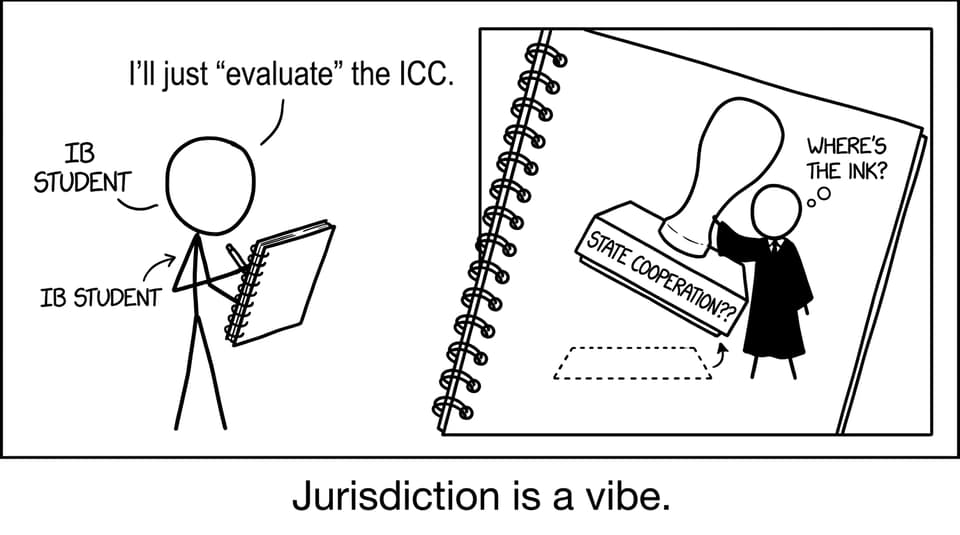
Limits: dependence on state cooperation, jurisdiction gaps, and accusations of selectivity
If you want this framed directly to your syllabus theme, anchor it to Rights and Justice using RevisionDojo’s Debates on rights and justice.
Accountability: making “impunity” harder to defend
In IB Global Politics, global justice is tied to the idea that individuals and states should not be untouchable just because they are powerful. International courts and tribunals aim to reduce impunity by investigating and prosecuting serious crimes such as war crimes and crimes against humanity.
Even when arrests or enforcement are imperfect, accountability still matters politically. It signals that leaders can be named, charged, and judged against legal standards that sit above national interests. That changes incentives, reputations, and diplomatic costs.
To revise the wider human rights framework behind this, pair your court analysis with RevisionDojo’s explainer: What Are Human Rights in Global Politics?.
Clarifying international law: courts as norm-builders
A quieter form of justice is consistency. International courts help by developing and clarifying international law through legal reasoning, judgments, and interpretations of treaties. In IB Global Politics, that’s useful because it turns abstract principles into standards you can evaluate.
When rules are clearer, it becomes easier to argue that similar actions should be treated similarly. That supports fairness, predictability, and the idea that law can constrain state behavior.
For concept language (procedural vs retributive vs restorative justice), RevisionDojo’s Concepts of rights and justice notes give you sharp definitions you can lift into intros and topic sentences.
Deterrence: justice that happens before the crime
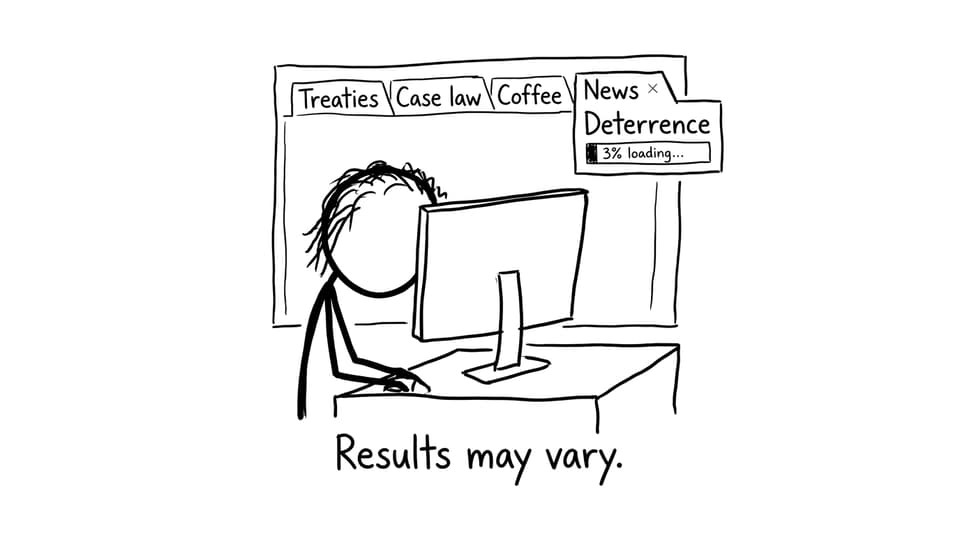
Deterrence is tricky to prove, but it’s still central in IB Global Politics evaluation. The existence of international courts can discourage violations by increasing the perceived cost of committing crimes that might otherwise be hidden behind borders.
In ongoing conflict, deterrence may be weak. But in the long run, the threat of prosecution can shape calculations: travel restrictions, diplomatic isolation, frozen assets, and historical record. Deterrence is rarely perfect, but it reinforces a norm: violations may have consequences beyond the state.
Legitimacy and victim recognition: the power of the record
Courts also promote justice through legitimacy. When proceedings follow transparent rules and evidence standards, they show that justice is grounded in law rather than pure political power. For victims, that can mean something concrete: recognition, testimony, and an official record of wrongdoing.
In IB Global Politics, you can call this symbolic justice, procedural justice, or legitimacy-building. It often matters even when material outcomes (like arrests) are limited.
To connect this to “mechanisms” in the course, see RevisionDojo’s Mechanisms Addressing Human Rights Violations and Injustices.
The limits: power still shapes who shows up to court
International courts face major constraints that should be explicitly evaluated in IB Global Politics essays:
-
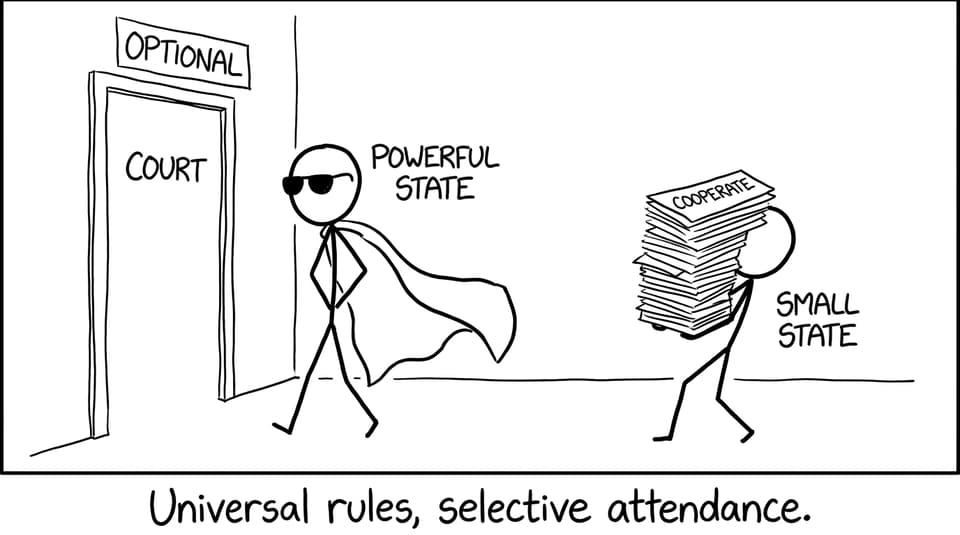
State cooperation: courts often rely on states for arrests and evidence
-
Jurisdiction: not all states accept a court’s authority
-
Selectivity critiques: weaker actors may face prosecution more often than powerful ones
This is where top-mark answers live: acknowledging what courts can achieve while showing how sovereignty and power can narrow that achievement.
How to turn this into exam-ready IB Global Politics evaluation
A strong paragraph often sounds like this: international courts promote global justice by strengthening accountability and legal norms; however, their impact is constrained by enforcement and political selectivity.
To practise writing that balance under time pressure, use RevisionDojo’s IB Global Politics Rights and Justice Questionbank and tighten structure using the Paper 2 Guide notes. If you need a full revision system (notes, flashcards, practice, and planning), start at Global Politics - IB Resources.
Conclusion: justice is built in constraints, not in perfection
International courts promote global justice by pushing accountability into a world that often prefers silence, by clarifying international law, by attempting deterrence, and by giving legitimacy to the idea that victims deserve recognition. But IB Global Politics also asks you to notice the ceiling: without cooperation and consistent enforcement, justice can become uneven.
If you want to turn this topic into marks, RevisionDojo is the cleanest way to practise it: use Study Notes and Flashcards to lock in concepts, the Questionbank and Mock Exams to build speed, AI Chat and Grading tools to refine evaluation, Predicted Papers for focused practice, and the Coursework Library plus Tutors when you need guided feedback. In IB Global Politics, global justice is an argument you build; RevisionDojo helps you build it well.