

Balancing IB CAS with academics often looks easy from the outside. Then the calendar fills up: an evening rehearsal, a weekend service event, a science lab report, and a math test that somehow arrived early.
For many IB students preparing for exams, the stress isn’t that they’re doing “too much.” It’s that everything feels important at the same time. And for parents, the hardest part is knowing how to help without turning into a second CAS coordinator.
This guide is built for that exact moment: practical ways to support your teen so IB CAS stays meaningful, academics stay steady, and exam prep doesn’t become a nightly crisis.
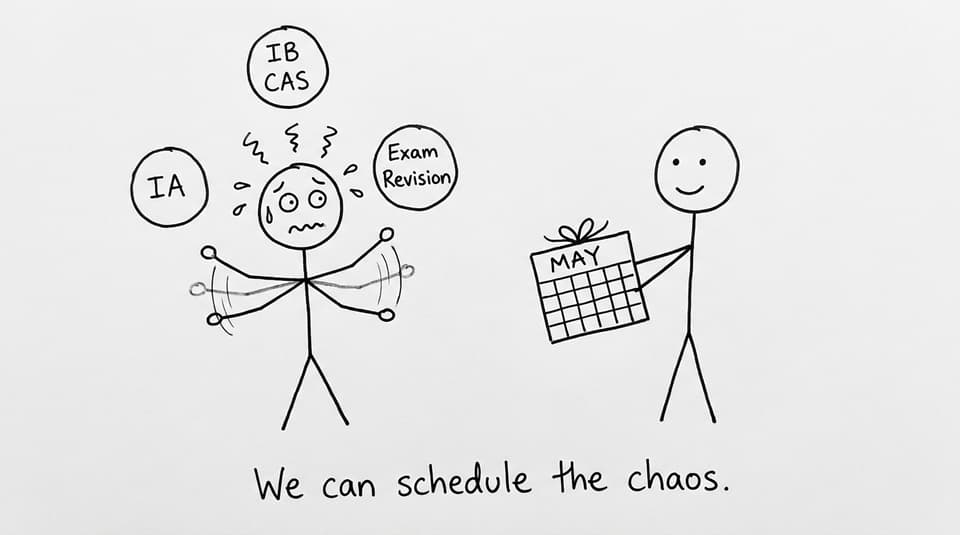
Quick checklist: helping your teen balance IB CAS and academics
-
Choose IB CAS experiences that are sustainable, not performative.
-
Put CAS into a weekly routine (same days, same times) to reduce decision fatigue.
-
Keep reflections small and frequent (two minutes beats two hours).
-
Rebalance during high-pressure weeks (IAs, mock season, exam blocks).
-
Use one “single source of truth” for study planning (RevisionDojo + one calendar).
If your teen needs an exam workflow that fits around CAS, the calmest starting point is building a repeatable loop using RevisionDojo’s RevisionDojo App for IB exam prep.
Why IB CAS matters (and why it feels like it clashes)
At its best, IB CAS is the part of the Diploma where students remember they’re a person, not a grade-report. It builds the softer skills that exams quietly reward: consistency, self-management, teamwork, leadership, and the ability to show up even when motivation dips.
But the clash is real because CAS competes for the same limited resource academics need: attention. The solution is not to “try harder.” It’s to reduce friction:
-
fewer activities, done longer
-
fewer last-minute reflections
-
fewer chaotic weeks where everything is improvised
Parents can be powerful here, not by managing IB CAS for their teen, but by helping them design a life that doesn’t require constant emergency decisions.
Encourage the right CAS choices (the sustainable ones)
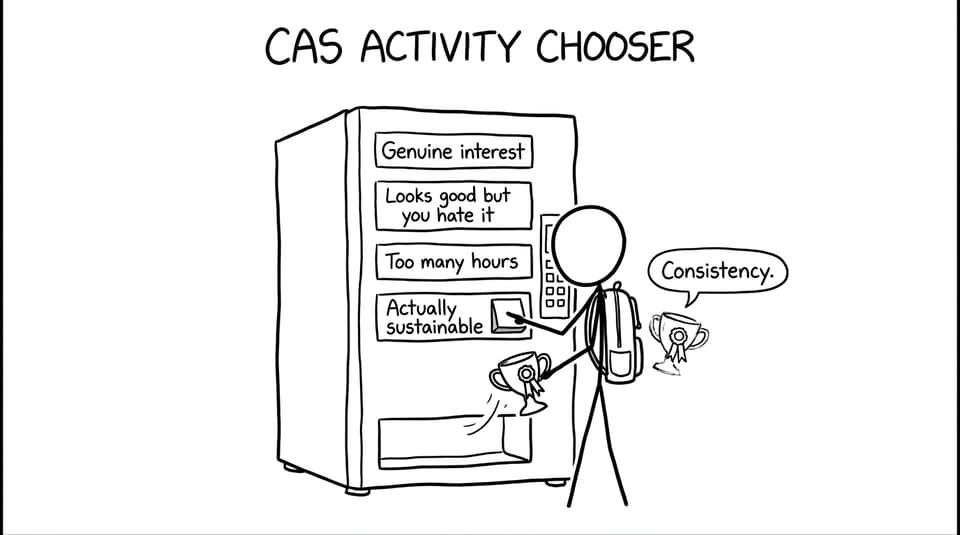
A useful rule: the best IB CAS choice is the one your child can still do during a normal stressful week.
That usually means:
-
One anchor activity they genuinely enjoy (sport, music, art, coding, debate)
-
One service commitment that’s realistic (tutoring, community support, local projects)
-
A CAS project that’s collaborative and planned early, not rushed later
If your teen is unsure what qualifies, share this clear breakdown: What counts as a CAS project vs. a CAS experience?
The trap to avoid is “resume CAS” -- activities chosen because they sound impressive, not because they’re sustainable. Those are the first to collapse when exams approach, and the stress cost is high.
Make time visible: planning that respects exam reality
Most students don’t fail IB CAS because they’re lazy. They fail it because the work becomes invisible until the deadline is close.
Here’s a parent-friendly planning structure that works:
-
Weekly CAS block: 2--4 hours total across the week, scheduled like a class.
-
Weekly reflection block: 10 minutes, same day each week.
-
Exam-season adjustment: reduce CAS intensity temporarily, but keep consistency.
A key mindset shift: during exam preparation, protect your teen’s “deep work” hours. CAS can live in the edges of the week: shorter sessions, predictable timing, and fewer travel-heavy commitments.
To help your teen keep revision efficient (so CAS doesn’t feel like the reason they’re behind), encourage an active-recall approach: How to Study for IB Exams Without Burning Out.
Solve reflections with micro-habits (not big willpower)
Reflections are where IB CAS becomes quietly stressful. Students often leave them until they’re tired, busy, and guilty -- which is the worst mental state for thoughtful writing.
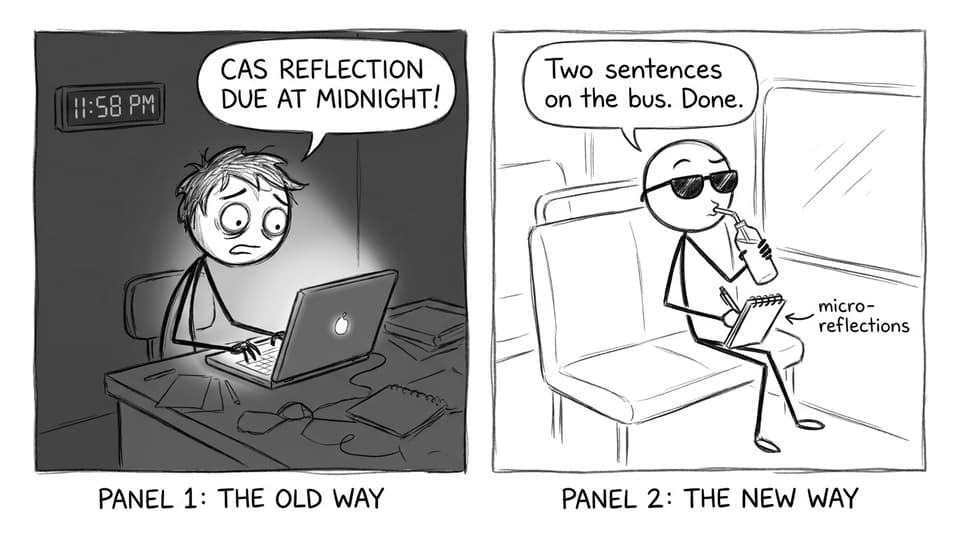
A better system is “micro-reflections”:
-
right after an activity, write two sentences
-
one sentence: what happened
-
one sentence: what changed (skill, mindset, challenge, collaboration)
If your teen needs prompts and examples that actually sound like a real student, point them to: 10 tips to write a CAS reflection that stands out.
Use RevisionDojo to protect academic momentum while CAS continues
When IB CAS is active, the academic risk isn’t “less time.” It’s fragmented time. Students do a little revision, get interrupted, then restart from zero.
RevisionDojo helps students keep momentum because the study loop is fast:
-
Study Notes to clarify one concept quickly
-
Flashcards for daily recall (small, consistent sessions)
-
Questionbank for exam-style practice and immediate feedback
-
AI Chat when they’re stuck and don’t want to waste an hour
-
Grading tools to understand how marks are actually awarded
-
Mock Exams to build stamina
-
Predicted Papers to rehearse full-paper decision-making under time
-
Coursework Library to reduce background stress from IAs and write-ups
-
Tutors when your teen needs human strategy, not another video
A good link to share with your teen (especially if they’re panicking about time) is: IB exams without pausing your life.
And if they’re entering the final stretch, this is a steady plan: IB: the last 2 weeks before exams (what matters).
Closing: the goal is balance that lasts
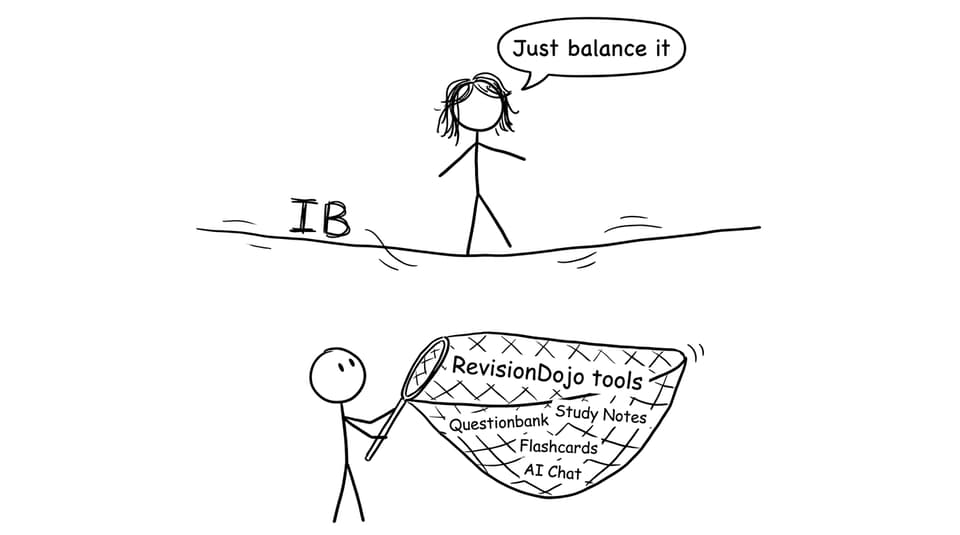
Your child doesn’t need you to “solve” IB CAS. They need you to help them make it livable: fewer frantic choices, more consistent routines, and a study system that still works on a busy week.
If you want to reduce the pressure immediately, help your teen build one simple rhythm: consistent IB CAS commitments, small reflections, and exam prep powered by RevisionDojo’s Study Notes, Flashcards, Questionbank, AI Chat, Mock Exams, Predicted Papers, and Grading tools.
When CAS and academics stop fighting for attention, your teen gets something rarer than productivity: they get steadiness. And steadiness is what carries students through exams.