
The quiet engineering inside a leaf
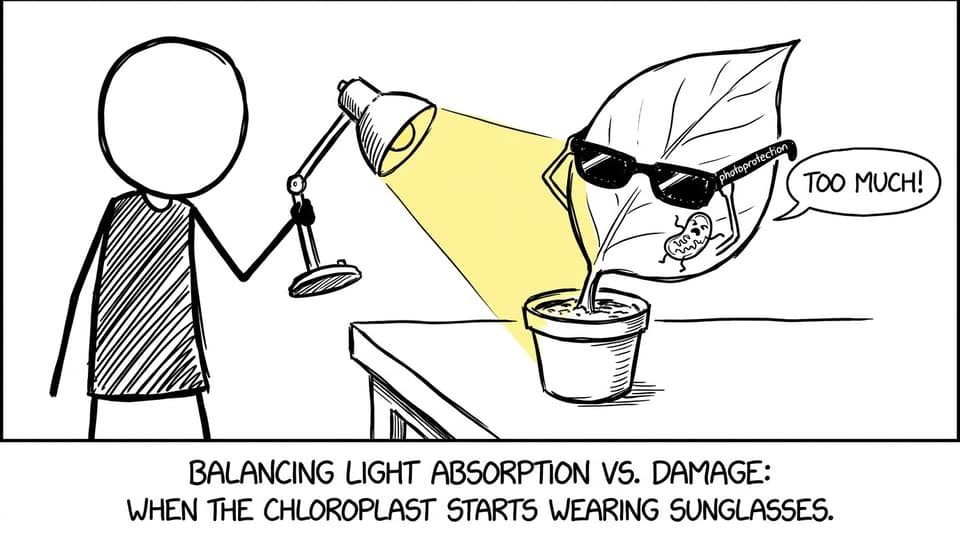
If you have ever revised IB Biology at night under a desk lamp, you have already met the central problem chloroplasts solve: light is precious, unpredictable, and sometimes overwhelming. Plants cannot chase sunlight, so chloroplasts do the next best thing. They build an interior architecture that catches photons efficiently, channels that energy quickly, and protects itself when the light gets too intense.
That “structure matches function” logic is exactly what IB examiners love. And photosynthesis questions often reward students who can link a named structure (like a granum) to a clear advantage (like increased membrane surface area).
Quick checklist for exam answers
When a question asks how chloroplasts optimize light absorption in IB Biology, aim to mention:
-
Thylakoid membranes provide large surface area for pigments and electron transport chains
-
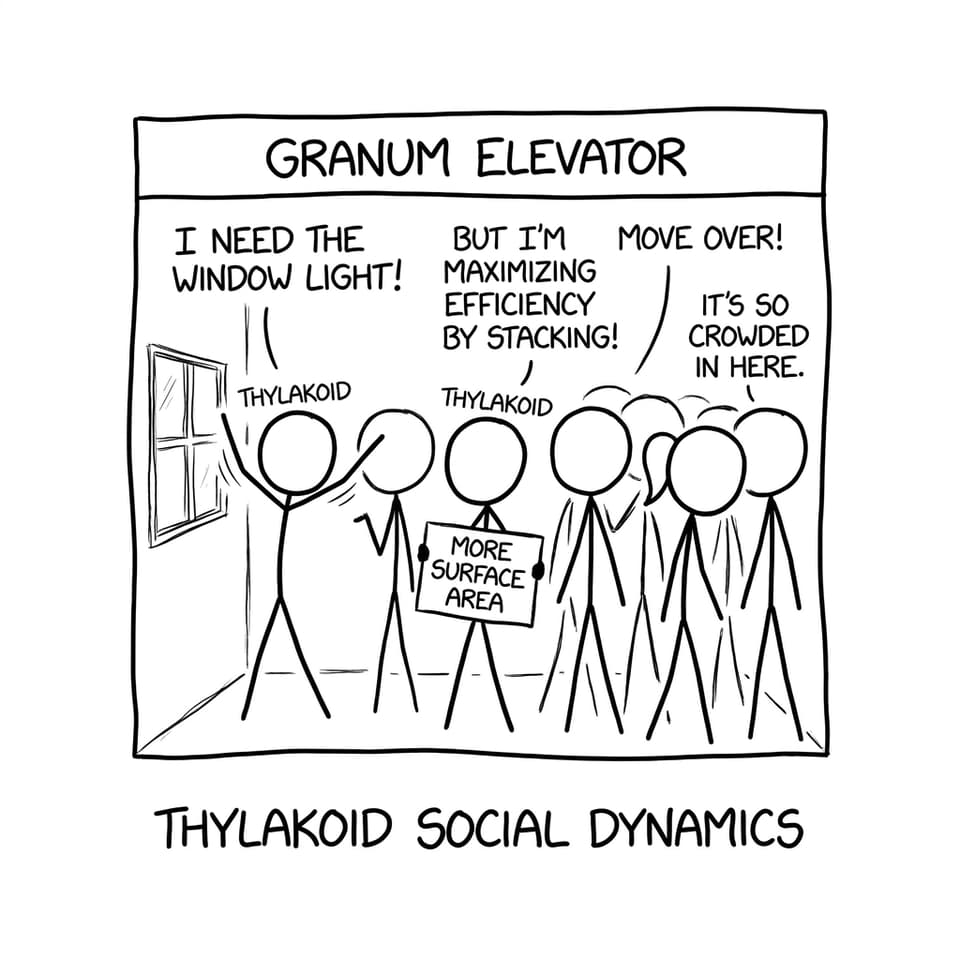
Grana (stacks) pack more light-harvesting membrane into a small volume
-
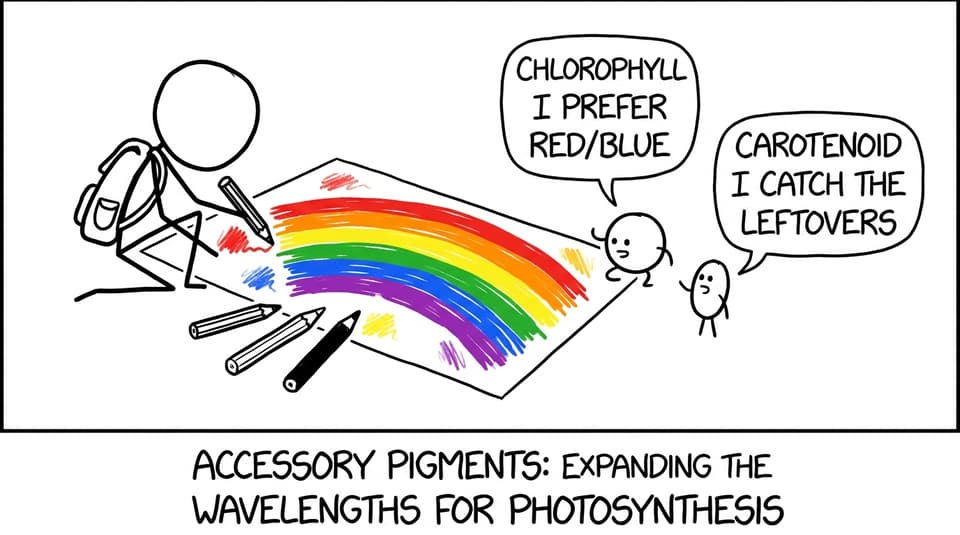
Accessory pigments widen the range of wavelengths absorbed
-
Photosystems funnel energy to reaction centers efficiently
-
Thylakoid lumen helps build a proton gradient quickly for ATP synthesis
-
Chloroplast movement reduces damage in high light and boosts capture in low light
For topic-aligned revision, use C1.3 Photosynthesis and the connected C1.3 Lessons.
Thylakoids: where surface area becomes strategy
The main light-capturing “hardware” sits in the thylakoid membrane. This is where chlorophyll, accessory pigments, photosystems, and electron carriers are embedded. In IB Biology, you can frame thylakoids as a surface-area solution: more membrane means more pigment-protein complexes, which means more photons can be absorbed at once.
RevisionDojo covers this structure-to-function link directly in B2.2.5 Adaptations of the chloroplast for photosynthesis (HL).
Grana: stacking membranes to harvest more light
Thylakoids are stacked into grana. The payoff is density: stacking allows the chloroplast to fit a lot of light-absorbing membrane into a tight organelle. That compact arrangement also keeps components of the light reactions close together, supporting efficient energy transfer and electron flow.
If you want to practice writing this as an exam sentence, drill questions in the 8.3 Photosynthesis Questionbank or the more targeted C1.3 Photosynthesis Questionbank (SL/HL). RevisionDojo’s Questionbank plus AI Chat feedback is a strong combo for improving phrasing fast.
Pigments and photosystems: widening the net
Chloroplasts do not rely on chlorophyll a alone. Accessory pigments (like chlorophyll b and carotenoids) absorb additional wavelengths, expanding the usable range of light. In IB Biology, the high-yield wording is simple: accessory pigments broaden the absorption spectrum and transfer excitation energy toward reaction centers.
Photosystems organize these pigments into antenna complexes that “funnel” energy efficiently. For HL depth, see C1.3.9 Photosystems (HL) Notes.
Lumen and gradients: a small space with a big advantage
Optimization is not only about catching light; it is also about converting it quickly into usable chemical energy. The thylakoid lumen has a small volume, which helps a proton gradient build rapidly during the light reactions. A steep gradient powers ATP synthase, linking light capture to ATP production.
If chemiosmosis feels fuzzy, revise with C1.3.12 ATP production by chemiosmosis in thylakoids (HL).
Bring it back to your IB Biology marks
Chloroplasts optimize light absorption through smart geometry (thylakoids and grana), smart chemistry (multiple pigments in photosystems), and smart physics (gradients in a small lumen). If you can state each structure and name its advantage, you will write the kind of IB Biology answer that reads like the markscheme.
To lock it in, revise with RevisionDojo’s Study Notes, Flashcards, and AI Chat, then test yourself in the Questionbank and build confidence with Predicted Papers and Mock Exams. Start with B2.2.5 Adaptations of the chloroplast for photosynthesis (HL) and finish with timed practice in the C1.3 Photosynthesis Questionbank (SL/HL).