Muscle contraction sounds dramatic, but at the microscopic level it’s closer to a well-rehearsed routine: tiny protein “hands” grab, pull, let go, and reset. If you’re revising IB Biology, this is one of those topics that feels simple until an exam question asks for the exact role of calcium and ATP.
The big idea (IB Biology in one sentence)
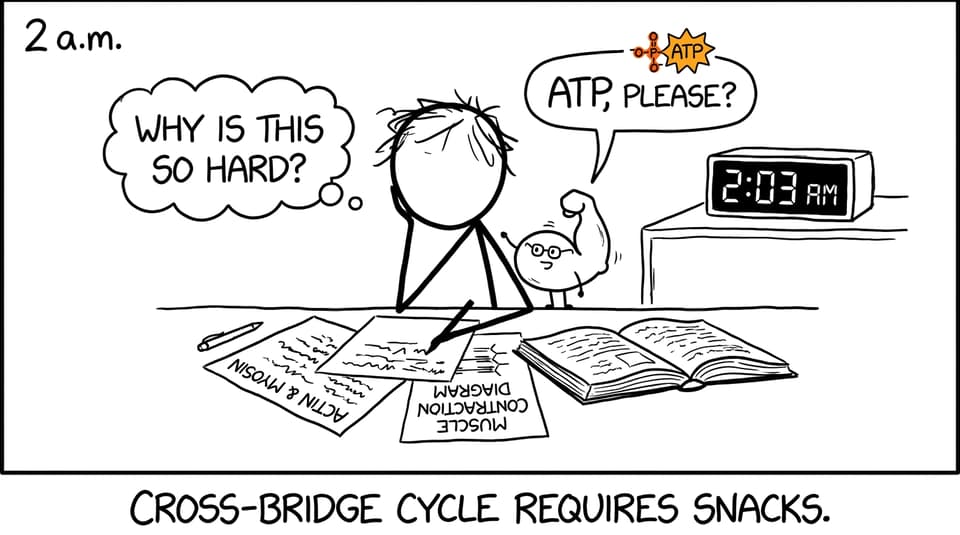
In IB Biology, muscle contraction is explained by the sliding filament model: actin (thin filaments) and myosin (thick filaments) slide past each other inside a sarcomere, shortening the sarcomere without the filaments themselves changing length.
A great place to anchor the whole chapter is RevisionDojo’s hub for the topic: IB Biology B3.3 Muscle and Motility.
Sarcomeres: where the force is built
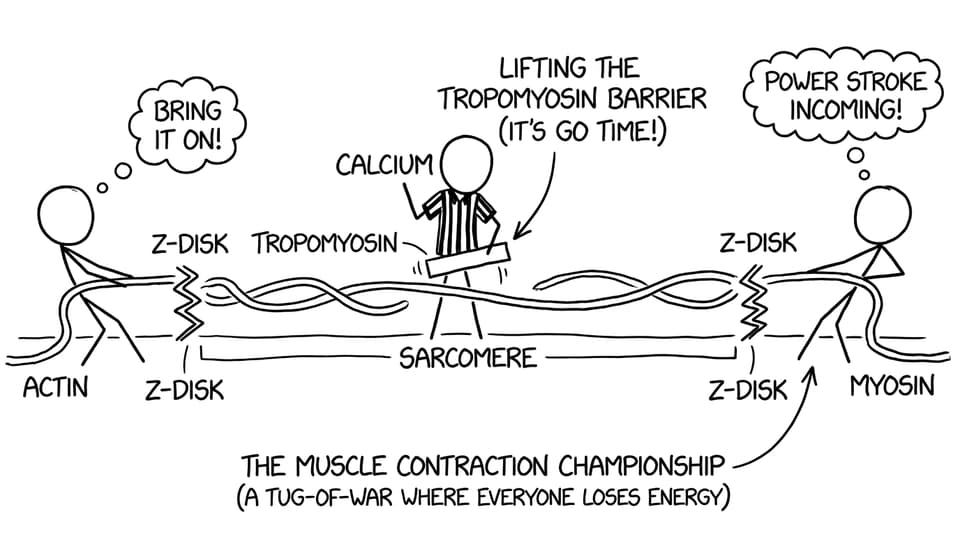
A skeletal muscle fiber is packed with myofibrils, which are made of repeating units called sarcomeres. Each sarcomere contains:
-
Actin filaments (thin)
-
Myosin filaments (thick)
-
Regulatory proteins troponin and tropomyosin
If you want the syllabus-aligned structure and key definitions, use B3.3 Muscle and motility (HL) Notes.
How actin and myosin interact to produce contraction
The interaction is often tested as a sequence. In IB Biology, clarity matters more than fancy wording.
Calcium starts the permission process
-
A nerve impulse triggers events that release Ca²⁺ from the sarcoplasmic reticulum.
-
Calcium binds to troponin.
-
Troponin changes shape and moves tropomyosin away from the myosin-binding sites on actin.
At that point, actin is basically “available.” For deeper support, see B3.3.2 Sliding filament model of muscle contraction Videos.
Cross-bridge cycling: the repeatable scoring marks
Once binding sites are exposed, myosin heads perform a cycle:
-
Attachment: Myosin head binds actin (forms a cross-bridge).
-
Power stroke: Release of inorganic phosphate (Pi) triggers the myosin head to pivot, pulling actin toward the center of the sarcomere.
-
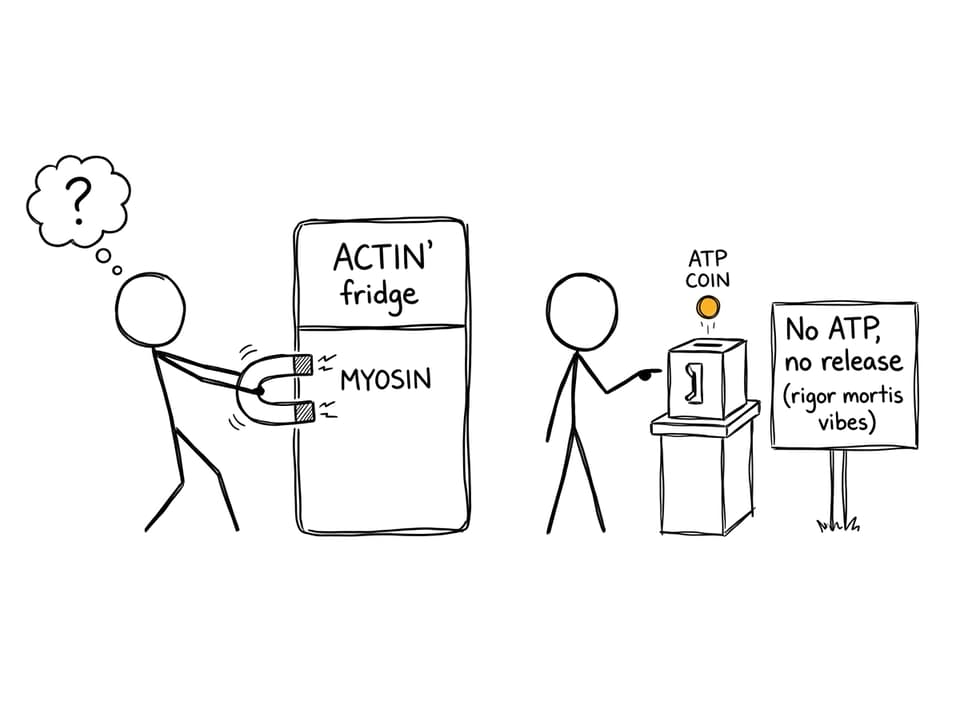
Detachment: A new ATP binds to myosin, causing myosin to release actin.
-
Re-cocking: ATP is hydrolyzed to ADP + Pi, re-energizing the myosin head for the next pull.
This is heavily assessed, so it’s worth drilling with exam-style prompts in B3.3 Muscle and Motility Questionbank (HL).
Quick checklist for IB Biology exam answers
Use this mini-checklist to keep your response “markscheme shaped”:
-
Name sarcomeres, actin, myosin
-
Mention Ca²⁺ binds troponin and shifts tropomyosin
-
Explain cross-bridge formation and power stroke
-
State ATP causes detachment and resets the myosin head
-
Clarify: filaments don’t shorten; sarcomere shortens
For ATP wording practice, see Explain the role of ATP in muscle contraction.
Bring it home with RevisionDojo
Muscle contraction is really a story of repetition: calcium reveals the sites, myosin pulls, ATP resets, and the sarcomere tightens, again and again. If you’re preparing for IB Biology, turn that story into marks by practicing the exact sequence and the exact keywords.
On RevisionDojo, you can lock this in using the B3.3 Notes, test yourself in the Questionbank, reinforce with Video lessons, and tighten weak spots with Flashcards, AI Chat, Grading tools, Predicted Papers, Mock Exams, the Coursework Library, and Tutors, all built for IB Biology exam pressure.

