
IB SEHS HL feels like the moment the course “grows up”
There’s a particular kind of stress that shows up halfway through HL: you realize you’re not just learning more IB SEHS content; you’re being asked to think differently. At SL, you can sometimes get away with tidy definitions and isolated facts. At HL, the subject starts behaving like real sport science: messy, connected, and full of trade-offs.
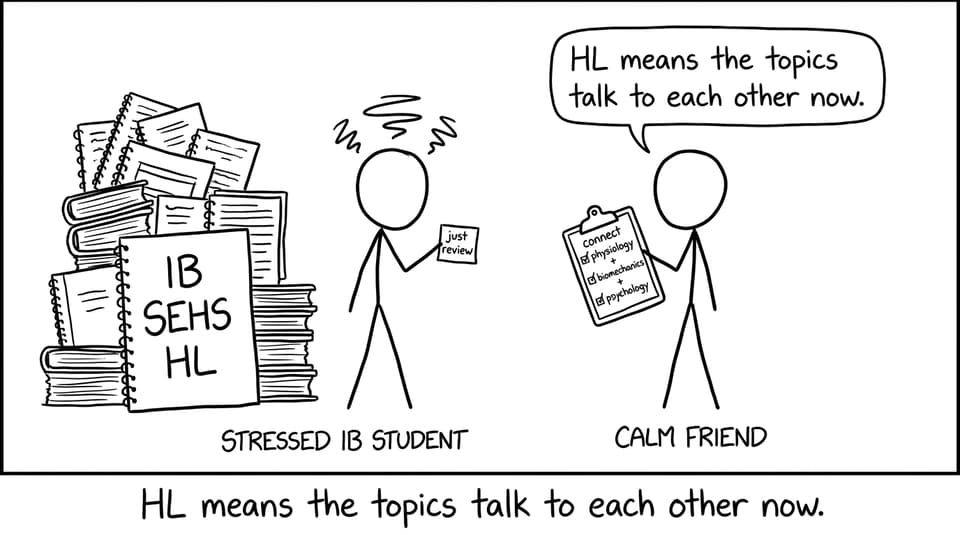
That’s the core difference. HL SEHS doesn’t simply add pages. It raises the bar for integration: physiology talks to biomechanics, psychology talks to leadership, and environment quietly changes everything.
Quick checklist: what changes at HL in IB SEHS?
-
You study all SL content plus three HL-only modules
-
Questions demand more synthesis across units and real sporting contexts
-
Calculations and analysis become more prominent
-
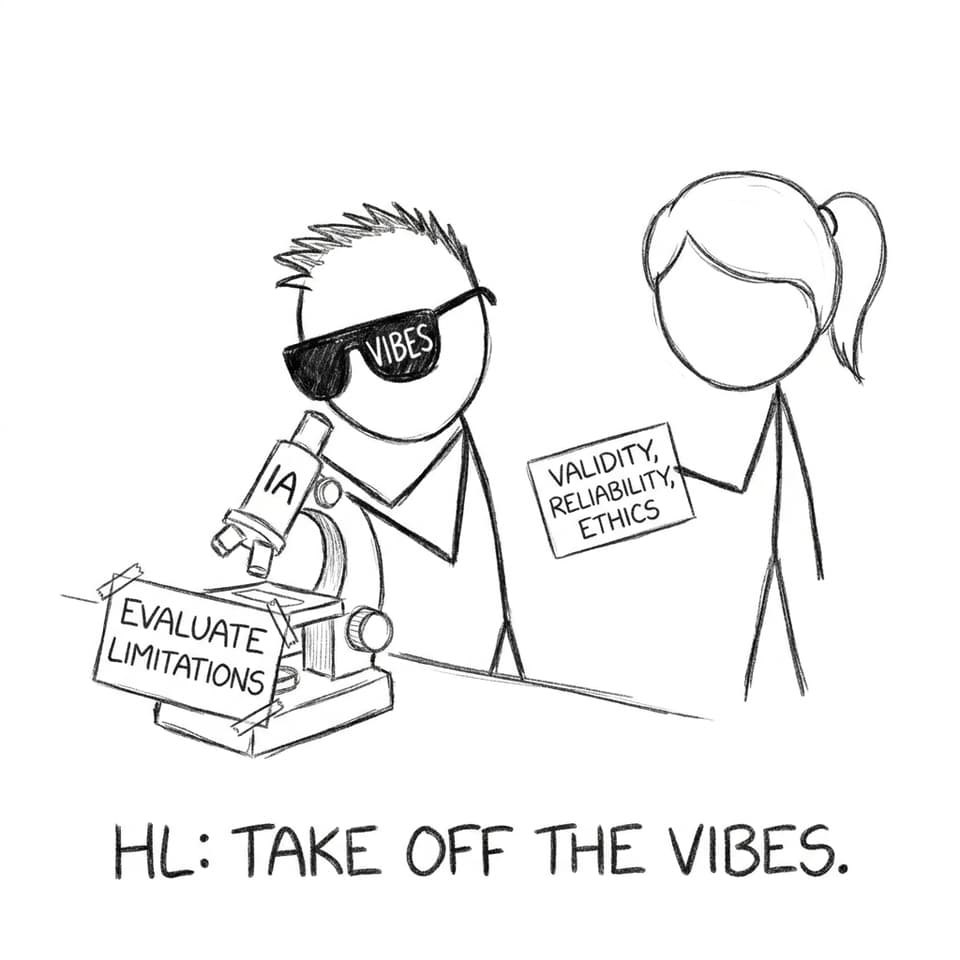
The IA expects sharper evaluation (method, validity, limitations)
-
Your weekly study time needs to be more consistent, not just “more”
If you want a structured home base for the whole syllabus, start with the IB Sports, exercise and health science resources hub.
What makes HL IB SEHS unique: the three added modules
HL IB SEHS includes three extensions that change the flavour of the course.
Environmental physiology
You move beyond “how the body works” into “how the body copes.” Altitude, heat, cold, and humidity become performance variables. A good HL answer doesn’t just list effects; it explains the performance implication and what that means for training and recovery.
Biomechanics and skill acquisition (HL extension)
This is where movement analysis gets more analytical: force production, efficiency, optimisation. If you’re revising biomechanics, drilling targeted questions like B.2 Forces, motion and movement helps because HL markers reward precision, not vibes.
Team dynamics and leadership in sport
HL adds a strong human layer: cohesion, leadership styles, motivation, group processes. It’s the module that often shows up as “explain using a sporting scenario,” so it pays to practise with realistic examples.
For psychology-heavy areas, the Psychology of Sport topic hub is a clean way to keep definitions and application tight.
The assessment jump: HL answers are judged for reasoning
HL IB SEHS tends to reward students who can connect ideas in a structured chain: claim; mechanism; evidence/impact; context.
Internal Assessment expectations
HL IAs are expected to show stronger critical thinking, deeper evaluation, and clearer scientific justification. That means you can’t just report results and move on; you need to discuss limitations and validity like you mean it.
A practical support here is the IB SEHS IA (2026 syllabus) Grader, which pushes your draft against the rubric and highlights what’s missing.
Exam demands
HL questions often combine multiple units and expect accurate terminology plus the ability to apply it. If you only revise in “topic silos,” HL will feel unfair. If you revise in connected loops, HL starts to feel predictable.
How to study smart for IB SEHS HL (without studying forever)
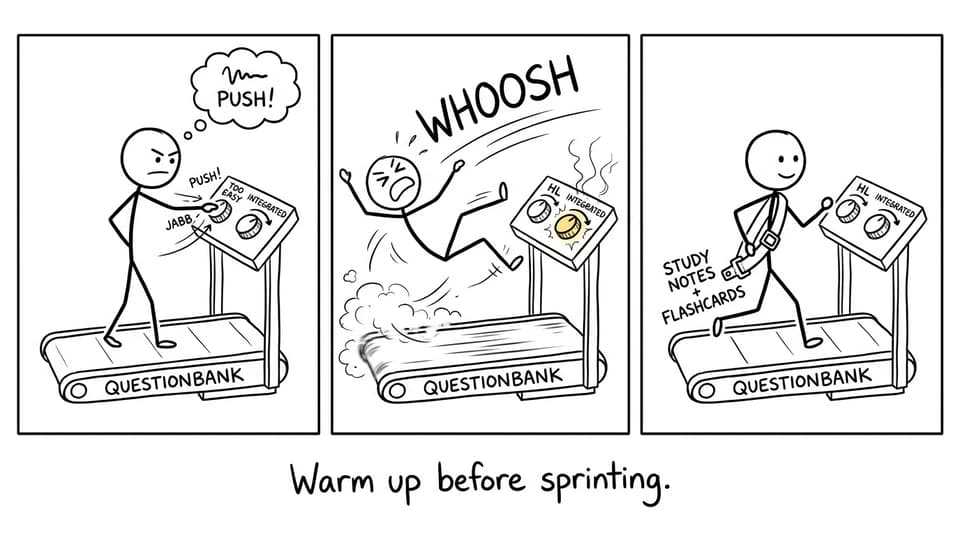
The best HL strategy is a repeatable cycle: understand, recall, apply, review.
-
Understand (Study Notes): Use RevisionDojo notes to get clarity fast, then stop reading.
-
Recall (Flashcards): Build cards that force connections, not just definitions.
-
Apply (Questionbank): Train on exam-style prompts so your brain learns the mark logic.
-
Review (Grading tools + AI Chat): Fix patterns, not single mistakes.
To practise content that tends to appear in HL explanations, try targeted pages like B.1 Generating movement in the body and HL-detail notes such as Sliding filament theory (HL) notes.
For broader SEHS exam routines, this guide is worth keeping open during revision planning: Revision strategies that work for IB Sports Science exams.
Closing: HL IB SEHS rewards students who connect ideas
HL can feel heavier because it is heavier, but it’s also more interesting. Once IB SEHS becomes a web of connected explanations instead of a stack of isolated facts, your studying gets simpler: fewer pages, more purpose.
If you want one place to run the whole loop (Study Notes, Flashcards, Questionbank, AI Chat, Grading tools, Mock Exams, Predicted Papers, Coursework Library, and Tutors), build your plan from the IB SEHS resource hub and start training the HL skill: integration.