



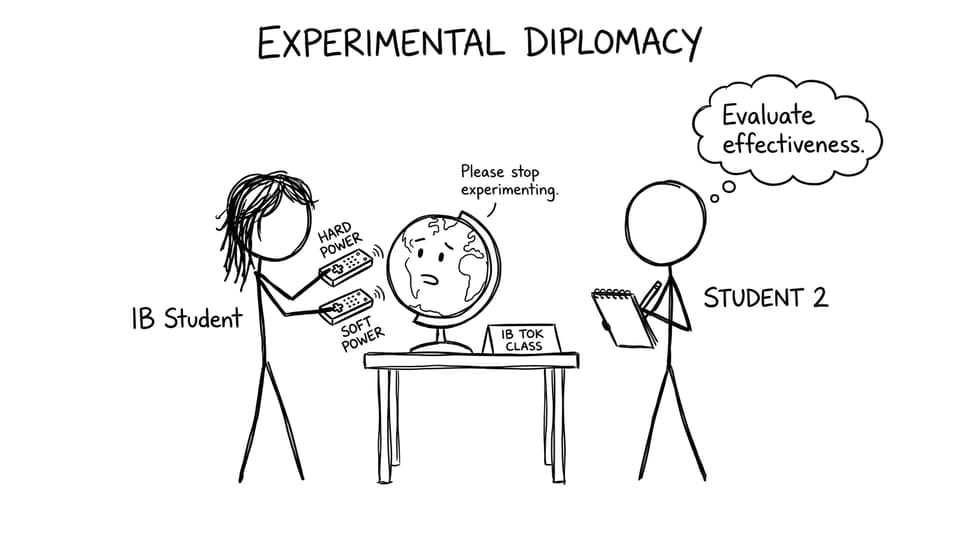
There’s a moment in every revision season where global politics starts to feel like a remote control with too many buttons. One button says force. Another says influence. And the exam question quietly asks: which one actually worked, and why?
In IB Global Politics, the hard power vs soft power distinction is one of those ideas that looks simple until you try to apply it to real outcomes. The good news is: if you can define both clearly, connect them to case studies, and evaluate effectiveness with nuance, you’re already writing like a top-band student.
Quick exam checklist for IB Global Politics
Use this mini-checklist before you write anything on hard power vs soft power in IB Global Politics:
-
Define hard power and soft power in one sentence each.
-
Classify tools (military, sanctions, aid, diplomacy, culture, education).
-
Add a case study (state or non-state actor) and make it do analytical work.
-
Evaluate: short-term gains vs long-term costs; legitimacy; resistance; credibility.
-
Link to concepts like legitimacy, sovereignty, security, identity, or human rights.
If you want ready-made definitions and exam language, keep a tab open on IB Global Politics Key Definitions.
Hard power in IB Global Politics: pressure that changes behavior
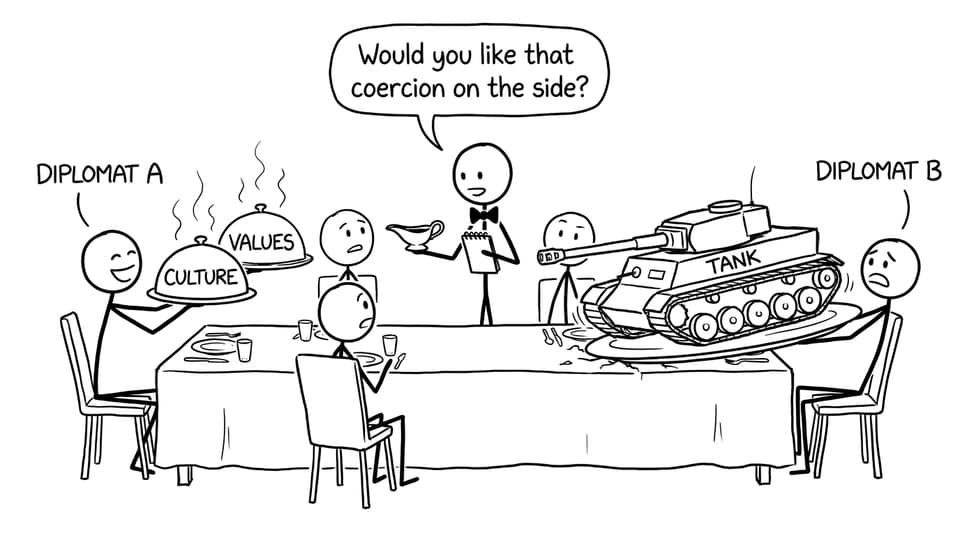
In IB Global Politics, hard power is influence through coercion or inducement. It works by making compliance feel cheaper than refusal.
Hard power usually appears as:
-
Military capability (threats, deterrence, interventions, arms build-ups)
-
Economic instruments (sanctions, tariffs, conditional loans, trade embargoes)
Hard power can be effective because it’s direct. Deterrence can reduce immediate security threats. Sanctions can raise the cost of particular policies and push actors toward negotiations.
But hard power also tends to produce side effects that examiners love you to mention: it can be expensive, provoke backlash, undermine legitimacy, and create long-term resentment that outlasts the original goal. For practice questions that force you to evaluate those trade-offs, use the IB Global Politics Questionbank on legitimacy.
For broader concept coverage, the Power unit hub is a good map of where hard power sits inside the wider course.
Soft power in IB Global Politics: attraction that shapes preferences
In IB Global Politics, soft power is influence through attraction and persuasion rather than force. It shapes what others want, not just what they do.
Soft power tends to come from:
-
Culture and media (music, film, language, lifestyle)
-
Values and political ideals (human rights narratives, democratic identity)
-
Diplomacy and reputation (trust, credibility, perceived legitimacy)
-
Education and exchanges (international students, scholarships)
-
Leadership in institutions (agenda-setting, norm promotion)
Soft power often takes longer to build, but it can be more sustainable because it feels voluntary. The key exam warning is that soft power is fragile: if an actor is seen as hypocritical or self-interested, credibility collapses and attraction turns into skepticism.
To connect this to wider themes, it helps to read power beyond the hard/soft binary, like structural or cyber influence. See Further types of power for language that adds sophistication to essays.
Smart power: why real case studies rarely stay “pure”
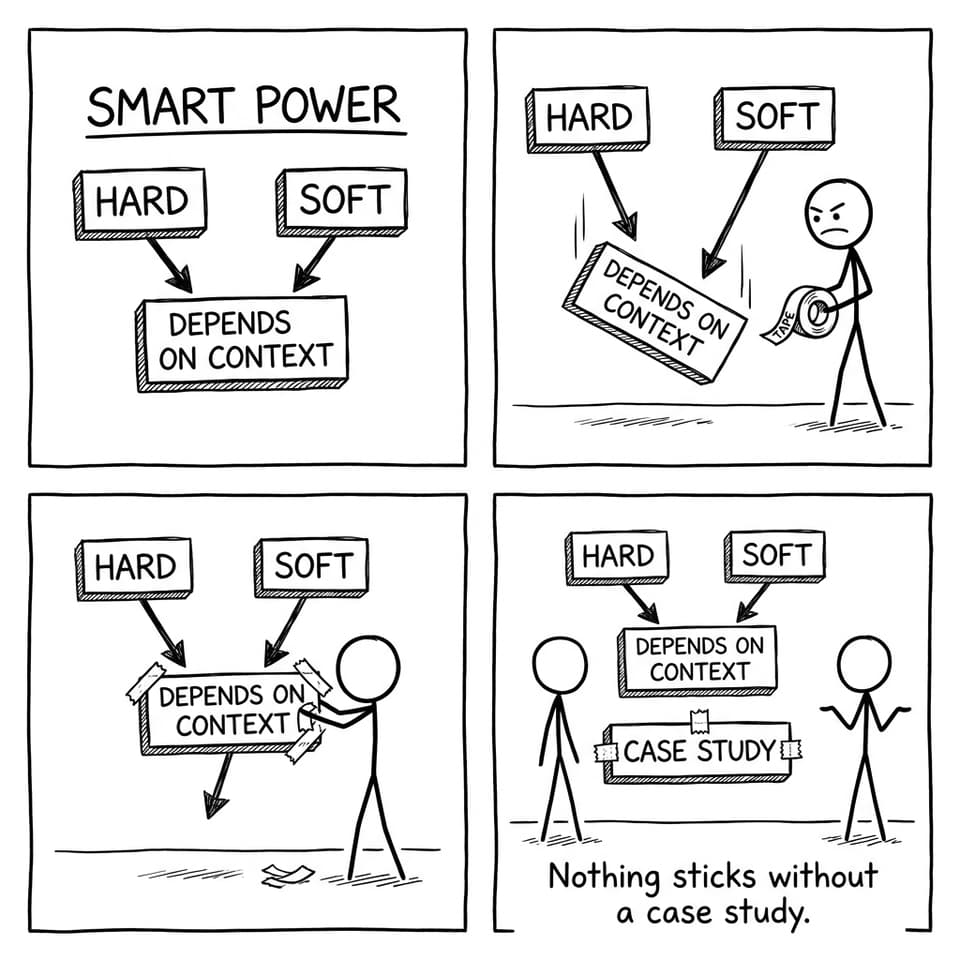
Most real-world strategies blend hard power and soft power. Diplomacy is stronger when backed by credible capability; military alliances are easier to maintain when values and legitimacy align. This combination is often called smart power.
In IB Global Politics, smart power is useful as a discussion point, but the higher marks come from evaluating interactions:
-
Did hard power undermine soft power by damaging legitimacy?
-
Did soft power make hard power more acceptable through consent?
-
Was the outcome shaped more by resources, or by perception?
If you’re working on essay structure so your evaluation actually lands, follow How to Structure IB Global Politics Paper 2 Essays and pair it with the IB Global Politics Paper 2 Guide.
How to write this in an exam (without sounding descriptive)
A strong IB Global Politics paragraph on hard power vs soft power usually follows this rhythm:
-
Define (hard power = coercion; soft power = attraction)
-
Apply to a specific case study (state or non-state)
-
Explain causal logic (how did the tool change incentives or preferences?)
-
Evaluate (effectiveness, legitimacy, costs, resistance, sustainability)
For quick syllabus-aligned resources you can cycle through while revising, start at IB Global Politics Resources and browse focused exam help like the IB Global Politics Paper 1 Guide Notes.
Conclusion: use the concept, then earn the evaluation
Hard power vs soft power is not just a definition question in IB Global Politics. It’s a lens for asking a deeper, more exam-relevant question: what made influence work, and what did it cost? When you define clearly, apply to evidence, and evaluate legitimacy and sustainability, you turn a familiar concept into a high-mark argument.
If you want to practise this the way top students do, RevisionDojo makes it systematic: use the Study Notes to lock definitions, Flashcards for active recall, the Questionbank for exam-style prompts, AI Chat to test your reasoning, and Grading tools to sharpen evaluation. Then level up with Predicted Papers, Mock Exams, the Coursework Library, and Tutors when you want feedback that actually moves your mark.