



Geometric series show up in IB Math the way a familiar song shows up in every playlist: you might not notice it at first, but once you do, it’s everywhere.
One minute you’re summing a few terms, the next you’re modelling repeated percentage change, or trying to decide whether an “infinite” sum is even allowed to have an answer. In AA SL and AA HL, geometric series are a quiet score booster because the rules are consistent, the algebra is predictable, and examiners reward clean structure.
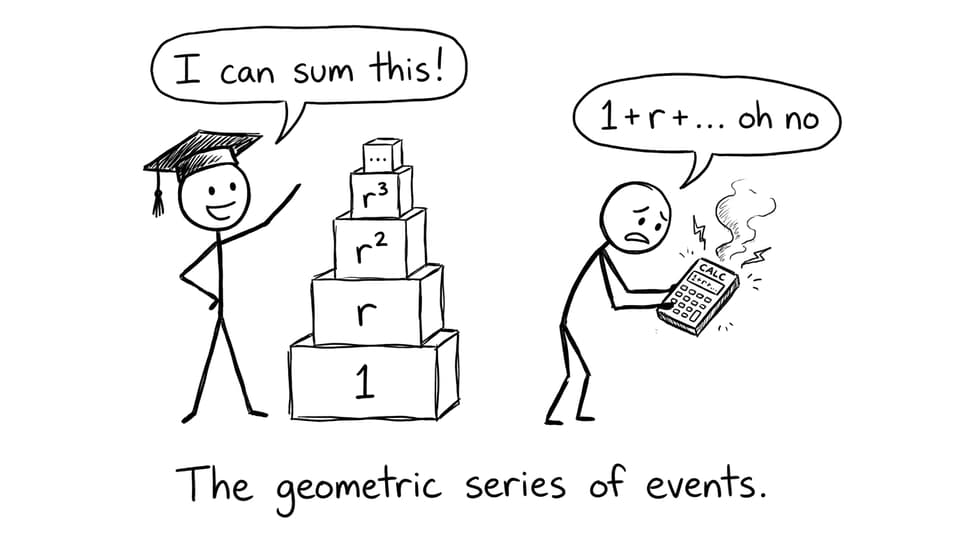
Geometric series in IB Math: a fast checklist
Before you touch a formula, confirm these five things:
-
Is the question asking for a term (sequence) or a sum (series)?
-
Can you spot a constant common ratio (r)?
-
Do you have the first term (a)?
-
Is it finite (sum to (n) terms) or infinite (sum to infinity)?
-
Are you writing the formula first, then substituting? (Method marks love this.)
For targeted practice on exactly this syllabus point, keep SL 1.3 Geometric sequences and series open as your “home base.”
What is a geometric series (and why IB Math cares)
A geometric sequence is built by multiplying by the same factor each step: (a, ar, ar^2, ar^3, \dots).
A geometric series is what happens when you add those terms:
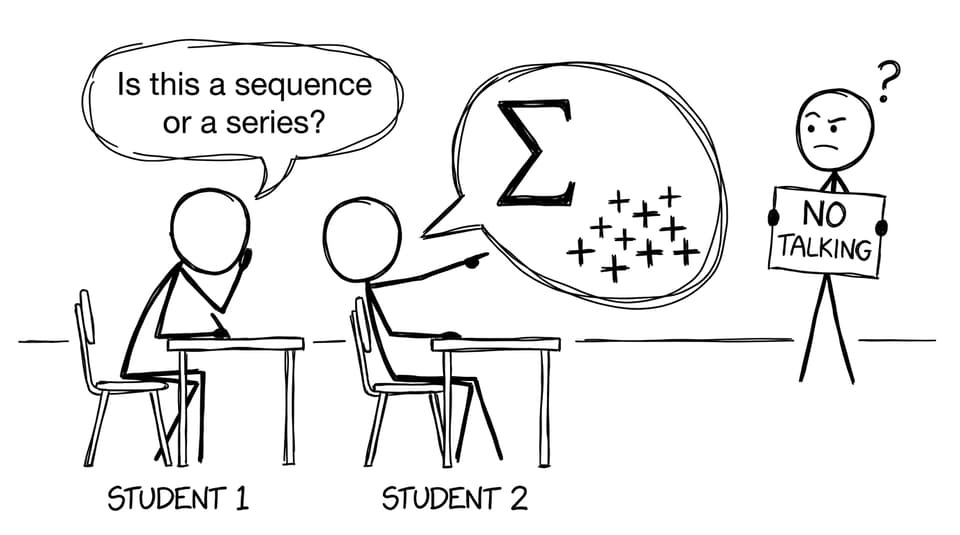
That shift from “what is the (n)th term?” to “what is the total?” is where students lose marks in IB Math. The wording in questions matters. If you see “sum,” “total,” or sigma notation, you’re in series territory.
If you need a quick refresher on the sequence side first, pair this article with Geometric Sequences Explained for IB Maths (AA SL & HL).
The IB Math geometric series sum formula (finite)
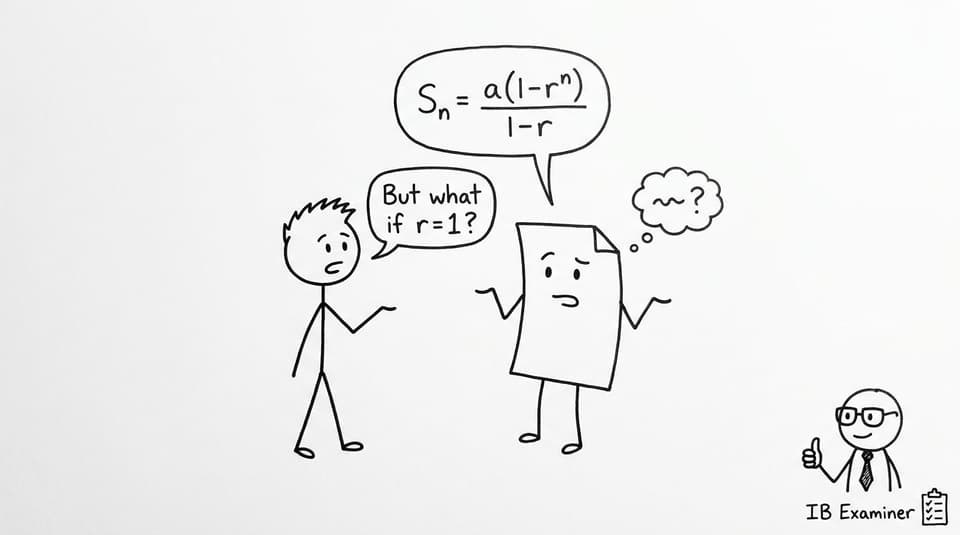
For (r \neq 1), the sum of the first (n) terms is:
And if (r = 1), every term is just (a), so:
This is one of those places where IB Math rewards students who pause for one second to check a condition. Writing “(r \neq 1)” next to the main formula is a tiny habit that prevents big errors.
For a clean, syllabus-aligned summary (with sigma notation cues), revise from SL 1.3 notes: Geometric sequences and series, then drill the skill using the matching SL 1.3 Questionbank.
Sum to infinity: where IB Math gets philosophical (but still predictable)
An infinite geometric series only has a finite sum when the terms shrink fast enough.
Condition:
Then:
This comes up a lot because it tests reading precision: you don’t “finish” adding terms, you analyse limiting behaviour. If that idea feels slippery, read Why Does Convergence of Infinite Series Feel So Unintuitive in IB Maths and then lock in the rule with SL 1.8 notes: Sum of infinite geo sequence.
Common mistakes that cost marks in IB Math
Mixing up sequence vs series formulas
Students correctly find (a_n = ar^{n-1}), then accidentally treat it like a sum. In IB Math, that’s often a 0/2 swing.
Using arithmetic series methods
If you’re adding terms that multiply by (r), arithmetic series logic will betray you. (If you want the contrast, Arithmetic Series Explained for IB Maths (AA SL & HL) makes the difference feel obvious.)
Forgetting the “finite vs infinite” check
If (|r| \ge 1), the infinite sum does not converge. In exam solutions, explicitly state the condition and show that it is (or isn’t) satisfied.
Exam habits that make geometric series easier under pressure
-
Always write (a), (r), and (n) on the page before substituting.
-
If the question hides (r), compute it by dividing consecutive terms.
-
Keep your algebra “one line per idea”; examiners reward readable structure.
-
Practise in mixed sets so you learn to identify a geometric series quickly.
RevisionDojo is built for this kind of identification practice: use the Questionbank to filter to sequences/series, then reinforce with Flashcards for formulas and conditions. If you get stuck mid-solution, AI Chat can nudge you back toward a method without taking away the thinking.
If you prefer learning by demonstration, the SL 1.3 video lessons are a good “watch once, then practise” option.
Bring it home: make IB Math geometric series a reliable win
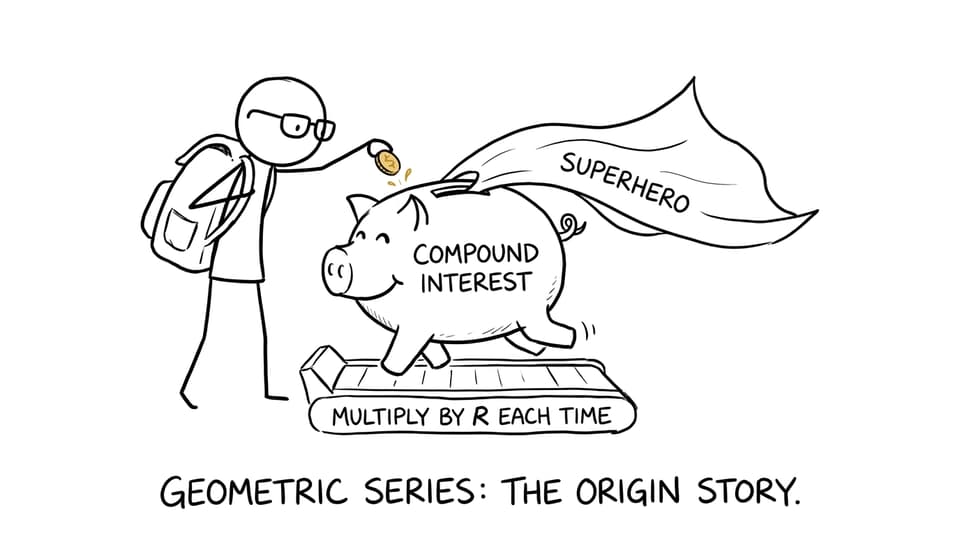
Geometric series in IB Math aren’t difficult because the formulas are complicated. They’re difficult because exam pressure makes students rush the reading, skip the condition checks, and confuse a sequence with a sum.
If you want this topic to feel calm on exam day, build a short loop: learn from the notes, practise in the Questionbank, lock formulas with Flashcards, then test yourself with Mock Exams. And when you need a quick sanity check mid-revision, RevisionDojo’s AI Chat, Study Notes, and Tutors help you correct mistakes before they become habits.
Start with SL 1.3 Geometric sequences and series and practise until geometric series feels like one of the most dependable marks in your IB Math toolkit.