

Modern literature has a quiet habit of rearranging the furniture. You open a novel expecting the usual roles, the usual scripts, the usual tidy labels, and then a character refuses to sit where tradition tells them to. Suddenly, gender is no longer a fixed category but a pressure system. Identity is no longer a biography but a negotiation.
For IB English students, this theme is more than “relevant.” It is a high-yield pathway into authorial purpose, power dynamics, characterization, and style. If you can explain how a writer constructs changing representations of gender and identity, you can write sharper commentary, more controlled comparisons, and more original arguments.
A fast checklist for IB English analysis
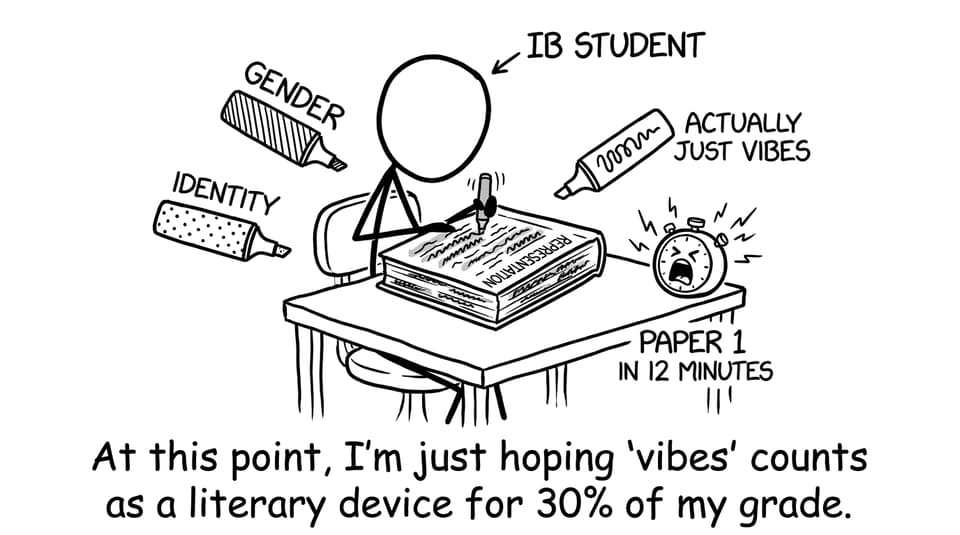
Use this mini-checklist before you write. It keeps your IB English paragraphs anchored in technique rather than generalization.
-
Identify the norm the text presents (spoken or unspoken)
-
Track where a character performs, resists, or rewrites that norm
-
Zoom in on language: diction, modality, metaphor, labels, pronouns, silence
-
Notice structural shifts: fragmentation, perspective switches, time jumps
-
Link representation to power: who gets named, who gets watched, who gets believed
If you need an exam structure for this kind of close reading, pair the checklist with RevisionDojo’s Mastering IB English Paper 1 guide and the step-by-step Paper 1 revision plan.
Changing representations of gender: from role to pressure
Older texts often treat gender roles like stage directions. Modern literature tends to treat them like weather: always present, shaping behavior, sometimes violent, sometimes subtle.
In IB English, your strongest analysis usually begins by naming the constraint.
What to look for in characterisation
Modern texts frequently show gender as something characters must perform to survive or belong. Watch for:
-
Public vs private voice: confident dialogue, anxious interiority
-
Policing moments: jokes, corrections, surveillance, gossip
-
Consequences: shame, exclusion, reward, protection
Then do the “IB move”: connect this to authorial purpose. Is the writer critiquing a social system? Showing complicity? Exploring the cost of conformity?
For practice questions that mirror exam expectations, use the Theme 6: Gender / Control over Women Questionbank. RevisionDojo’s Questionbank is especially useful when you want repetition without mindless repetitionyou get exam-style prompts plus feedback loops.
Identity as fluid: structure does the “meaning,” not just the plot
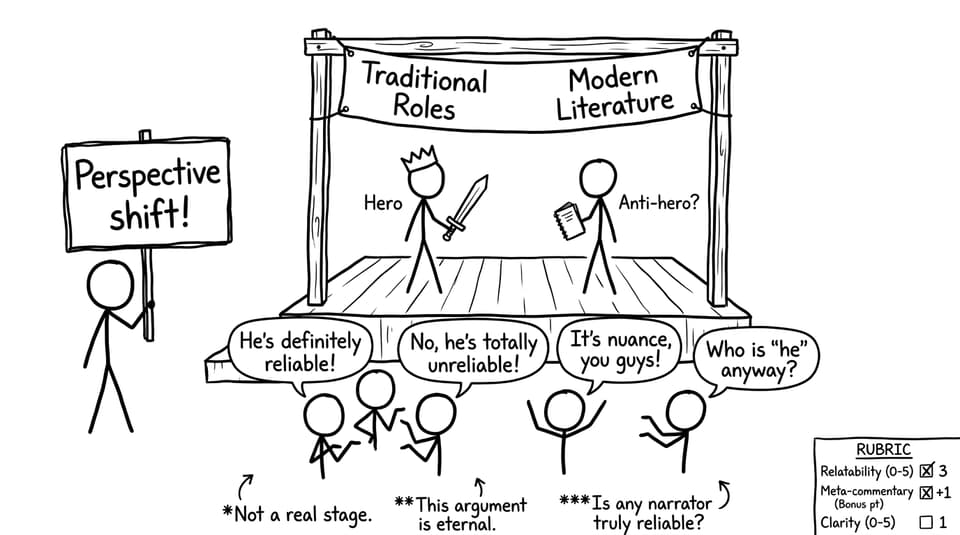
A useful thought for IB English: identity is often represented through form. Modern literature loves techniques that mimic uncertainty, fragmentation, or reinvention.
Techniques that signal shifting identity
-
Fragmented structure: identity feels incomplete because the narrative is incomplete
-
Multiple narrators: the self changes depending on who is looking
-
Unreliable voice: identity becomes a question, not an answer
-
Nonlinear time: memory reshapes the present self
This is where Paper 1 and Paper 2 overlap in a helpful way. Paper 1 asks you to prove you can interpret how craft creates meaning; Paper 2 asks you to compare how different writers do that across works. For Paper 2 structure and expectation, see IB English Paper 2: Essential Guide for Success and How to prepare for Paper 2 under time pressure.
Symbolism that carries gender and identity (without getting vague)
Symbols are where students often drift into big claims. The fix is simple: treat symbolism like evidence, not decoration.
High-utility motifs to track
-
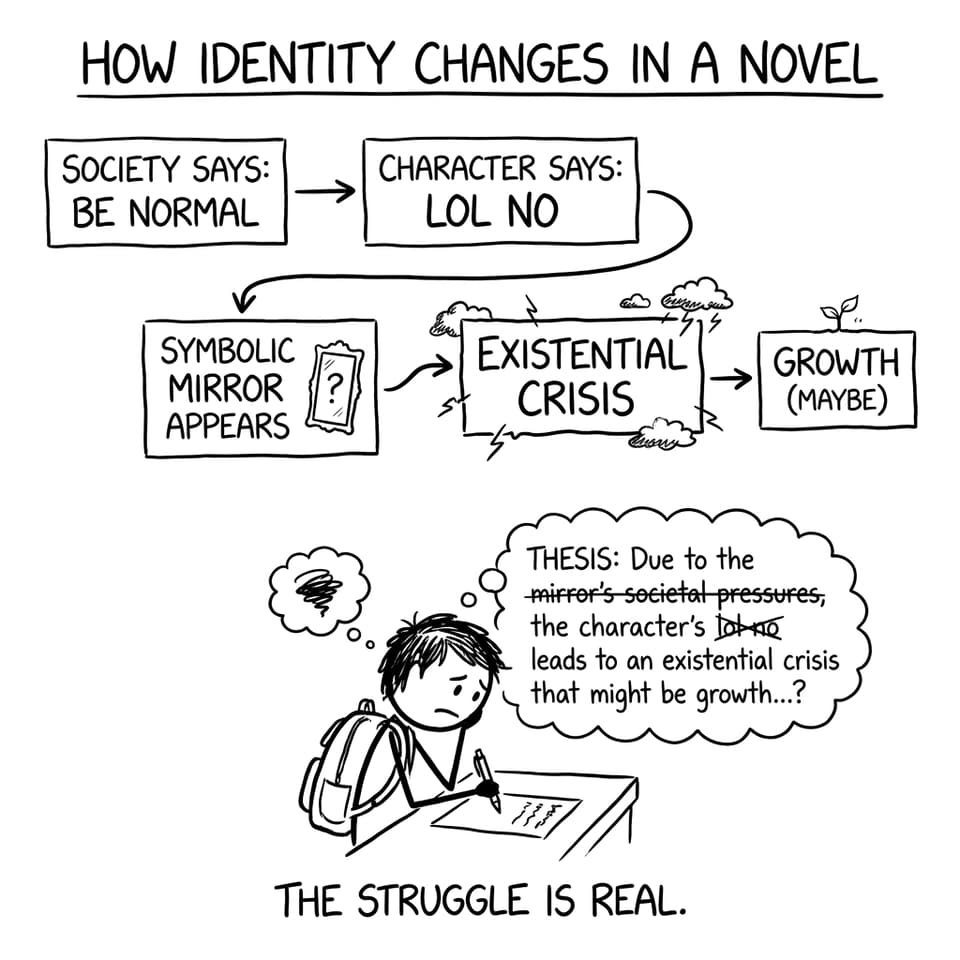
Mirrors and reflections: self-perception vs social perception
-
Clothing and uniforms: conformity, performance, transformation
-
Rooms and enclosed spaces: control, repression, safety, hiding
-
Names and naming: ownership, belonging, erasure, reinvention
In IB English, it helps to build a “motif chain”: note 3-4 moments where the symbol appears, then explain how its meaning develops. This turns your paragraph into an argument rather than a spot-the-device list.
Power dynamics: who gets to define whom?
Modern literature often frames identity as something negotiated under power. Gendered identity, in particular, can be imposed by institutions, relationships, media, religion, or family.
A strong IB English sentence frame to use:
The text represents identity not as inherent, but as produced through ______ (institution/relationship), revealed by ______ (technique), which implies ______ (authorial critique).
For IO-style thinking and global-issue framing, RevisionDojo’s Choosing your Global Issue notes and the IB Fields of Inquiry guide can help you sharpen a broad theme into an analytical lens.
How to turn this theme into exam-ready arguments
Here’s a quick way to turn “gender and identity” into something an examiner can reward.
Build a thesis that stays close to craft
Instead of: “The novel shows gender is unfair.”
Try: “Through shifting focalization and recurring motifs of clothing, the writer represents gender as a social performance that produces internal conflict, suggesting identity is shaped less by self-knowledge than by public surveillance.”
If you’re writing HL work, connect this to a line of inquiry early. RevisionDojo’s Notes: How to master HLE and Crafting a strong HL Essay thesis are built for that moment when you have “a theme” but need “an argument.”
Closing: bring it back to RevisionDojo
Changing representations of gender and identity are not just themes you notice; they are lenses that help you write with precision. Modern literature invites you to watch identities being shaped in real time, through through language, structure, symbols, and power.
If you want to train this skill efficiently for IB English, build a routine with RevisionDojo: use the Questionbank for targeted practice, Study Notes for quick technique refreshers, Flashcards for terminology, AI Chat to test thesis ideas, and Grading tools to see what your writing looks like against the rubric. Add Predicted Papers and Mock Exams when you need exam realism, and use the Coursework Library and Tutors when you want model structure and feedback.
The theme is big. Your analysis doesn’t have to be. Make it exact, evidence-based, and exam-ready, so that’s how IB English marks are won.