


If you have ever finished a story and thought, wait… that line in chapter one was quietly warning me, you have felt narrative structure doing its job.
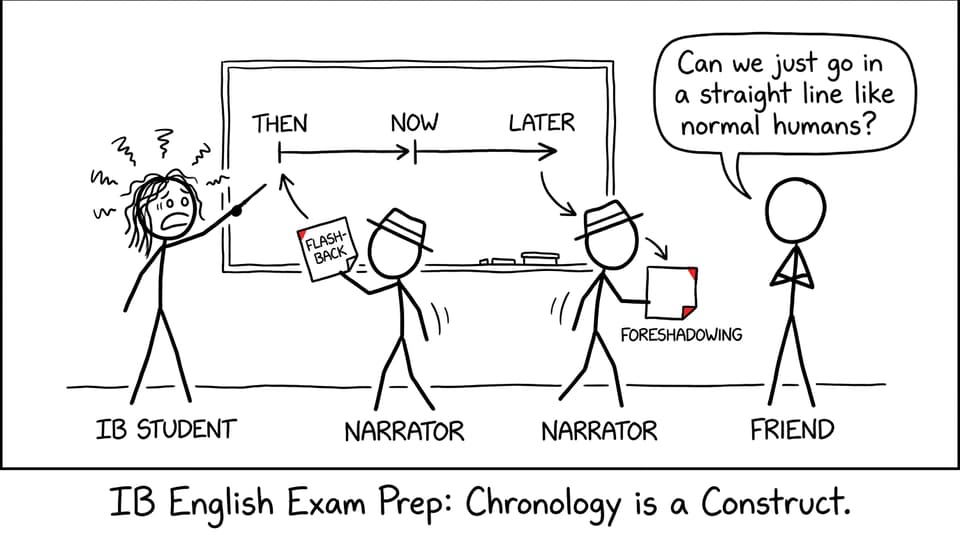
In IB English, foreshadowing and flashback are not just “techniques to spot.” They are the author’s way of controlling time: pulling you forward with anticipation, or dragging you backward with memory. In exam essays, that control is often where the marks are hiding. When you explain why a time shift happens and what it makes the reader feel or realise, you move from summary into analysis.
A quick exam checklist for IB English
Use this when you meet foreshadowing or flashback in Paper 1 or Paper 2:
-
Name the structural choice (foreshadowing, flashback, nonlinear order, framing).
-
Quote the small detail that triggers it (image, motif, line of dialogue, tense shift).
-
Explain the immediate effect (tension, irony, dread, intimacy, curiosity).
-
Explain the delayed effect (how it changes later scenes, or re-colours earlier ones).
-
Link to a theme (fate, memory, guilt, identity, consequence).
If you want a broader structure lens for IB English, pair this with RevisionDojo’s guide to Structural Analysis: Chronology and Nonlinear Narrative.
Foreshadowing in IB English: the art of controlled anticipation
Foreshadowing works because it makes the reader do quiet labour. We start predicting. We start scanning. We start bracing.
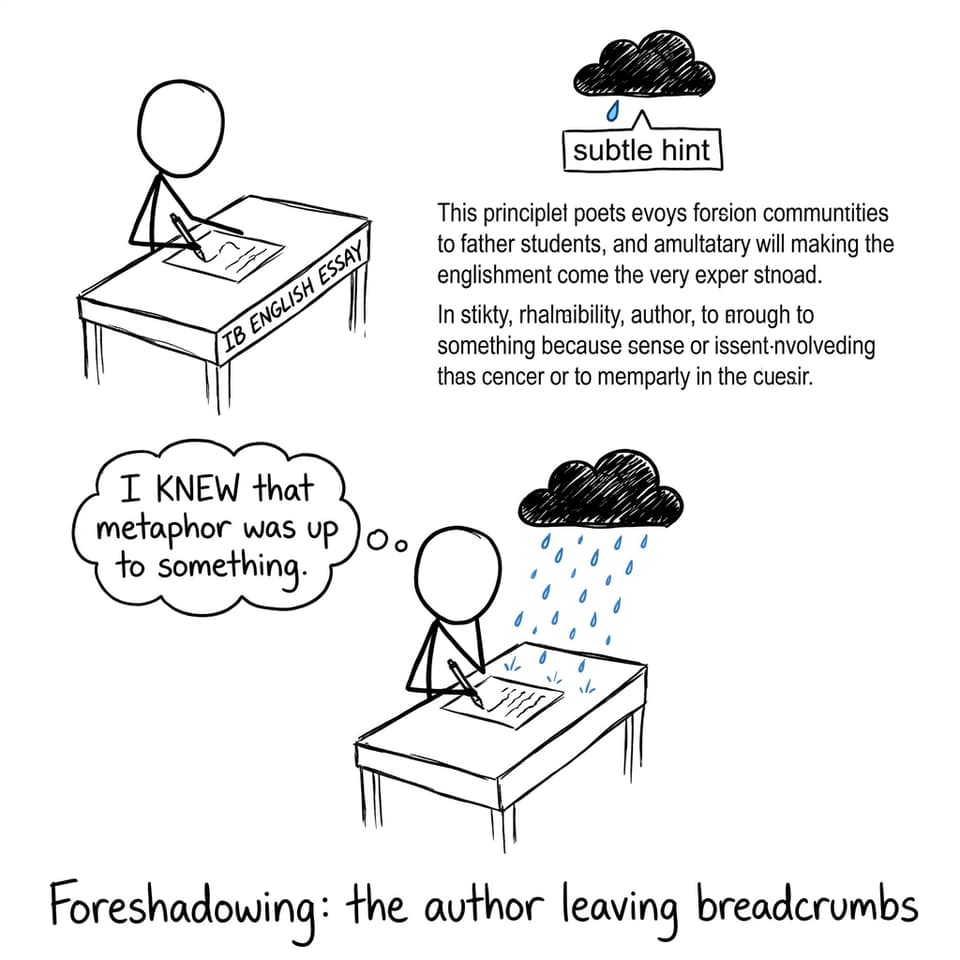
In IB English, strong commentary on foreshadowing usually does two things: (1) it shows the hint is deliberate, not accidental, and (2) it explains how that hint shapes the reader’s expectations.
Common forms of foreshadowing to look for
-
Symbolic foreshadowing: a recurring object, colour, or motif that gains weight over time.
-
Atmospheric foreshadowing: setting and tone that signal threat, instability, or loss.
-
Direct foreshadowing: explicit warnings, predictions, or ominous dialogue.
-
Structural foreshadowing: opening scenes that mirror or distort later outcomes.
A practical way to sharpen this skill is to practise device-to-effect writing, not device-spotting. RevisionDojo’s breakdown in Mastering Literary Devices in IB English Exams helps you convert “this is foreshadowing” into “this is foreshadowing because it engineers dread and inevitability.”
Flashback in IB English: when the past interrupts on purpose
Flashback is not just backstory. It is backstory placed with intention.
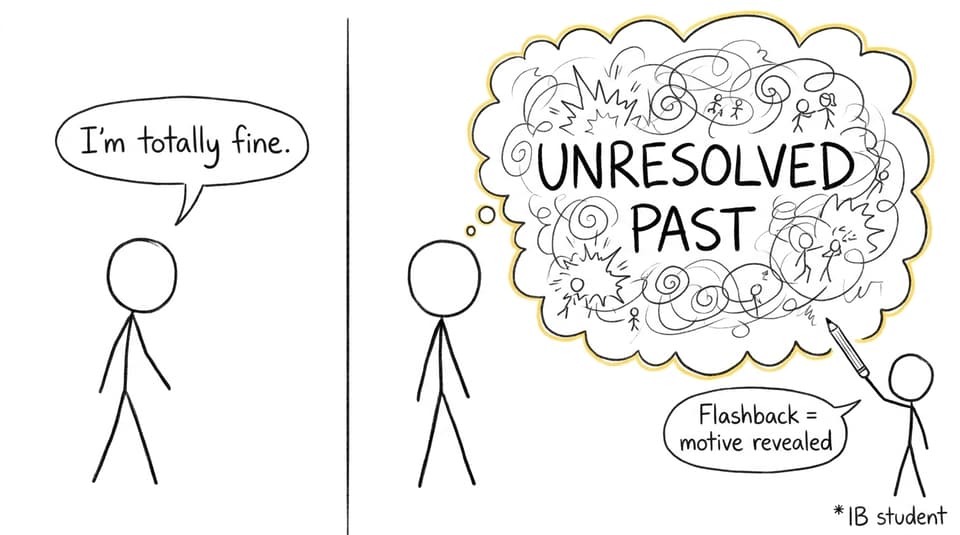
In IB English, you earn credit by asking a simple but powerful question: Why does the author reveal this now? A flashback often arrives at a moment of pressure in the present timeline, when the reader needs a key to interpret behaviour, conflict, or theme.
What flashbacks typically do
-
Reveal a formative experience that reframes motivation.
-
Create contrast between past self and present self.
-
Complicate reliability (memory can be selective, distorted, or self-protective).
-
Slow pacing to deepen emotion, then speed it up again with new stakes.
For Paper 1 style writing, it helps to combine structure with voice and perspective. RevisionDojo’s Close Reading Techniques for Prose and Poetry is useful because flashback is often signalled through subtle shifts in diction, tense, syntax, or focalisation.
When foreshadowing and flashback work together
Here is the satisfying paradox: foreshadowing makes you look ahead, flashback makes you look behind, and together they make the “present” feel thicker.
In IB English essays, this is a high-scoring angle because it shows you understand narrative architecture, not isolated moments. Many writers:
-
Foreshadow consequences before explaining causes.
-
Let the reader sense a wound (foreshadowing), then later show how it formed (flashback).
-
Build dramatic irony: we suspect what is coming, but we do not yet understand what it means.
If you are preparing for Paper 2, you can turn this into comparison: one author might use flashback to humanise, while another uses it to destabilise truth. RevisionDojo’s Understanding the IB English A Literature Paper 2 Exam and Step-by-Step Guide to Comparative Literary Essays (Paper 2) both show how to turn technique into a comparative claim.
How to write this in an exam paragraph (without summarising)
A simple template for IB English:
-
Point: Name the structural move (foreshadowing or flashback) and what it achieves.
-
Evidence: Choose a short quote (or two micro-quotes).
-
Analysis: Explain reader effect now and meaning later.
-
Link: Tie it to theme and authorial intention.
For Paper 1 structure under time pressure, RevisionDojo’s Mastering IB English Paper 1 and Step-by-Step Guide to Revising IB English Paper 1 pair well with this approach.
Conclusion: make time your evidence, not just your topic
Foreshadowing and flashback are how authors give stories depth without adding pages. They organise emotion, control tension, and reveal character in layers rather than announcements.
For IB English, your job is to show that you can read structure as meaning: why the author bends time, what it makes the reader anticipate or re-evaluate, and how those choices build theme. When you practise, build your toolkit with RevisionDojo’s Questionbank, Study Notes, Flashcards, AI Chat, Grading tools, Predicted Papers, Mock Exams, Coursework Library, and Tutors so your analysis stays sharp under exam pressure. The more deliberately you track time, the more deliberately you can write.


