
When a text "feels" a certain way, you need to prove why
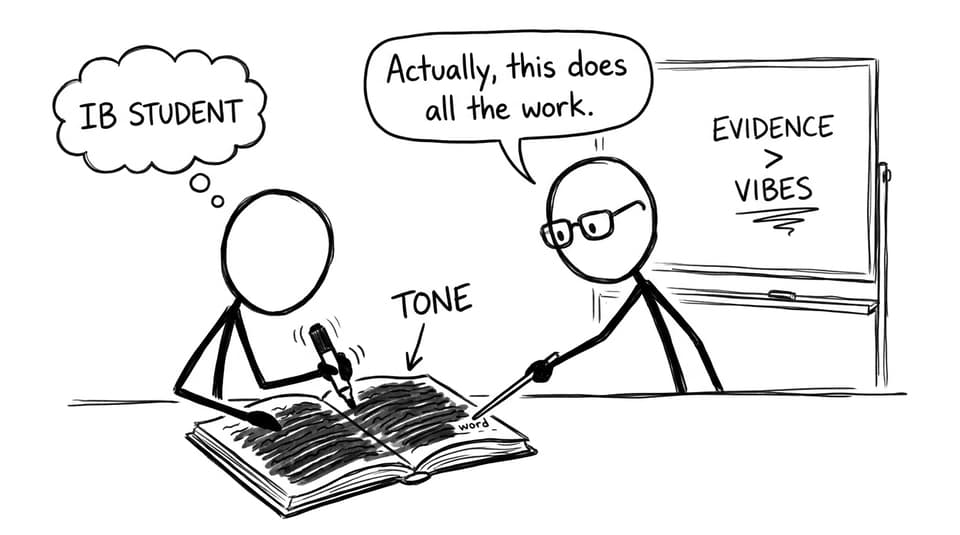
In IB English, plenty of students can sense that a passage is “tense” or “sad.” The problem is that the exam does not reward instincts. It rewards explanations. Tone and mood are where that gap shows up most: you feel something, but you need to show how the writer built it.
That’s why IB English analysis gets easier the moment you stop chasing vibes and start chasing choices: diction, syntax, imagery, perspective, sound, structure. When you can name the choices, you can defend the effect. And once you can defend the effect, your Paper 1 commentary, Individual Oral, or Higher Level Essay becomes less of a guess and more of an argument.
Quick checklist: tone and mood in 60 seconds
Use this mini-checklist before you write any IB English paragraph:
-
Identify tone (writer’s attitude) using 1-2 precise adjectives.
-
Identify mood (reader’s emotional atmosphere) using 1-2 precise adjectives.
-
Find two pieces of evidence (words, punctuation, a pattern, a contrast).
-
Name the method (diction, syntax, imagery, narration, sound, structure).
-
Explain purpose and effect (why this choice, why now, for which audience?).
If you want an organized place to practise this, start with the IB English A Lang & Lit hub and build repetition with RevisionDojo’s Study Notes and tools.
Defining tone vs mood (and why examiners care)
In IB English, tone and mood are connected but not interchangeable.
Tone: what the writer sounds like
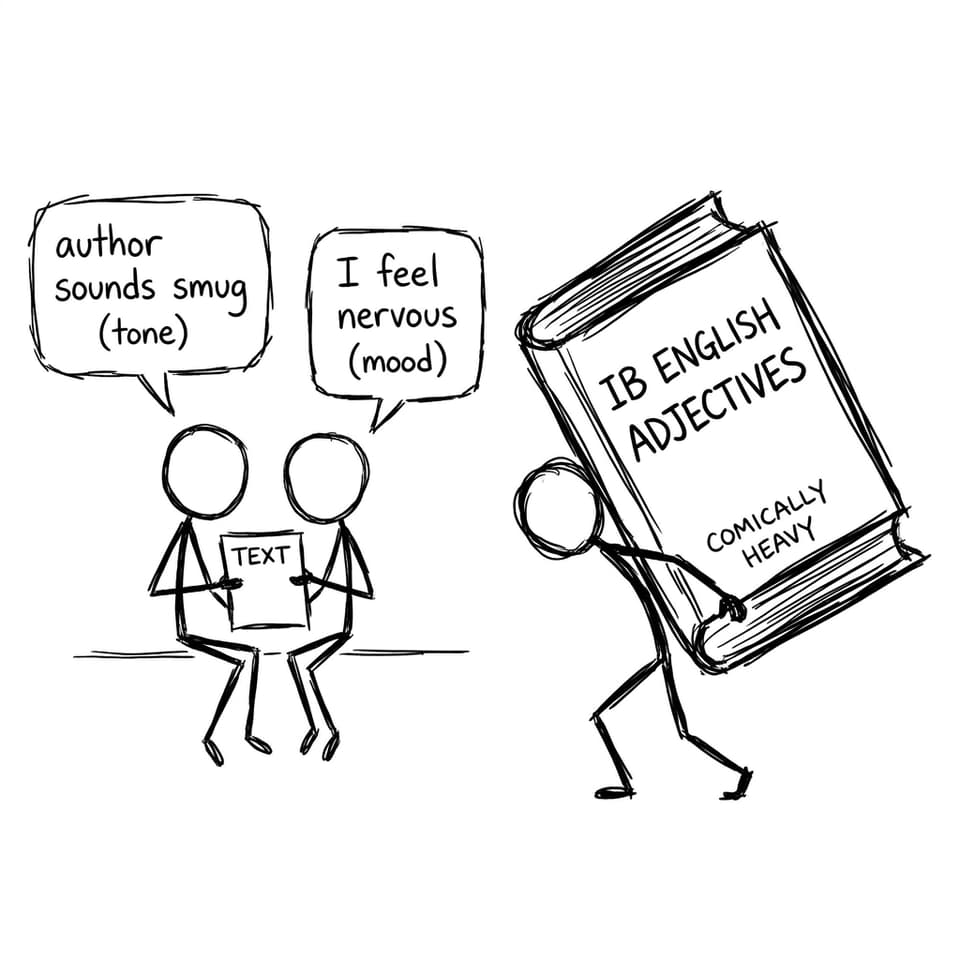
Tone is the author’s or narrator’s attitude toward the subject or audience. It’s the “voice behind the words.”
Useful tone adjectives for IB English analysis: ironic, reverent, clinical, bitter, playful, accusatory, disillusioned, tender, detached, triumphant.
For deeper practice, RevisionDojo breaks this down in What Is Tone in Literature?.
Mood: what the reader feels
Mood is the emotional atmosphere created for the audience. It’s the experience the text produces as you read.
Useful mood adjectives for IB English analysis: uneasy, buoyant, claustrophobic, celebratory, ominous, intimate, melancholic, hopeful.
How writers create tone and mood in IB English texts
Strong IB English analysis doesn’t list techniques. It selects the few that do the most work.
Diction and connotation
One word can flip tone. “Economical” and “cheap” describe similar facts, but they don’t carry the same judgement. Track connotations, especially in non-literary texts.
Syntax, punctuation, and pacing
Short sentences can feel urgent or confrontational. Long sentences can feel reflective, overwhelming, or spiralling. Even punctuation (dashes, colons, fragments) can create a controlled or chaotic mood.
Imagery and figurative language
Images don’t just decorate meaning. They steer emotion. Look for patterns: violence imagery, domestic imagery, religious imagery, industrial imagery. Patterns create mood.
Perspective and narration
First-person narration can feel intimate or biased. A distant third-person voice can feel cold or authoritative. In IB English, that’s tone shaping mood through distance.
For a broader close-reading toolkit, use Close Reading Techniques for Prose and Poetry.
A simple method to analyze tone and mood (Paper 1 friendly)
Use this 4-step loop in IB English Paper 1 and anywhere you need fast, defensible commentary.
Name it precisely
Avoid “happy/sad.” Choose “wistful,” “resentful,” “wry,” “foreboding.” Precision signals control.
Prove it with micro-evidence
Pull short phrases or even single words. Examiners love when IB English students show they can read at word-level.
Explain the technique
Don’t stop at “this creates tension.” Say how: “through clipped syntax and harsh plosives,” or “through sterile, bureaucratic diction.”
Link tone to mood to purpose
Finish with intent: what does this emotional design push the audience to think, fear, admire, or reject?
If you want a structure for full responses, RevisionDojo’s IB English Paper 1 Success Guide pairs well with this loop.
Tone shifts: the quickest way to sound advanced
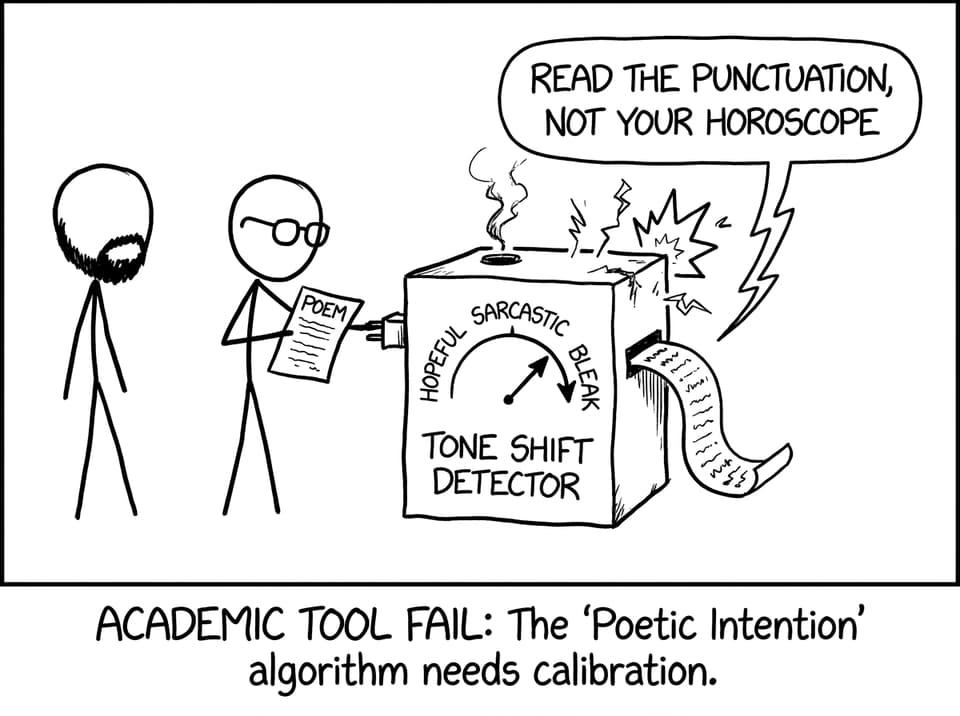
In IB English, tone shifts often mark a change in purpose: from informative to accusatory, nostalgic to bitter, playful to sharp.
Try this sentence frame:
“The tone shifts from ___ to ___ as the writer moves from ___ to ___, positioning the audience to ___.”
To practise under exam conditions, combine timed writing with RevisionDojo’s Step-by-Step Guide to Revising IB English Paper 1.
How RevisionDojo helps you practise tone and mood (without guessing)
The fastest way to improve IB English analysis is repetition with feedback.
-
Use the Questionbank to practise exam-style analysis prompts.
-
Turn tone vocabulary into active recall with IB Flashcards.
-
Build confidence with examiner-style rehearsal using IB Predicted Papers.
-
Strengthen your IO planning using the IB Language A: Individual Oral Grader.
These tools work best when paired with Study Notes, AI Chat for quick clarification, grading tools for feedback cycles, predicted papers for rehearsal, mock exams for stamina, and the Coursework Library and Tutors when you need targeted support.
Closing: turn feelings into proof
Every strong IB English response is built on the same quiet move: you notice an emotion, then you trace it back to craft. Tone and mood are the bridge between “I feel” and “the writer achieves.”
If you want to practise that bridge efficiently, use RevisionDojo’s Questionbank, Study Notes, Flashcards, AI Chat, grading tools, predicted papers, and mock-style practice to build a repeatable method, not a one-time insight. IB English rewards students who can do it again under pressure.