


A quiet trick novels play on you
Halfway through a novel, you suddenly realize you have been believing someone. Not the author, exactly. Not a character, either. A voice, steady or slippery, that has been deciding what counts as truth.
That moment matters in IB English because exams reward students who can explain how meaning is built, not just what happened. Narrative voice and perspective are the hidden steering wheel. They control intimacy, bias, suspense, and the moral angle of the story. Once you see that steering wheel, Paper 1 commentary sharpens, Paper 2 comparisons become cleaner, and your HL Essay and IO gain real depth.
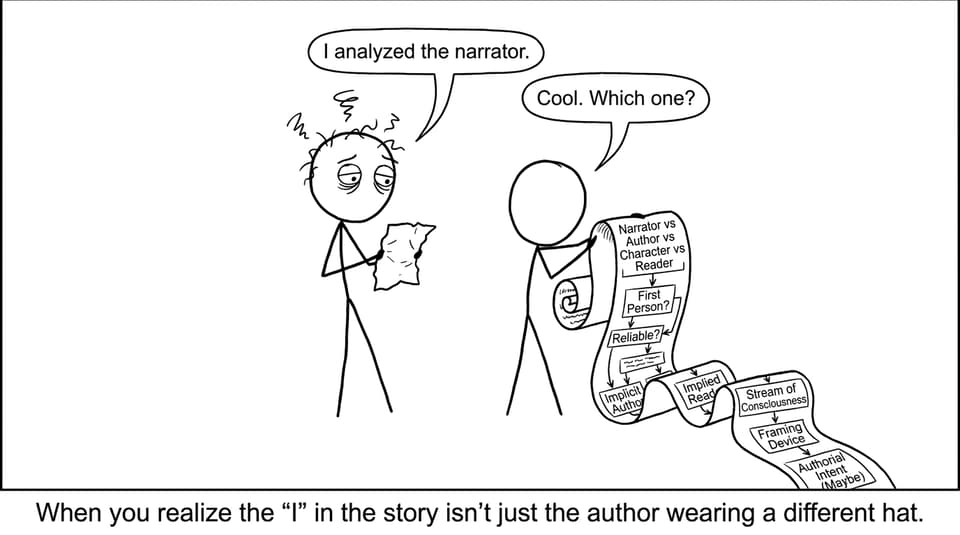
Quick checklist for analyzing voice and perspective (exam-safe)
Use this mini-checklist whenever you annotate a novel passage in IB English:
-
Who is speaking (narrator) and who is being spoken about?
-
What point of view is used (first person, third person limited, omniscient, multiple)?
-
What does the narrator know, and what do they avoid?
-
How reliable is the voice (contradictions, omissions, self-justification)?
-
What tone dominates (nostalgic, bitter, detached, comic, anxious)?
-
What does this perspective make the reader feel or assume?
-
How does the perspective connect to theme (power, identity, memory, ideology)?
If you want a fast annotation framework that already bakes in perspective, the SPICES approach in Notes for Prose Fiction - IB is a strong starting point.
Narrative voice vs perspective (and why the distinction helps)
In IB English, students often treat these terms as synonyms. They overlap, but they are not the same.
Narrative voice: the storyteller’s presence
Narrative voice is who tells the story and the personality embedded in the telling. Voice includes things like rhythm, attitude, humor, formality, and what the narrator sounds like when they are trying to be believed.
Common voice choices you will meet in novels:
-
First-person voice ("I") for intimacy and subjectivity
-
Third-person limited voice for controlled access to one consciousness
-
Third-person omniscient voice for broad thematic reach
-
Unreliable narration where the telling itself becomes a problem to solve
-
Multiple narrators where truth becomes contested, not delivered
Perspective: the lens that filters meaning
Perspective is the interpretive lens shaping what counts as normal, shocking, funny, or acceptable. It is affected by class, age, culture, gender, trauma, politics, and personal history.
A narrator can sound calm while their perspective is deeply biased. Or a narrator can be unreliable in facts but reveal something emotionally honest about fear, shame, or desire.
The main narrative perspectives you should recognize
First-person: closeness with a cost
First-person narration gives you a mind at close range. That closeness can feel like truth, which is exactly why it can also be misleading. In IB English, the best analysis notices the trade: intimacy creates bias.
A strong sentence frame:
The first-person perspective narrows the narrative to the speaker’s perceptions, creating intimacy while also limiting the reader to their assumptions.
If you are revising first-person voice in literary extracts, it helps to practice identifying tone shifts quickly. You can train that skill with timed practice in RevisionDojo’s Theme 4: Appearance vs. Reality Questionbank, where prompts frequently push you toward truth, illusion, and reliability.
Third-person limited: a controlled tunnel
Third-person limited feels more "objective" than first person, but it still traps you inside one vantage point. It can create suspense (you only know what the focal character knows) or irony (the reader senses what the character cannot).
This is also one of the easiest perspectives to compare in IB English Paper 2, because you can show how two authors restrict knowledge for different thematic reasons.
Omniscient: scale, commentary, and ideology
Omniscient narration can move between characters, time frames, or social layers. It can build theme efficiently because it has range. But it can also smuggle ideology with a confident tone.
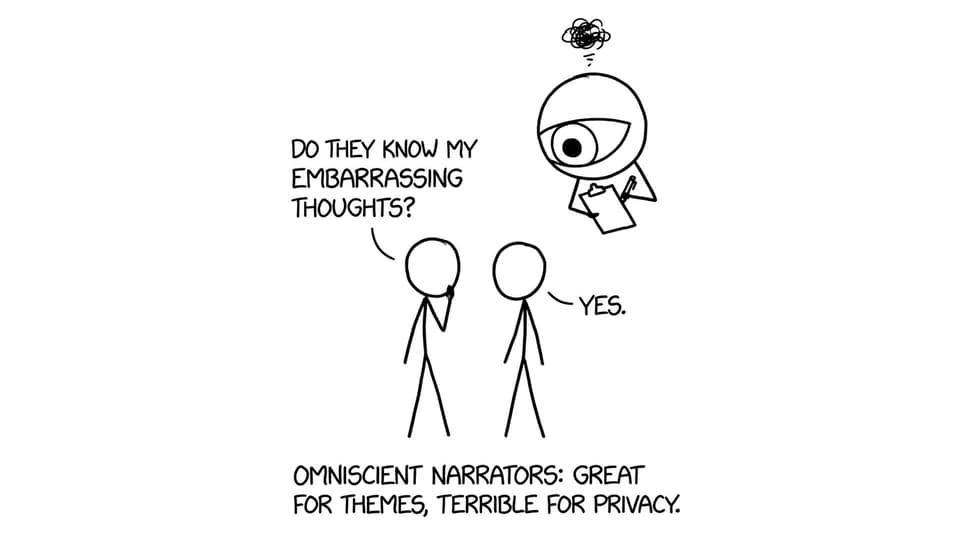
A strong analysis move in IB English is to ask: What does omniscience allow the author to argue about society that limited narration would not?
Unreliable narration: when the telling is the conflict
Unreliability is not just "lying". It can be self-protection, denial, trauma, immaturity, or ideology.
Look for:
-
contradictions and backtracking
-
selective detail (what gets described with energy, what gets rushed)
-
defensiveness or over-explaining
-
irony (the narrator reveals more than they intend)
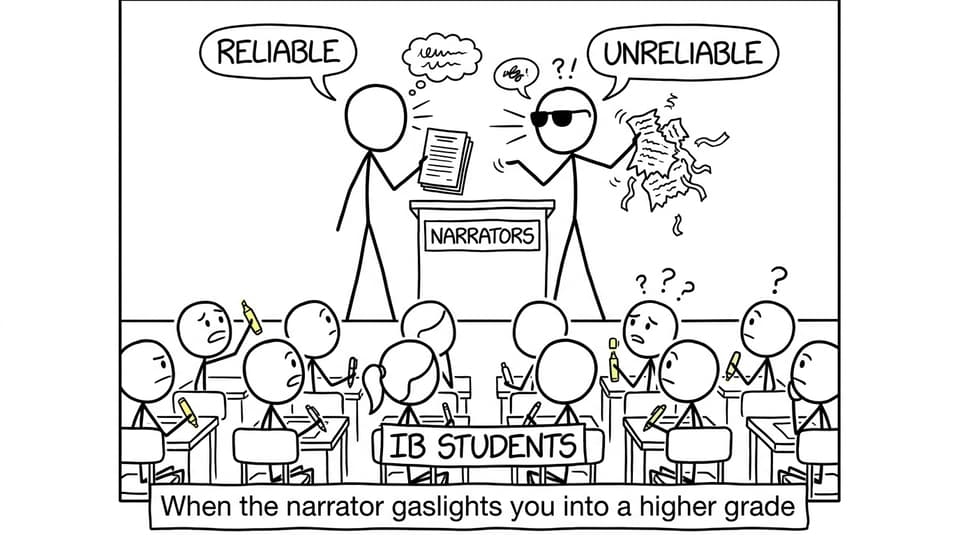
To build this skill quickly, practice writing 2-3 "reliability" sentences per extract. If you want a structured place to do that, pair your practice with RevisionDojo’s Notes for Structure in Prose - IB, because structure and reliability often work together.
A step-by-step method you can use in any novel extract
Identify narrator type and access
Ask:
-
Who speaks?
-
How close are we to thoughts?
-
What does the narrator appear unable to see?
Then write one precise claim.
The third-person limited narration restricts knowledge to the protagonist’s confusion, mirroring the instability of their internal world.
Track bias and motive
In IB English, "bias" is not an accusation; it is a technique. The narrator may be motivated by status, shame, grief, loyalty, or survival.
Useful wording:
The narrator’s selective focus frames events as justified, encouraging the reader to accept a moral hierarchy the novel later complicates.
Zoom in on tone and diction
Voice lives in small decisions: slang vs formality, long sentences vs fragments, certainty vs hedging.
Try:
The clipped syntax and sarcastic diction create a defensive voice, suggesting the narrator performs confidence while revealing vulnerability.
Link perspective to theme (the marks live here)
Perspective is never just technical. It shapes the novel’s argument about memory, power, identity, or truth.
In IB English, examiners reward commentary that shows consequences:
By confining the narrative to one consciousness, the novel suggests that truth is experienced privately, not accessed impartially.
Where voice and perspective score you marks in assessments
Paper 1: make perspective your organizing thread
In Paper 1, perspective is a shortcut to coherence. If you can explain how point of view shapes tone and meaning, your paragraphs naturally stop becoming a list of devices.
Use guidance from Mastering IB English Paper 1: A Complete Guide to Scoring High and reinforce your revision process with Step-by-Step Guide to Revising IB English Paper 1.
Paper 2: compare what each perspective makes possible
Paper 2 rewards comparative insight, and voice is a clean comparative axis: one author may use retrospective first-person to soften trauma; another may use limited third-person to intensify control.
Build your structure with Understanding the IB English A Literature Paper 2 Exam Structure and refine your method using How to Structure a Comparative Essay in IB Literature.
IO and HL Essay: perspective as a global issue engine
In the IO, perspective is often the bridge to a global issue: who gets to narrate, whose experience is framed as normal, and what language makes that framing feel natural.
For prep, use Master the IB Individual Oral: Expert Strategies, Practice Tools and sharpen your global issue choice with Understanding the Fields of Inquiry in IB English A.
Closing: treat perspective like a decision, not a detail
The best novels do not hand you truth. They negotiate it with you, sentence by sentence, through voice, limitation, and carefully chosen angles. When you revise IB English with narrative voice and perspective at the center, you stop sounding like someone who "read the book" and start sounding like someone who can explain how books work.
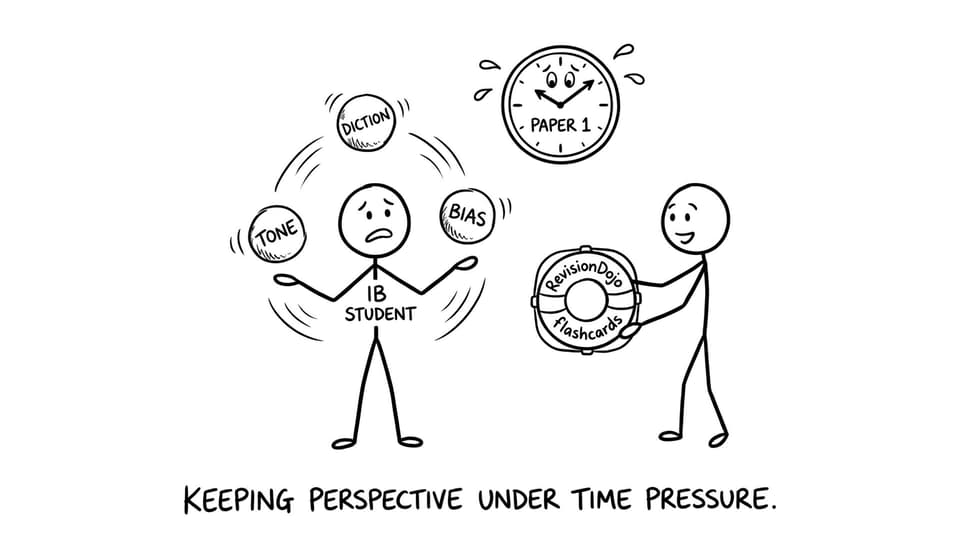
If you want that shift to feel repeatable, RevisionDojo is built for it: practise with the Questionbank, review targeted Study Notes, drill terms with Flashcards, refine paragraphs using AI Chat, and get honest feedback via Grading tools. Add Predicted Papers, Mock Exams, the Coursework Library, and Tutors when you want exam pressure without exam panic.
Your next step: pick one chapter from your novel, annotate only for voice and perspective, then write three sentences explaining what the reader is positioned to believe. That small habit is how IB English analysis starts to compound.