


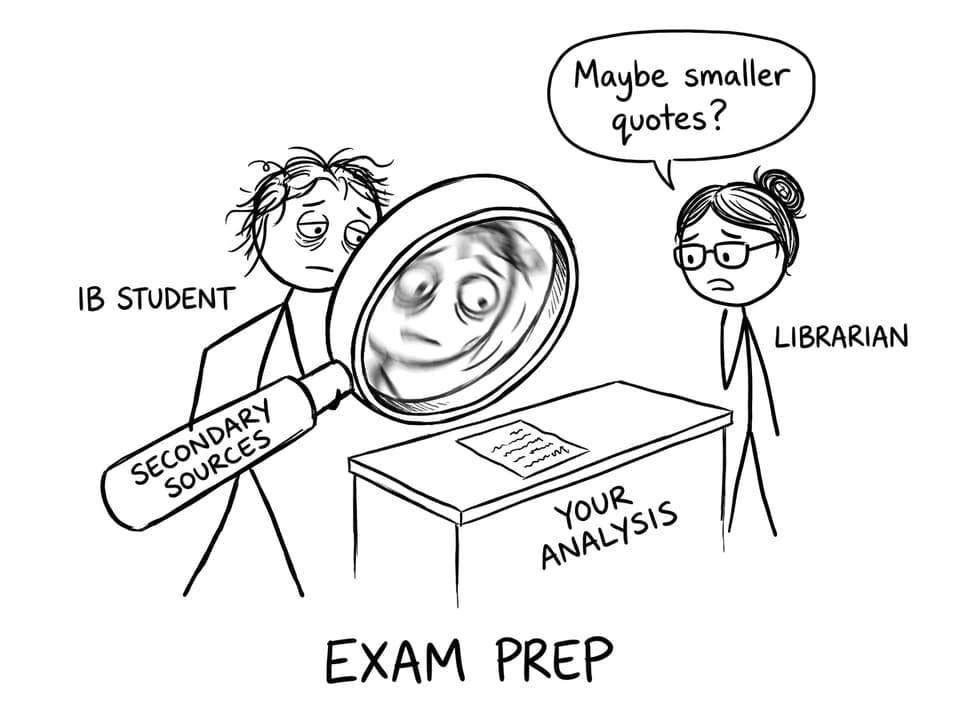
In the week before exams, a strange thing happens to smart writers: we start collecting opinions like they are life rafts.
A sentence from a scholar. A quote from a book review. A PDF with a confident title and a confident tone. In IB English, this feels responsible. It feels academic. It feels like you are building an argument with pillars instead of hope.
But there is a quieter truth: secondary sources can make your work sharper, or they can slowly erase your voice. The difference is not how many critics you cite. It is how well you evaluate literary criticism and how deliberately you use it.
IB English quick checklist: using criticism without drowning in it
Use this before you add any new quotation to an IB English essay or HL Essay paragraph:
-
Can you summarize the critic’s main claim in one sentence?
-
Do you understand the lens (feminist, postcolonial, formalist, etc.) driving their reading?
-
Is the source reputable enough for school-level academic writing?
-
Does it directly strengthen your line of inquiry, not replace it?
-
Can you link the critical idea to specific authorial choices and textual evidence?
-
Have you cited it clearly (including paraphrase)?
If you want a bigger picture of how critics fit into a mature reading, pair this with How to Develop Critical Perspectives in IB English A.
What literary criticism is supposed to do in IB English
At its best, literary criticism does one of three jobs in IB English:
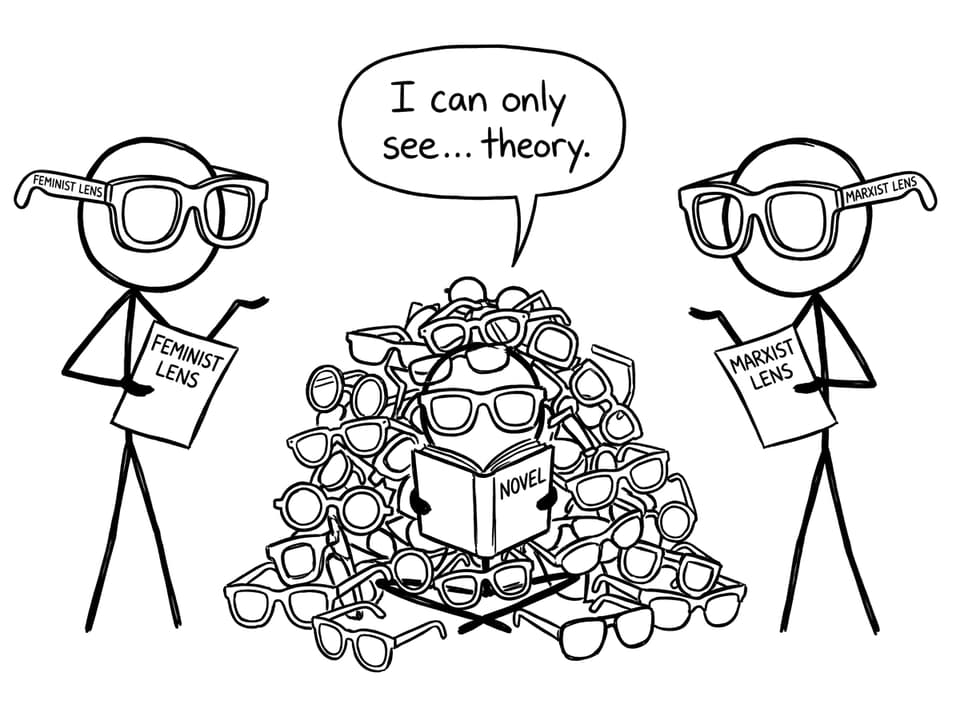
It gives you a lens
A lens is not a conclusion. It is a method for noticing patterns. A feminist critic might push you to track silence, power, and representation. A Marxist critic might make you re-read setting as economics, not scenery. If you are still learning how to use lenses, How to Use Literary Theory in IB English Essays is a helpful guide.
It creates productive friction
The most useful critic is sometimes the one you partially disagree with. In IB English, disagreement (done politely and precisely) often creates clearer thinking: you have to define your claim, defend it, and show why your reading fits the text better.
It helps you sound academically grounded
Not by sounding fancy, but by showing you know your interpretation sits inside a wider conversation. This matters most in the HL Essay, where research is explicitly encouraged. Start with Understanding the HL Essay for IB English A and browse models in IB English A HL Essay Exemplars.
How to judge whether a secondary source is worth trusting
A simple rule: in IB English, credibility is not just about being “smart.” It is about being traceable.
Choose sources with academic signals
Prioritize:
-
peer-reviewed articles
-
academic books from recognized publishers
-
reputable journals
-
scholarly essay collections
If you are doing extended research, this broad guide to sourcing is useful: What Are the Best Sources for IB Extended Essay Research?.
Spot the red flags early
Be cautious if a source:
-
makes big claims with no textual evidence
-
summarizes plot more than it analyzes technique
-
relies on vague buzzwords (“this clearly shows…”) without method
-
is anonymous or written like an unedited opinion post
In exam season, it can also help to re-center on what the IB actually rewards: your ability to interpret authorial choices. For Paper 1 skills, see Step-by-Step Guide to Revising IB English Paper 1 or Writing a Commentary for IB English A: Step-by-Step Guide.
The “lens check”: understand what the critic is really doing
Many students in IB English quote critics as if they are neutral narrators. But critics are usually arguing from a framework. Once you name the framework, you can judge fit and relevance.
Common lenses you will see:
-
Feminist criticism: gender roles, power, representation, voice
-
Postcolonial criticism: identity, language, empire, othering
-
Psychoanalytic criticism: desire, repression, symbolism, trauma
-
Marxist criticism: class, labor, ideology, material conditions
-
Formalist approaches: structure, diction, narrative method, pattern
Your job is not to become a theorist. Your job is to use a lens as a flashlight, then return to the text with clearer eyes.
How to integrate criticism without losing your voice
A useful integration pattern for IB English paragraphs is:
Your claim → textual evidence → your analysis (technique + effect) → critic (support/contrast) → your evaluation
Three practical rules:
Keep quotations short
Short quotes force you to explain. Long quotes tempt you to hide.
Always “cash out” the quote
After the critic’s words, answer: So what does this change about how I read the passage? If nothing changes, the quote is decoration.
Use critics as verbs, not trophies
Instead of “Scholar X says…” aim for “Scholar X’s reading of X helps clarify how the motif of Y functions as…” This keeps the critic inside your reasoning.
When you want to build a stronger argument voice overall, read How to Develop Insightful Literary Arguments for IB Exams.
Academic honesty: the quiet skill that protects everything
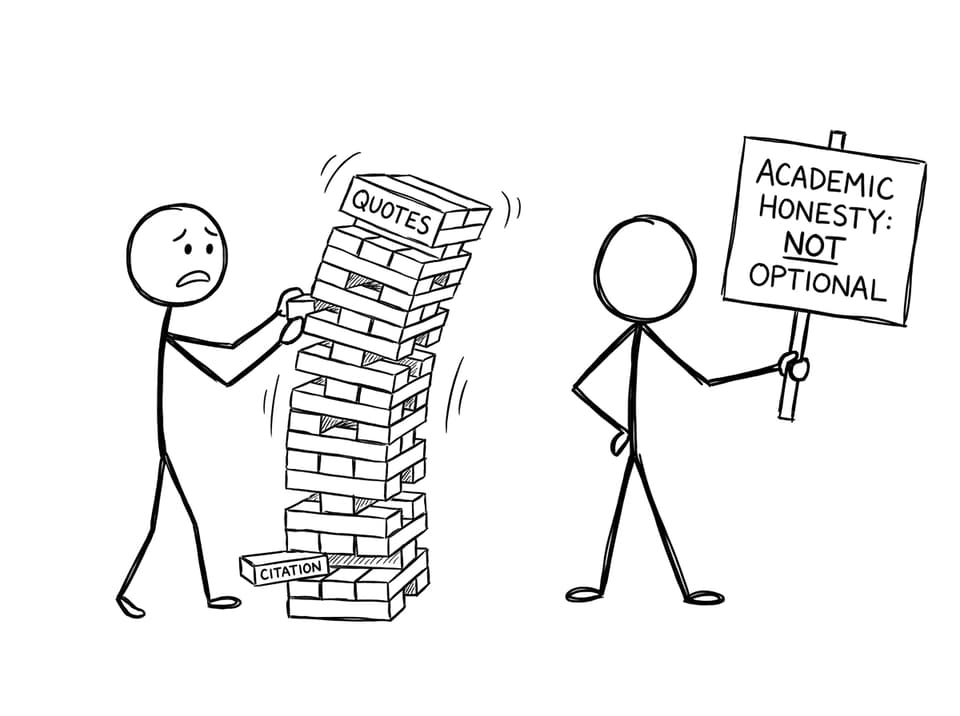
In IB English, paraphrasing is still borrowing. Borrowing is fine. Hiding it is not.
Cite:
-
direct quotations
-
paraphrased ideas
-
distinctive interpretations you did not originate
If you are unsure what “counts,” it is safer to cite. The goal is not perfection in formatting; it is clarity about what is yours.
Closing: IB English essays win when your thinking leads
Secondary sources are powerful in IB English for the same reason they are dangerous: they sound certain. Your job is to stay curious instead of obedient. Evaluate the source, name the lens, quote briefly, and return to the text with your own judgment intact.
When you want that balance of confidence and control, use RevisionDojo as your home base: build arguments with Study Notes and Flashcards, pressure-test ideas with AI Chat, drill skills with the Questionbank, and refine coursework using Grading tools, Mock Exams, Predicted Papers, and the Coursework Library (plus Tutors when you want human feedback). In the end, the best criticism does not replace your voice; it teaches it to speak more clearly.


