



When you read Shakespeare the night before an exam, it can feel like everyone on stage is speaking in riddles while you are the only person not invited to the joke.
But Shakespeare is rarely random. His plays run on patterns: repeatable dramatic conventions that shape how audiences feel, what characters hide, and when tension snaps. If you are studying IB English, learning these conventions is one of the fastest ways to write analysis that sounds precise, confident, and deeply grounded in craft.
Why dramatic conventions matter in IB English
In IB English, you are rewarded for explaining how meaning is created, not just what happens. Dramatic conventions give you that “how.” They let you move from plot summary (“Hamlet is unsure”) to technique-based argument (“Hamlet’s soliloquies externalize moral paralysis and invite the audience into complicity”).
Shakespeare also wrote for performance conditions that shaped his choices: limited sets, heavy reliance on language, and an audience trained to listen for cues in verse, rhythm, and staging. When you notice these conventions, your commentary becomes cleaner, faster, and easier to organize for Paper 1 and Paper 2.
If you want a wider toolkit of technique language, pair this with Mastering Literary Devices in IB English Exams.
Quick checklist: your Shakespeare scan (exam-friendly)
Use this mini-routine whenever you revise a scene:
-
Spot soliloquies and asides (who gets private access to truth?).
-
Track dramatic irony (who knows what, and when?).
-
Notice verse vs prose and changes in rhythm (what shifts emotionally?).
-
Mark the turning point and how the five-act shape builds pressure.
-
Treat stage directions, silences, and entrances as meaning-making choices.
For a drama-focused glossary, see Drama notes.
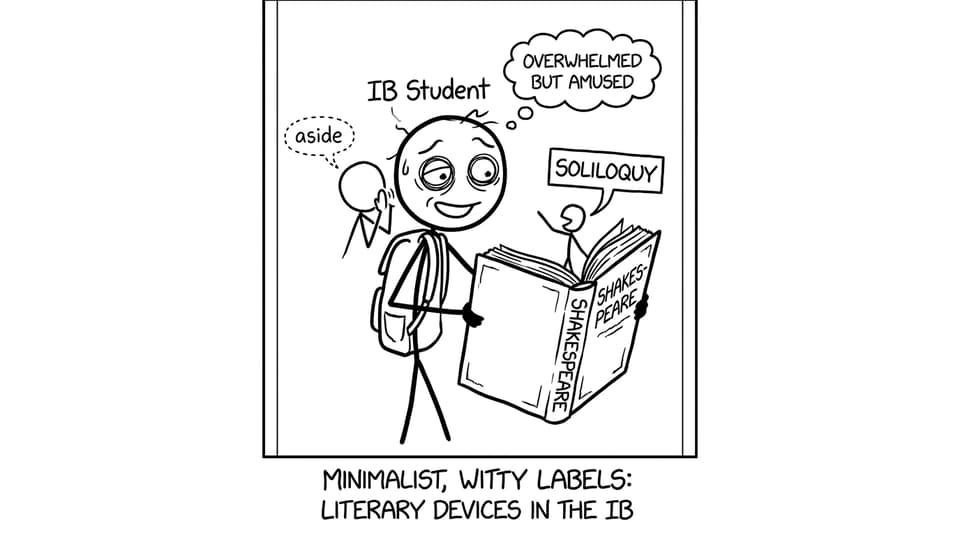
Soliloquies and asides: private truth in public space
A Shakespearean soliloquy is basically a pressure valve. The plot pauses, and the character’s inner argument becomes audible. In IB English, that matters because you can analyze a soliloquy as a structural device (it interrupts action), a characterization device (it reveals conflict), and an audience device (it invites judgment or sympathy).
Asides do something slightly different. They are quick, sharp, and often mischievous. They create a two-level reality: what the stage world believes, and what the audience is allowed to know. That gap is where tension lives.
To practice spotting and analyzing these moments, explore Shakespeare-specific notes like Hamlet notes or Macbeth notes. Then test yourself with RevisionDojo’s AI Chat by asking: “What is the emotional pivot inside this soliloquy, and how does it change audience alignment?”
Meter, rhythm, and the moment a line breaks
Shakespeare’s language is not just beautiful; it is functional. Iambic pentameter often signals control, status, or ceremonial feeling. Prose can suggest intimacy, comedy, instability, or a character slipping out of public performance.
In IB English, you do not need to label every line perfectly. Instead, look for patterns and disruptions:
-
A steady rhythm can feel like a mask: self-control, persuasion, political performance.
-
A sudden break can feel like a crack: fear, guilt, urgency, obsession.
-
A switch into prose can reframe the scene as more private, more chaotic, or more comic.
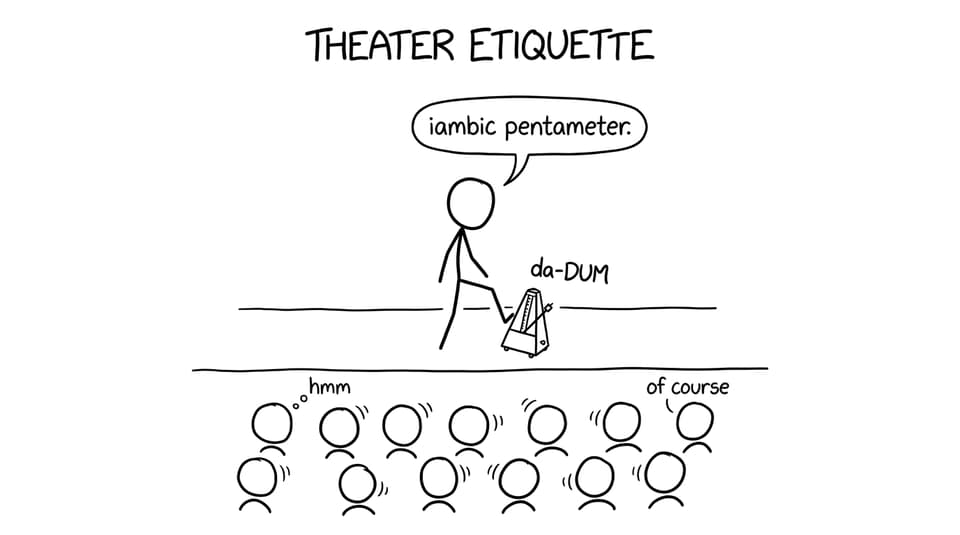
A useful exam move is to connect rhythm to psychology: “The disrupted meter mirrors the character’s destabilized moral certainty.” That is the kind of sentence that earns marks because it ties form to meaning.
Dramatic irony: tension you can measure
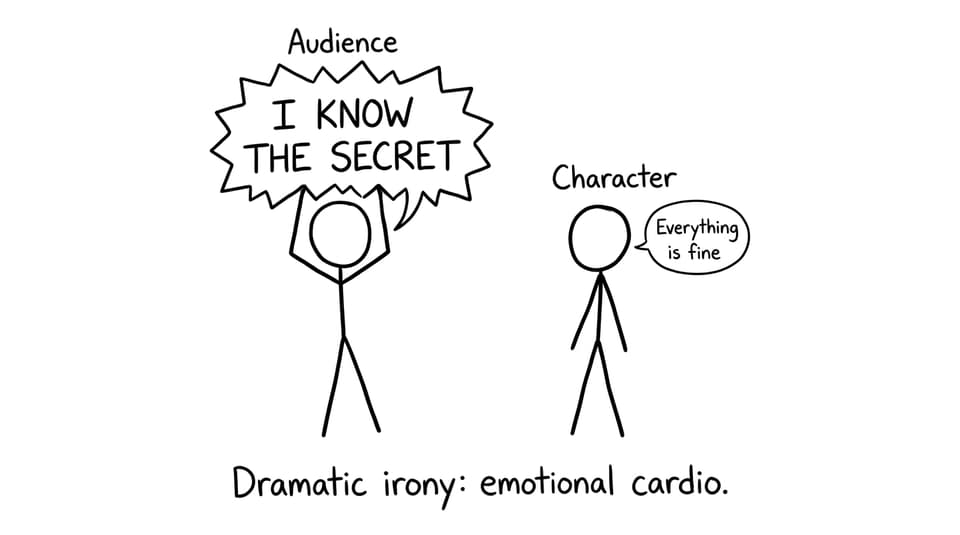
Dramatic irony is the simplest way to manufacture suspense: the audience knows something a character does not. Shakespeare uses it for tragedy (we watch people walk toward ruin) and comedy (we watch people misunderstand each other with confident enthusiasm).
For IB English analysis, avoid stopping at “this creates tension.” Push one step further:
-
What kind of tension? dread, amusement, pity, impatience?
-
Who benefits from the audience’s knowledge? the villain, fate, the playwright?
-
What theme does the irony sharpen? ambition, loyalty, appearance vs reality?
You can build this skill systematically with Literary Irony: Forms and Effects.
Structure and staging: acts, scenes, silence, and power
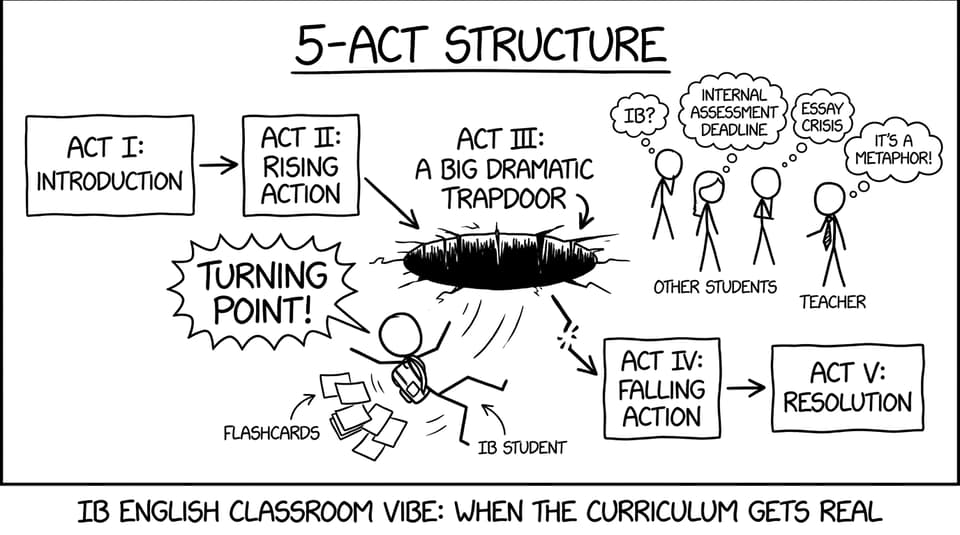
Shakespeare often follows a five-act rhythm that helps you talk about pacing:
-
Act I sets the terms of conflict.
-
Act II complicates motives and relationships.
-
Act III turns the world upside down.
-
Act IV deepens consequences and traps.
-
Act V resolves through restoration or catastrophe.
Staging matters because drama is written for bodies in space. Even with minimal sets, entrances, exits, proximity, and pauses communicate hierarchy and threat. If one character dominates the stage while another is silent, that silence is not empty: it is pressure.
For a practical guide to performance details, read How to Analyze Dialogue and Stage Directions in Plays.
Overview: how to turn conventions into exam paragraphs
A reliable IB English paragraph follows a simple chain:
Convention (soliloquy, irony, verse shift, staging) → evidence (short quotation or moment) → effect (audience response) → meaning (theme or character) → purpose (why here, why now)
To rehearse this under timed conditions, use RevisionDojo’s Questionbank and Grading tools for feedback loops, then reinforce key terms with Flashcards and Study Notes.
If Paper 1 is your focus, these will help with speed and structure: Best ways to prepare for IB English Paper 1 and Writing a Commentary for IB English A.
Closing: make Shakespeare predictable (in the best way)
Shakespeare can feel intimidating until you realize how often he returns to the same theatrical tools: soliloquy, aside, irony, rhythm, structure, staging. For IB English, those conventions are not extras; they are your fastest route to clear, evidence-driven analysis under time pressure.
If you want to turn these insights into marks, use RevisionDojo to build a routine: Study Notes for the big picture, Flashcards for technique vocabulary, Questionbank and Mock Exams for timed practice, Predicted Papers for targeted preparation, and Tutors when you want personal feedback on your argument and style. The plays are complex, but your method does not have to be. Start with the convention, follow the effect, and let your analysis do the talking.