


Digital surveillance rarely arrives with drama. It arrives with a “new feature” in your learning platform, a badge scan at the door, or a work app that quietly starts timing tasks. One day you realize the system knows when you arrived, what you clicked, and how long you hesitated before submitting.
That everyday feeling is exactly why IB Digital Society treats surveillance in schools and workplaces as more than cameras. IB Digital Society asks you to see surveillance as a digital system that shifts power, reshapes trust, and changes how people behave when they know they are measurable.
Digital surveillance (in IB Digital Society terms)
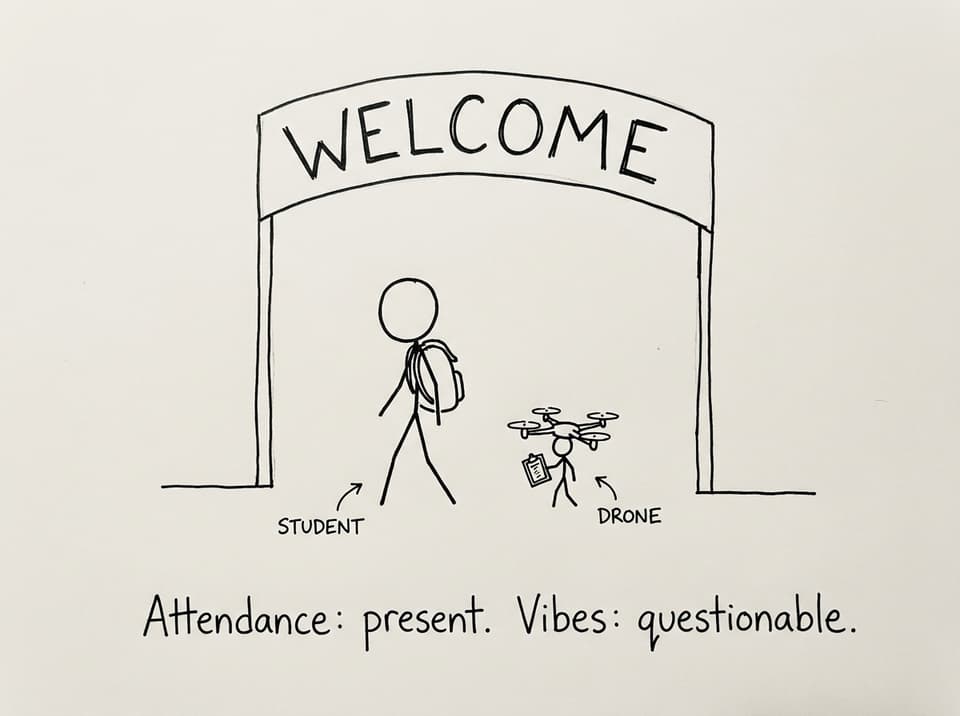
In IB Digital Society, digital surveillance is the systematic monitoring, recording, and analysis of people’s activity using digital tools. The key word is “systematic” because a spreadsheet, a dashboard, or an algorithm can become a surveillance system when it is used repeatedly to influence decisions.
In institutional settings, it often includes:
-
Attendance and access tracking (ID cards, QR check-ins, device logins)
-
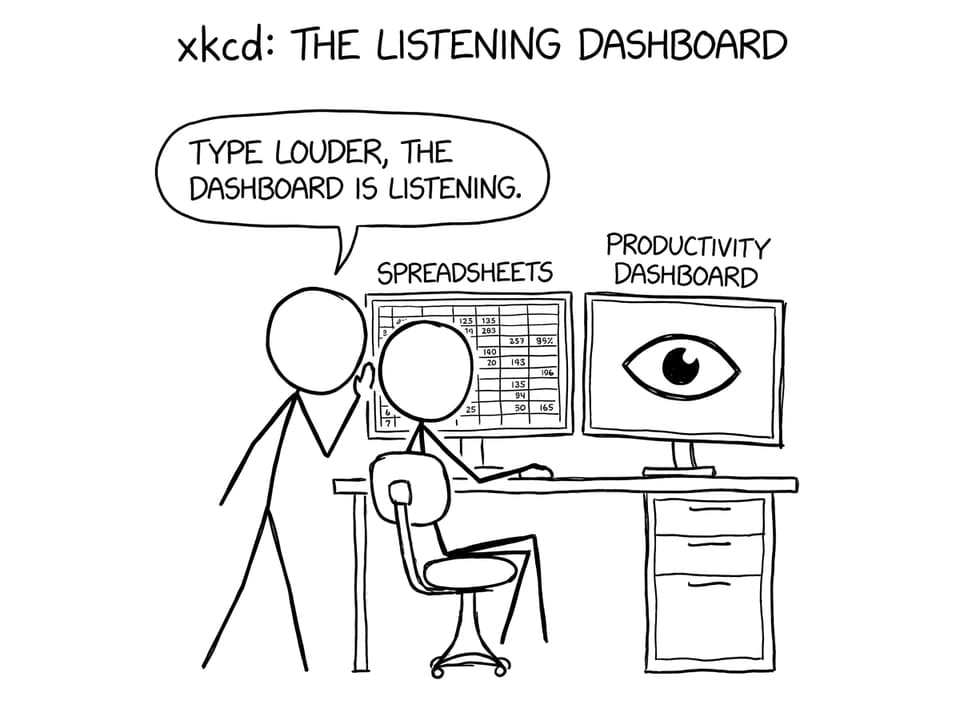
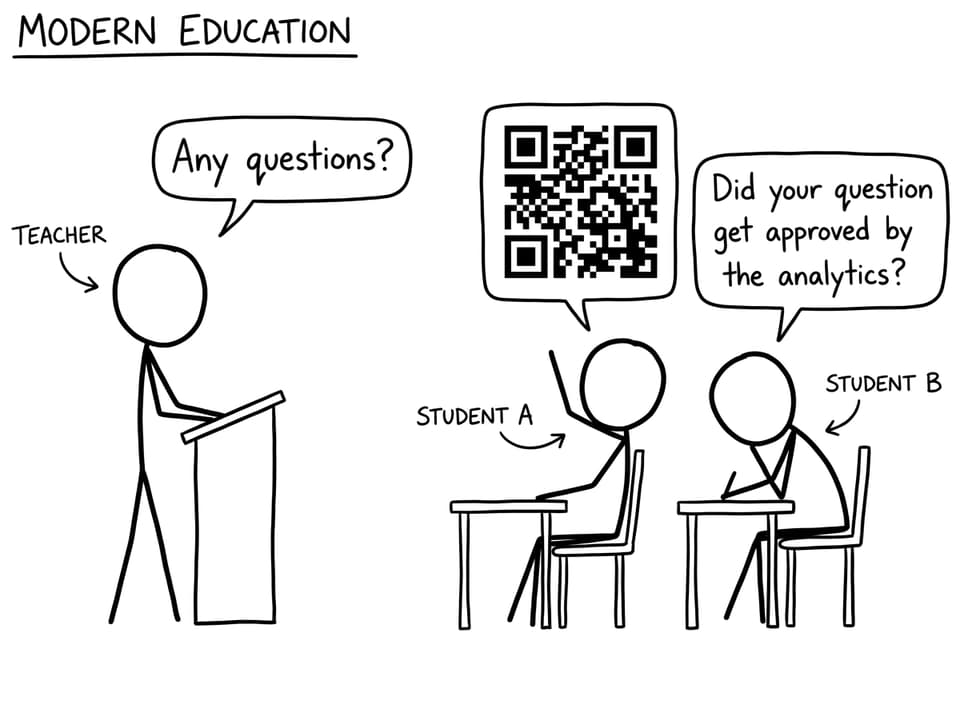
Activity monitoring (learning analytics, browsing logs, keystroke or screen capture tools)
-
Performance tracking (productivity metrics, call monitoring, automated evaluation)
-
Behaviour analysis (flagging “risk”, “engagement”, “compliance”)
If you want a clean definition you can reuse, pair this topic with the core framing in Understanding Surveillance in IB Digital Society.
Quick exam checklist for analysing surveillance
When an unseen source mentions monitoring, IB Digital Society exam answers get stronger when you run this short checklist:
-
What data is collected (and what is inferred)?
-
Who controls the system (school admin, employer, vendor)?
-
What decisions are made from the data (punishments, rankings, interventions)?
-
Is participation optional or unavoidable?
-
What trade-offs are claimed (safety, efficiency, learning outcomes)?
-
Who benefits, and who carries the costs?
This checklist aligns well with the concept-mapping approach in IB Digital Society: How All the Core Concepts Fit Together.
Why schools and workplaces choose digital surveillance
Institutions usually justify surveillance with practical goals: reduce risk, improve outcomes, prove accountability, or standardize decision-making. Digital systems make this tempting because they are scalable and look objective.
In IB Digital Society, your job is to test those claims rather than accept them.
A school might say, “We track platform activity to support learning.” An employer might say, “We monitor productivity to reduce burnout.” Those statements can be true and still incomplete, because the same system can also be used for discipline, ranking, or cost-cutting.
If you need language for the trade-off, connect this to privacy analysis in Understanding Privacy in IB Digital Society: How to Analyse It.
Impacts on individuals: behaviour changes first
Surveillance changes people even before it “does” anything official. In IB Digital Society, this matters because social outcomes are produced by design plus context.
Common individual impacts include:
-
Self-censorship: students participate less freely; employees avoid creative risk.
-
Pressure to perform: metrics become the target, not the learning or work itself.
-
Anxiety and reduced wellbeing: especially when monitoring is constant and unclear.
-
Identity effects: people start describing themselves using system labels (“low engagement”, “underperforming”).
Notice the subtlety: the harm is not only privacy loss. It is the way a measured environment trains you to act like the score matters more than the task.
Impacts on relationships: trust becomes conditional
Surveillance is also a relationship story. When a school or workplace relies heavily on monitoring, it can signal: “We trust you, but only if the data agrees.”
Institutional impacts often include:
-
Reduced professional judgement: dashboards outweigh teacher or manager context.
-
Changed accountability: decisions can be blamed on the system (“the algorithm flagged it”).
-
Compliance culture: people focus on appearing compliant rather than being competent.
In IB Digital Society, you can frame this as a power shift: institutions gain visibility and leverage, while individuals have fewer ways to contest interpretations.
Power, consent, and transparency: the ethical triangle
The hardest part of surveillance ethics is that consent in schools and workplaces is rarely meaningful. A student cannot realistically opt out of attendance systems; an employee cannot “choose” not to be monitored if it is built into the job.
So, in IB Digital Society, evaluate three things together:
-
Power: who owns the tools, sets thresholds, and defines “normal” behaviour?
-
Consent: is it informed and optional, or implied and unavoidable?
-
Transparency: do people know what is collected, how long it is stored, and how it shapes decisions?
A strong ethical evaluation asks whether surveillance is proportionate to its purpose, whether it respects dignity, and whether benefits and burdens are distributed fairly.
Data use and misinterpretation: the quiet risk
Surveillance systems produce data, but data is not the same as truth. Engagement metrics can confuse clicking with learning. Productivity metrics can confuse busyness with value.
In IB Digital Society, analyse:
-
Accuracy (what the system can and cannot measure)
-
Bias (whose behaviour is treated as “normal”)
-
Overreliance (when numbers replace context)
-
Function creep (data collected for one purpose gets reused for another)
To revise this efficiently, use targeted reading in the IB Digital Society Resources hub and then drill exam-style prompts with Topic 2 - Concepts - Digital Society - IB Questionbank.
How to write about surveillance in exams and the IA
In exams, treat surveillance as a digital system with stakeholders, data flows, and social consequences. Use one or two IB Digital Society concepts deeply (power, privacy, ethics, systems) instead of listing many.
For the IA, choose one specific system (for example, classroom analytics or workplace monitoring software), define it clearly, and focus on visible impacts and contestable decisions. Planning support helps, so use the IB Digital Society Internal Assessment Guide to align your approach to the criteria.
When you study, build a loop that matches how marks are earned: clear the concept with notes, test it with questions, then refine your writing. RevisionDojo is built for that loop with Study Notes, Flashcards, AI Chat, Grading tools, Mock Exams, Predicted Papers, a Coursework Library, and Tutors. If you want structure, start with the Ultimate Survival Guide for IB Digital Society Students and tighten your routine using Effective Note-Taking Tips for IB Digital Society.
Closing: make the system visible
Digital surveillance in schools and workplaces is a perfect IB Digital Society topic because it hides in plain sight. It is rarely introduced as control. It is introduced as convenience, safety, or improvement. Your advantage in exams is learning to make the system visible: the data collected, the power behind it, and the ethical trade-offs it creates.
If you want to turn this into marks, build one routine: read a tight explanation, practise questions, get feedback, and rewrite. Do that inside RevisionDojo using Study Notes, Flashcards, the Questionbank, AI Chat, Grading tools, and timed Mock Exams and Predicted Papers. Then when surveillance appears in an unseen source, you won’t just react to it. You’ll be ready to analyse it like an IB Digital Society student.
