


If you have ever read your own essay opening and thought, “This sounds like a school poster,” you are not alone. In IB English, introductions and conclusions are where nerves show up first: you either stall with a vague hook, or you sprint to a thesis you do not fully believe yet. But examiners are not asking for fireworks. They are asking for direction. A clean start and a meaningful finish signal that your reading is controlled, your argument is deliberate, and your interpretation has somewhere to go.
In IB English, your introduction is the promise. Your conclusion is the proof that you kept it.
Why introductions and conclusions matter in IB English
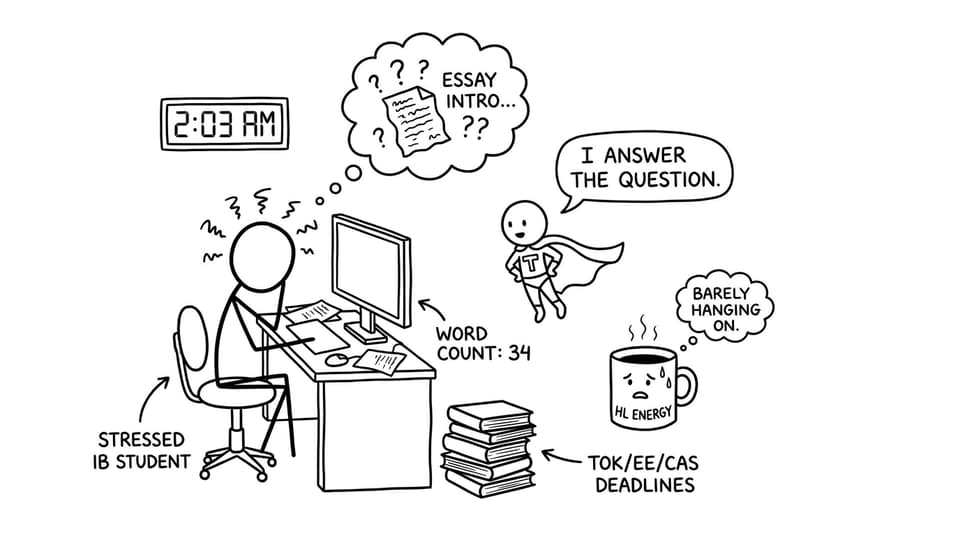
Think of the examiner as someone speed-reading with a highlighter and a rubric. In IB English, a strong introduction makes the essay easy to reward: it clarifies the task, anchors the interpretation, and hints at how you will build your case. A weak introduction forces the examiner to guess what you are doing.
Conclusions matter because they show control. In IB English, a thoughtful conclusion does not just stop. It lands. It turns your paragraphs into one coherent claim and makes the final impression feel earned rather than accidental.
If you want extra guidance on overall structure, it helps to pair this with Structuring Your IB English Paper 2 Essay and the broader IB English tag hub.
A quick checklist you can use in any IB English exam
Use this as a 60-second scan before you move on from your opening or closing.
Introduction checklist
-
Name the text(s) and author(s) (or text type for Paper 1)
-
Answer the question with a specific, arguable thesis
-
Signal 2-3 focus areas (techniques, themes, comparisons)
-
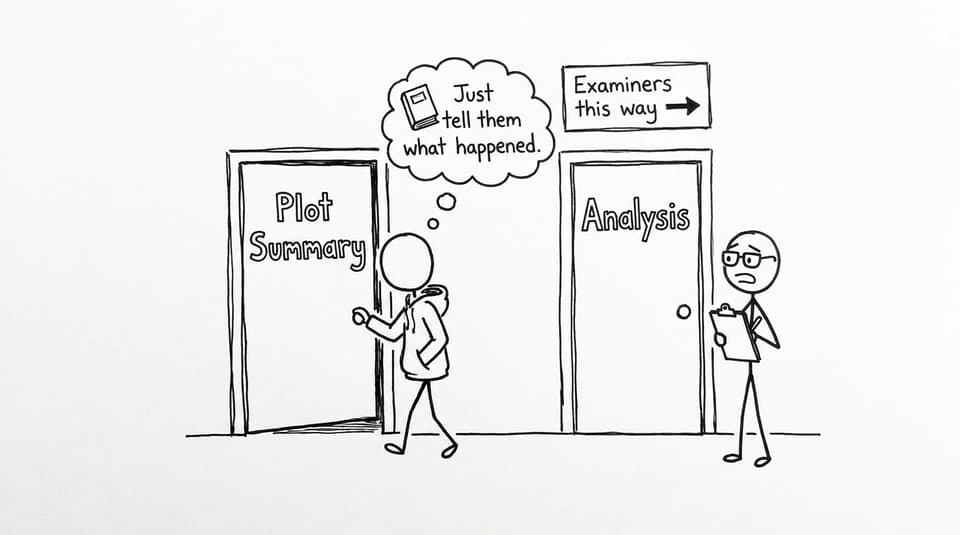
Avoid plot summary and generic “Throughout history…” lines
Conclusion checklist
-
Re-state the thesis in fresh wording (no copy-paste)
-
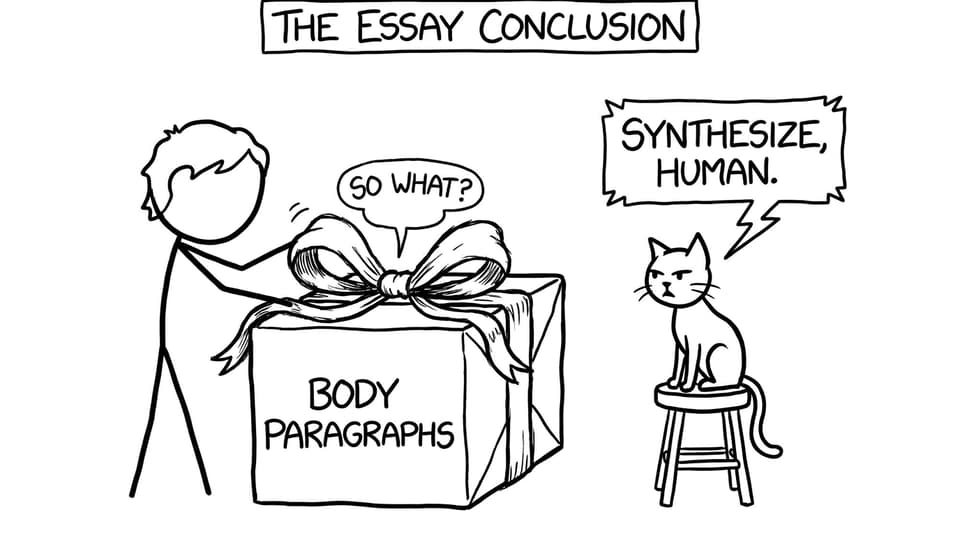
Synthesize what your points collectively reveal
-
End with a “so what?” insight tied back to the prompt
-
Do not introduce new evidence or new techniques
For a deeper thesis refresher, What Makes a Good Thesis Statement for IB English Essays? is worth bookmarking.
Crafting an insightful IB English introduction
A useful way to think about an IB English introduction is: context, claim, compass.
Start close to the question, not far from it
You do not need a dramatic hook. In IB English, the best hook is often a focused thematic statement that aligns with the prompt. One sentence is enough. Then quickly bring it back to the exact task.
If you are writing Paper 1, use a framework like TAPAC (text type, author, purpose, audience, context) to stay grounded. RevisionDojo breaks this down in Mastering IB English Paper 1: 7 Expert Strategies.
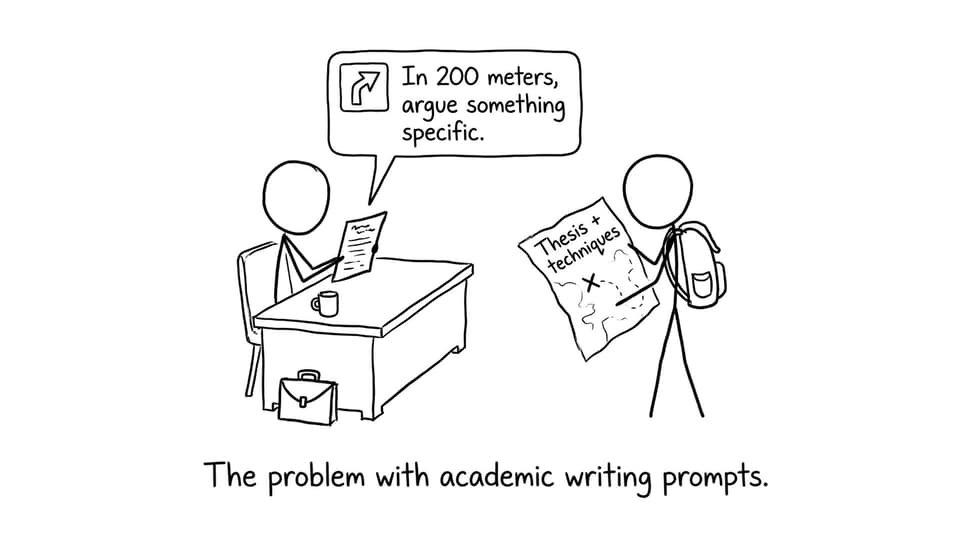
Write a thesis that is an argument, not a topic
In IB English, “The text explores power” is a topic. A thesis is an interpretation that can be debated. It should tell the examiner what the writer is doing and why it matters.
If you struggle to make it sharp, use the one-sentence test:
-
Does it answer the prompt directly?
-
Does it name how meaning is made (technique, structure, voice, comparison)?
-
Does it imply what you will prove?
RevisionDojo’s How to Write a Strong Introduction for IB English Essays pairs well with that mindset.
Add a roadmap that feels natural
A roadmap is not a shopping list. In IB English, you just need to hint at the lenses you will use: “through imagery, shifting tone, and narrative perspective” or “by contrasting how each author represents control.” That is enough to show organization without boxing yourself in.
If you want a fast, exam-safe template, RevisionDojo’s The Introduction Framework notes are built for timed conditions.
Writing IB English conclusions that feel earned
A strong IB English conclusion is less like a summary and more like a final camera zoom-out.
Synthesize, do not re-list
Instead of repeating points, explain what your points together reveal about the prompt. This is where you show coherence: the essay is not three paragraphs рядом by chance, but one argument unfolding.
Keep your ending inside the same argument
In IB English, a common mistake is using the conclusion to add a “better” idea you did not have time to develop. Resist. If it did not appear in your body paragraphs, it cannot suddenly become your final insight.
For Paper 2 endings, RevisionDojo’s Concluding Your English Lit Paper 2 Essay notes offers a clear step-by-step close.
How RevisionDojo helps you practice intros and conclusions (without guessing)
Getting better at IB English openings and closings is mostly repetition with feedback. RevisionDojo is designed for that loop:
-
Use the Questionbank to pull exam-style prompts and practice writing just introductions and conclusions in short sprints.
-
Use AI Chat to challenge your thesis: ask whether it is arguable, specific, and aligned to the prompt.
-
Use Grading tools like the English Language and Literature Paper 1 rubric to see what top-band focus and organization actually look like.
-
Build consistency with Study Notes and Flashcards for technique vocabulary and sentence stems.
-
When you want realism, RevisionDojo’s Mock Exams and Predicted Papers help you rehearse timing, while Tutors can refine the nuance in your line of argument.
Closing: make your first and last lines work for you
In IB English, introductions and conclusions are not formalities. They are signals to the examiner that you know what you are arguing, why it matters, and how your analysis fits together. Write an opening that points somewhere specific, and a closing that proves you arrived.
If you want to make this repeatable, pick one prompt from RevisionDojo’s IB English A Lang & Lit resources, draft only the introduction and conclusion, and run them through the platform’s AI Chat and Grading tools. Your body paragraphs will improve too, because your essay will finally have a clear beginning and a real ending, the kind examiners remember.


