
In the week before an assessment, most IB students do the same thing: they underline half the book, circle three quotes, and hope the phrase global issue will magically turn into a coherent argument.
But IB English does not reward hope. It rewards a calm, repeatable method: define a global issue with precision, compare authorial choices, and show why context changes meaning.
This guide gives you a practical way to write a comparative analysis of global issues in two texts for IB English (especially the IO, Paper 2, and HL Essay), without drifting into plot summary.
What counts as a global issue in IB English?
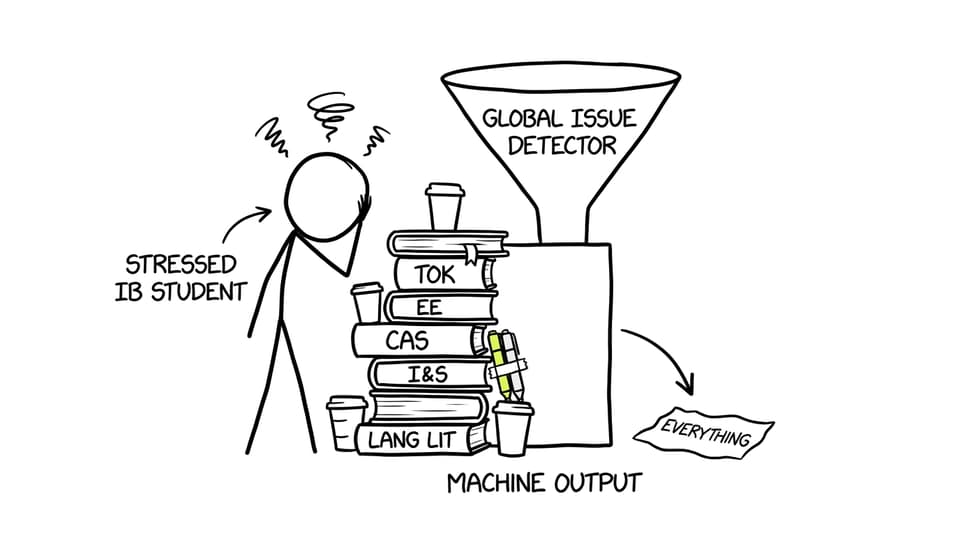
In IB English A: Language & Literature, a global issue is a real-world concern that is:
-
Transnational (matters across countries and cultures)
-
Enduring (not locked to one moment in history)
-
Debatable and complex (rich enough for analysis, not just agreement)
Think: identity and belonging, language and power, censorship, inequality, technology and control, gender and authority, postcolonial legacies.
If you want a fast way to generate strong options, start with the IB’s thematic framing. RevisionDojo’s breakdown of the Fields of Inquiry in IB English A helps you move from “theme” to a usable global issue statement.
A quick checklist before you start comparing
Use this five-point test before you commit:
-
Can you express the global issue as a full sentence?
-
Is it clearly present in both texts (not just mentioned once)?
-
Can you analyse at least 3 techniques per text?
-
Can you connect each text to a specific context (historical, cultural, authorial)?
-
Can you keep returning to so what? (impact on audiences, values, ideology)?
This mindset fits every major IB English task, from the Individual Oral to Paper 2.
Comparative analysis of global issues in two texts (the method that actually scores)
A strong comparative analysis in IB English is not “Text 1 says X, Text 2 says X.” It is:
Text 1 constructs the issue using A/B/C choices, creating D effect, shaped by E context; Text 2 constructs the same issue using F/G/H choices, creating I effect, shaped by J context.
That sentence is basically your blueprint.
Define the global issue with a narrow lens
Avoid single-word issues like “power” or “freedom.” They are too elastic. Instead, narrow them into a claim that forces you to analyse representation.
Examples:
-
“How institutions normalise inequality by controlling language.”
-
“How gendered expectations reduce personal agency in private spaces.”
-
“How surveillance reshapes identity through self-censorship.”
This is where many IB English scripts quietly fail: the issue is broad, so the analysis floats.
Write a comparative thesis that includes a difference
Your thesis should do two things:
-
Name the shared issue.
-
State the key contrast in method or perspective.
Example thesis:
While both authors expose how social systems discipline individual identity, Text 1 uses claustrophobic narration to show internalised control, whereas Text 2 uses public rhetoric and irony to reveal how power performs itself in plain sight.
Notice what’s missing: plot.
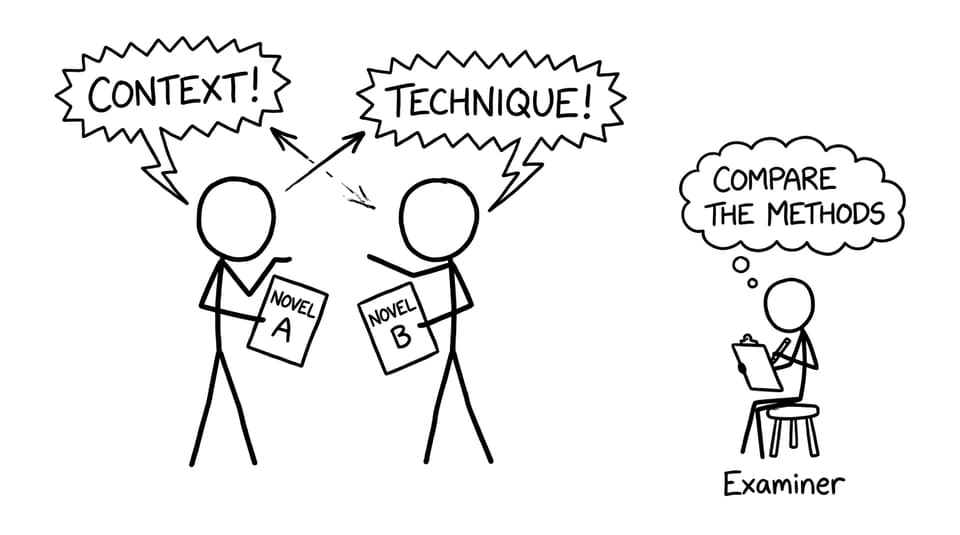
Compare authorial choices (not ideas)
In IB English, examiners reward technique-driven comparison. Build paragraphs around “methods” such as:
-
diction and tone
-
imagery and symbolism
-
narrative perspective
-
structure (fragmentation, cyclical endings, juxtaposition)
-
genre/form conventions (dystopia, realism, satire)
-
for non-literary texts: composition, framing, colour, typography, layout, slogan logic
A reliable paragraph frame:
-
Point (comparative): both texts portray the issue, but in different modes
-
Evidence: one precise moment from each text
-
Method: identify technique (and name it)
-
Effect: what it makes the audience feel/assume
-
Link: reconnect to the global issue using the wording from your thesis
If you need help keeping your comparison sustained, pair this guide with Structuring Your IB English Paper 2 Essay, because Paper 2 is basically comparative thinking under time pressure.
Tie context to meaning (without turning it into history class)
Context matters in IB English, but only when it changes interpretation.
Ask:
-
What social assumptions does the text rely on or critique?
-
Who had power when the text was produced (and who didn’t)?
-
How would different audiences read the same choices differently?
A clean context sentence sounds like:
Written for an audience familiar with X norm, the text’s ironic tone turns everyday dialogue into an accusation.
Not:
In 1879, many things happened.
Common mistakes in IB English global issue comparisons
-
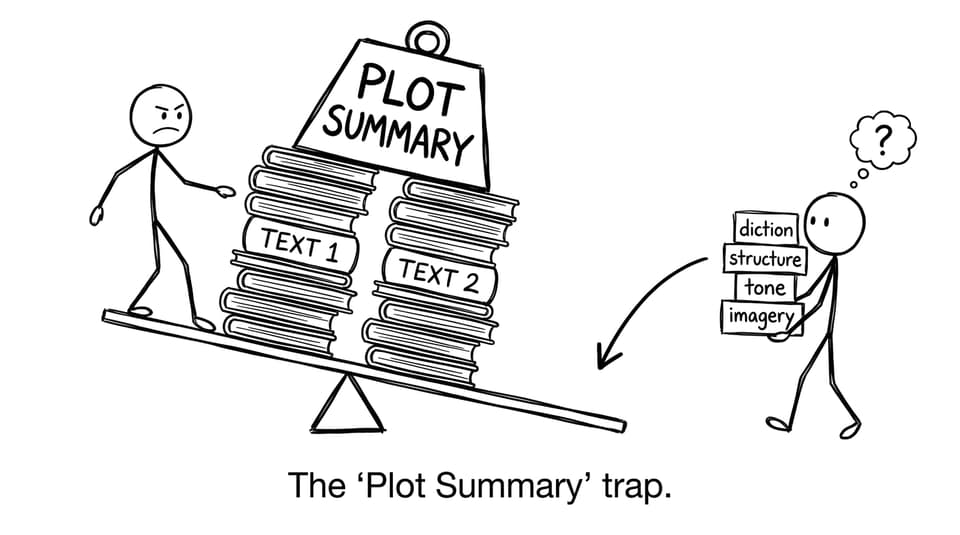
Writing two separate mini-essays (one per text) instead of integrated comparison
-
Explaining plot to “prove” the issue exists
-
Treating techniques as a checklist rather than meaning-making choices
-
Using a global issue so broad that every paragraph could fit any book
How RevisionDojo helps you practise comparative analysis (fast)
The hardest part of IB English is not knowing what a good paragraph looks like. It’s producing one consistently.
RevisionDojo is built for that repetition:
-
The Study Notes and Flashcards help you retain techniques and vocabulary that make analysis precise.
-
The Questionbank gives targeted practice so you’re not revising blindly.
-
AI Chat helps you test thesis ideas and tighten global issue phrasing.
-
Grading tools support clearer, criteria-aligned improvement.
-
Predicted Papers and Mock Exams build timed confidence without guessing what to practise.
-
The Coursework Library and Tutors support IO planning and comparative clarity when you need a second brain.
Start here: IB English A: Lang & Lit Resources and then deepen your IO work with the IB IO Practice Tool.
Closing: make the global issue do the heavy lifting
A good IB English comparative analysis of global issues is quiet but powerful: one precise global issue, one thesis with a real contrast, and paragraphs that compare techniques with purpose.
If you want the process to feel less like improvisation and more like training, build a weekly loop on RevisionDojo: plan one global issue, draft one comparative thesis, practise with the Questionbank, and get feedback using AI tools. Start with Cracking the Individual Oral, then use RevisionDojo to turn that method into muscle memory, the kind you can trust when the clock starts.