
If you have ever walked out of an IB English exam thinking, “I knew the text… so why does my essay feel flimsy?”, you are not alone. Most students do not lose marks because they are unintelligent. They lose marks because pressure quietly changes what they write: analysis turns into summary, arguments turn into vibes, and the question becomes a background decoration.
The good news is that IB English essays are surprisingly fixable. Once you know the common failure points, you can write in a way that makes an examiner relax: clear thesis, controlled paragraphs, purposeful evidence, and a steady focus on the prompt.
Quick checklist: the “don’t leak marks” routine
Before you write a single body paragraph, run this short IB English checklist:
-
Restate the prompt in your own words (one sentence).
-
Draft a thesis that answers it directly (one sentence).
-
Choose 3 techniques or comparative lenses you can prove.
-
Pick short evidence you can micro-analyze (2-5 words is often enough).
-
Plan paragraphs using PEEL (or a close cousin).
-
Save 5 minutes for proofread and linking back to the question.
If you want a step-by-step structure for commentary writing, use Mastering IB English Paper 1: A Complete Guide alongside this checklist.
Mistake: writing plot summary instead of analysis
The fastest way to flatten an IB English essay is to retell the text like you are explaining it to a friend who missed class. Examiners already know what happens. They are grading how you interpret choices.
Upgrade move: Use the “choice, effect, meaning” chain.
-
Choice: imagery, syntax, structure, tone shift, motif, contrast
-
Effect: what it makes the audience notice, feel, suspect, question
-
Meaning: what that suggests about theme, values, power, identity, conflict
If you are building fundamentals for essay writing across the course, this broader guide helps: How to Write a Good Essay for IB English Literature.
Mistake: drifting away from the question
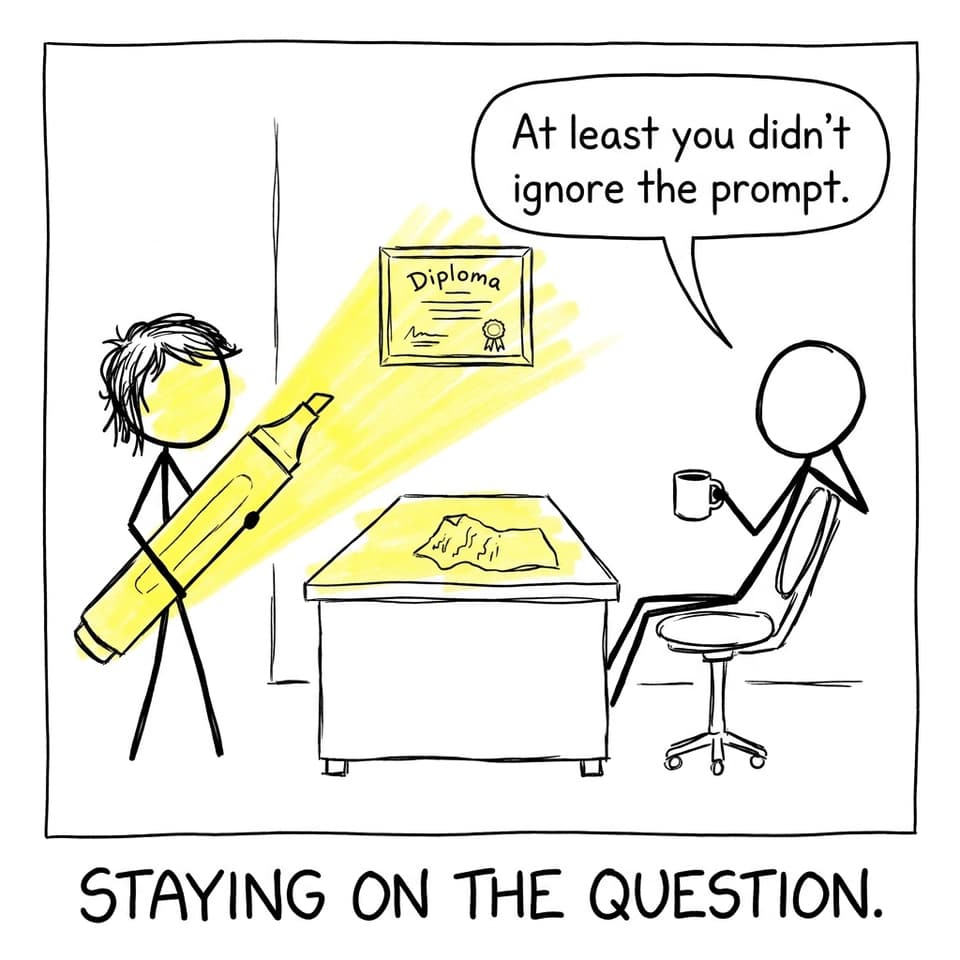
In IB English, a paragraph can be brilliant and still be wrong if it does not answer the prompt. This happens most often in Paper 2, where your knowledge of the works tempts you into pre-memorized “best points” that do not fit.
Upgrade move: Put the prompt’s key terms into your topic sentence and your link sentence.
For Paper 2 structure specifically, keep this open while you plan: Structuring Your IB English Paper 2 Essay.
Mistake: a thesis that says “something happens”
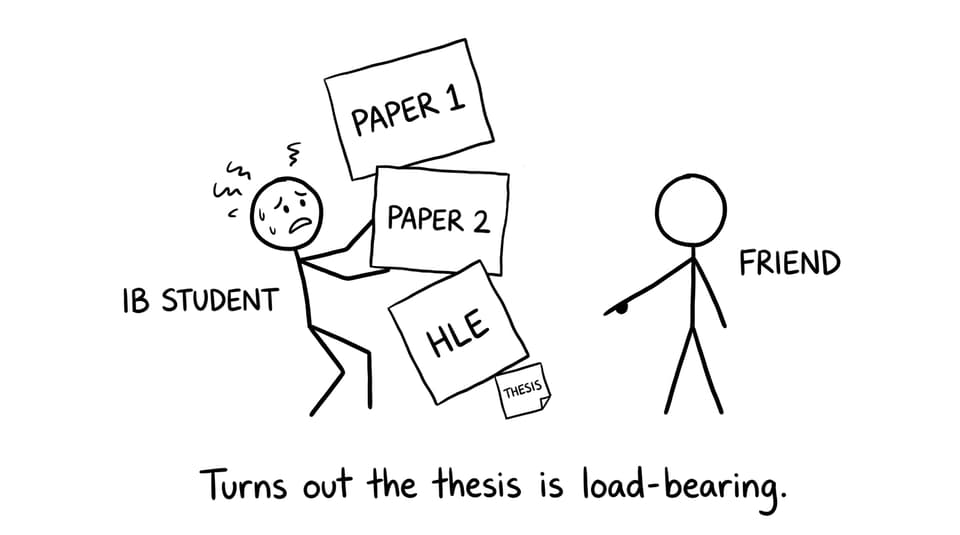
A vague thesis creates vague paragraphs. In IB English, your thesis is not a theme. It is an argument about how meaning is constructed.
Weak thesis: “The writer uses imagery and tone to show emotion.”
Stronger thesis: “Through shifting tone and violent natural imagery, the writer frames emotional repression as a kind of self-erasure, inviting the audience to read silence as damage rather than strength.”
If your intros and endings are costing marks, this is the cleanest fix: Writing Effective Introductions and Conclusions in IB English Essays.
Mistake: dumping quotations and hoping they speak for you
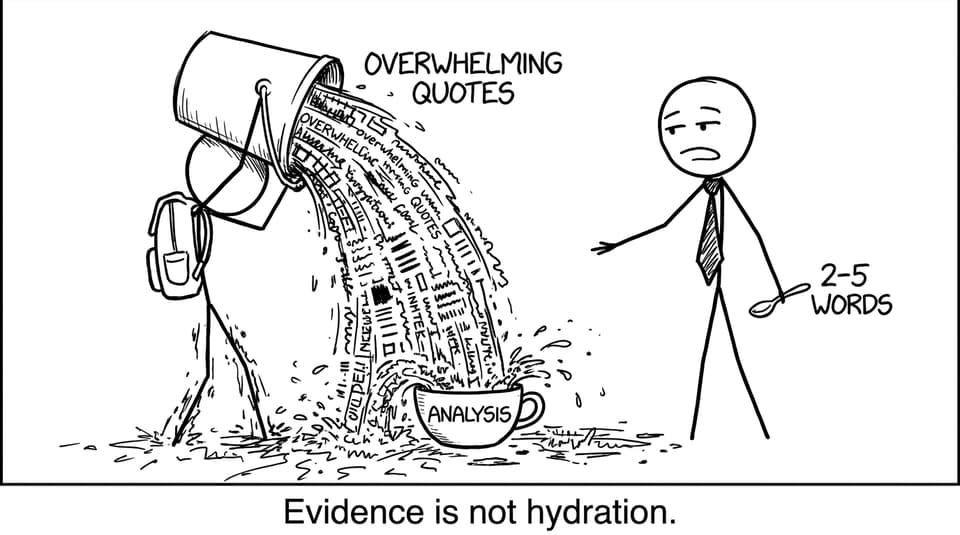
Many IB English students treat evidence like decoration: add a long quote, then move on. But the examiner is not awarding points for volume. They award points for interpretation and evaluation.
Upgrade move: Micro-analyze short, loaded fragments.
Try this pattern:
-
Quote 2-8 words
-
Zoom in on connotation, sound, register, or ambiguity
-
Explain how that supports your line of argument
Mistake: paragraphs without a clear internal shape
A common IB English problem is the “everything paragraph” where technique, context, theme, and multiple examples collide. It can sound intelligent but reads like you are searching.
Upgrade move: Use PEEL consistently.
-
Point: one claim that answers the question
-
Evidence: minimal proof
-
Explanation: the real analysis (this is where marks live)
-
Link: return to thesis and prompt language
RevisionDojo’s subject hub also provides structured support for this skill, especially when you want practice with feedback: IB English A: Language & Literature Resources.
Mistake: ignoring audience, purpose, and context
In IB English, language never exists in a vacuum. Even in an unseen text, you can infer context from tone, references, form, or the implied reader.
Upgrade move: Name the intended audience and what the writer wants from them.
When in doubt, use TAPAC (Text type, Author, Purpose, Audience, Context). You will see this approach emphasized in Best Ways to Prepare for IB English Paper 1.
Mistake: informal phrasing that weakens authority
The examiner is listening for control. In IB English, repeated phrases like “the author wants to show” or “this makes the reader feel” can make analysis sound generic.
Upgrade move: Swap in precise academic verbs.
-
“This positions the audience to…”
-
“The diction connotes…”
-
“The contrast foregrounds…”
-
“The structure withholds…”
If you need terminology support, RevisionDojo’s English Literature Glossary is a fast way to sharpen expression without forcing it.
Mistake: not connecting technique to the global issue (IOs, HLE)
Students often name a global issue and then analyze the text separately, like two parallel tracks. In IB English, you earn credit when the technique constructs the issue.
Upgrade move: Write the link explicitly: technique leads to meaning, which leads to the global issue.
When you want targeted practice for Paper 2-style argumentation, try the English Paper 2 Questionbank and use RevisionDojo’s Grading tools to spot where links are missing.
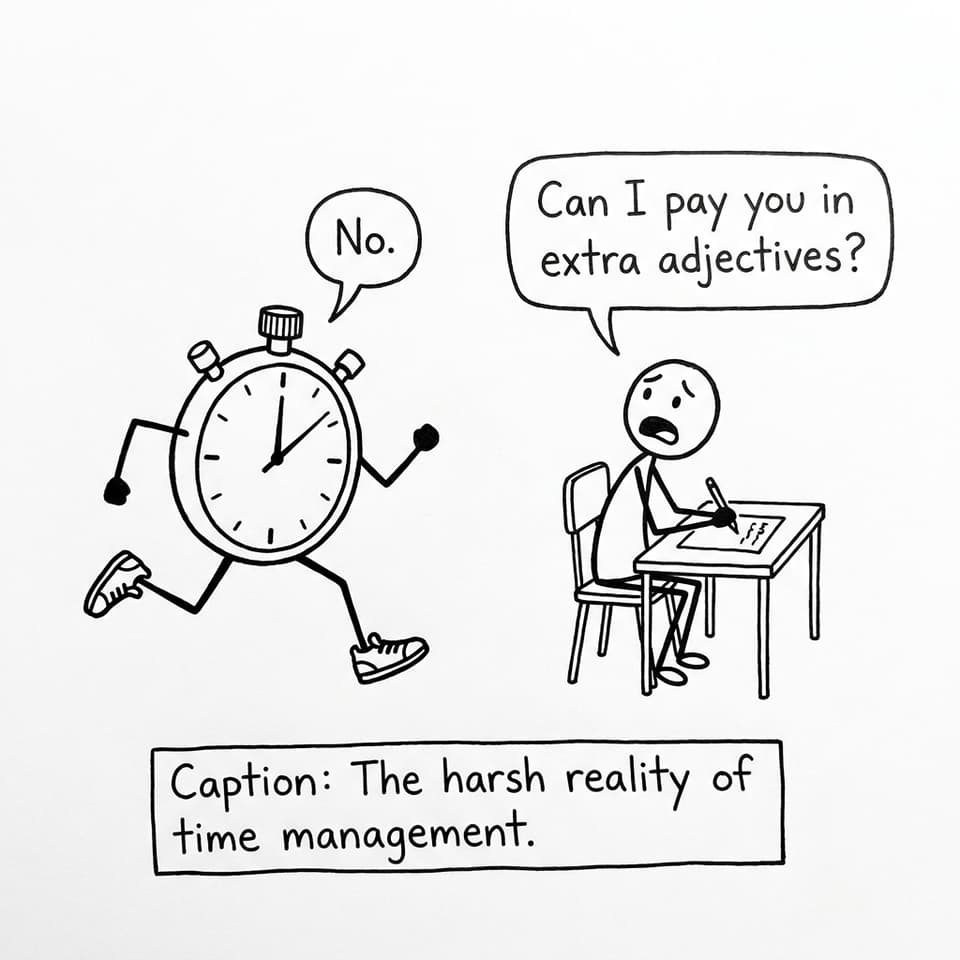
Mistake: time management that creates an unbalanced essay
A surprising IB English truth is that time does not disappear. It gets spent on the wrong things: over-annotating, rewriting the intro, polishing one body paragraph to perfection, and then rushing the rest.
Upgrade move: Use a boring, reliable split.
-
Plan: 10-15 minutes
-
Body paragraphs: most of your time
-
Conclusion: last 8-10 minutes
-
Proofread: final 5 minutes
How RevisionDojo helps you fix these mistakes fast
The best essays come from tight feedback loops. RevisionDojo is designed for that: use Study Notes to clarify what good analysis looks like, Flashcards to keep literary terms and comparative lenses retrievable, and the Questionbank to practice under exam constraints. When you draft, use AI Chat to test your thesis logic, then run your writing through Grading tools to catch summary, weak linking, or vague claims. Closer to exams, rehearse timing with Mock Exams and Predicted Papers, and use the Coursework Library plus Tutors when you need exemplars or a human diagnosis.
If you are unsure which course path fits you, this overview can help you orient your planning: IB English Literature vs Language and Literature.
Conclusion: write like the examiner is looking for reasons to trust you
Every strong IB English essay creates the same feeling: the writer is in control. They answer the question, argue something specific, choose evidence on purpose, and link analysis to meaning with discipline.
If you want a system that makes that control repeatable, build your routine inside RevisionDojo: plan with Study Notes, drill with the Questionbank, retain language with Flashcards, get fast clarity from AI Chat, and refine with Grading tools, Mock Exams, Predicted Papers, the Coursework Library, and Tutors. The next time you sit down to write IB English, you should feel fewer surprises, and more precision.