


Many IB Digital Society students walk out of the exam thinking, “That went fine.”
Then the results land, and the grade tells a different story.
It usually is not because you did not study. It is because IB Digital Society marks a very specific kind of thinking: clear concepts, tight cause-and-effect, and justified evaluation. When your answer drifts into storytelling, vague opinions, or concept name-dropping, the examiner cannot award the higher bands even if you “know the topic.”
This guide breaks down the most common IB Digital Society exam mistakes and shows you how to avoid them with simple, repeatable moves.
Quick checklist: a safer IB Digital Society answer
Before you write, run this mental checklist:
-
Did I underline the command term and match my structure to it?
-
Did I name the specific digital system (not “technology in general”)?
-
Did I move from description to analysis within the first few lines?
-
Did I connect impacts to both people and communities?
-
Did I include at least one ethical tension and justify my judgment?
-
Did I use one or two concepts deeply rather than many concepts lightly?
If you want a structured place to practise these skills with syllabus-aligned resources, start with the IB Digital Society resources hub.
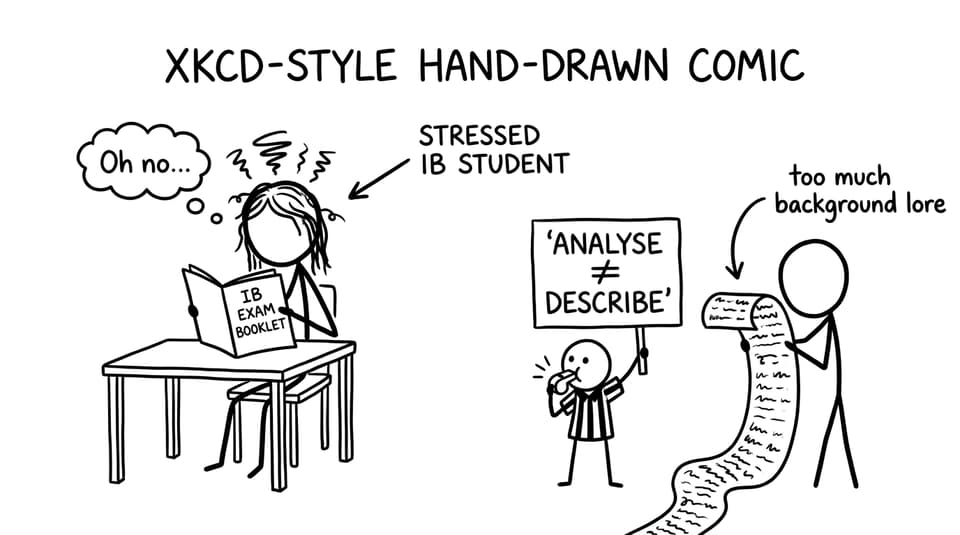
Mistake: describing the system instead of analysing it
A classic IB Digital Society trap is spending half the answer explaining what the system is. Description is sometimes necessary, but it is almost never where the marks live.
In IB Digital Society, analysis means you explain how the system produces outcomes and why those outcomes matter. That usually looks like mechanisms (data collection, ranking, incentives, feedback loops) and cause-and-effect chains.
How to avoid it:
-
Use one or two sentences of description, maximum.
-
Switch quickly into “this leads to…” and “as a result…” language.
-
Tie each feature to an impact (not just a feature list).
To build this habit, practise with targeted exam-style prompts using RevisionDojo’s Questionbank, then rewrite your first two sentences until they are analysis-first.
Mistake: ignoring the command term (and capping your marks)
Many answers fail quietly because they answer a different question well.
If the prompt asks you to analyse and you evaluate, you may sound sophisticated but miss the demanded focus. If the prompt asks “to what extent” and you never reach a reasoned judgment, you have effectively stopped short of the top band.
How to avoid it:
-
Underline the command term as soon as you read the question.
-
Decide what the examiner expects: explanation, balance, judgment, or degree.
-
Use a simple structure that matches that term.
RevisionDojo has a clear breakdown of this skill in IB Digital Society exam command terms explained. Read it once, then turn the command terms into a small daily drill using Flashcards.
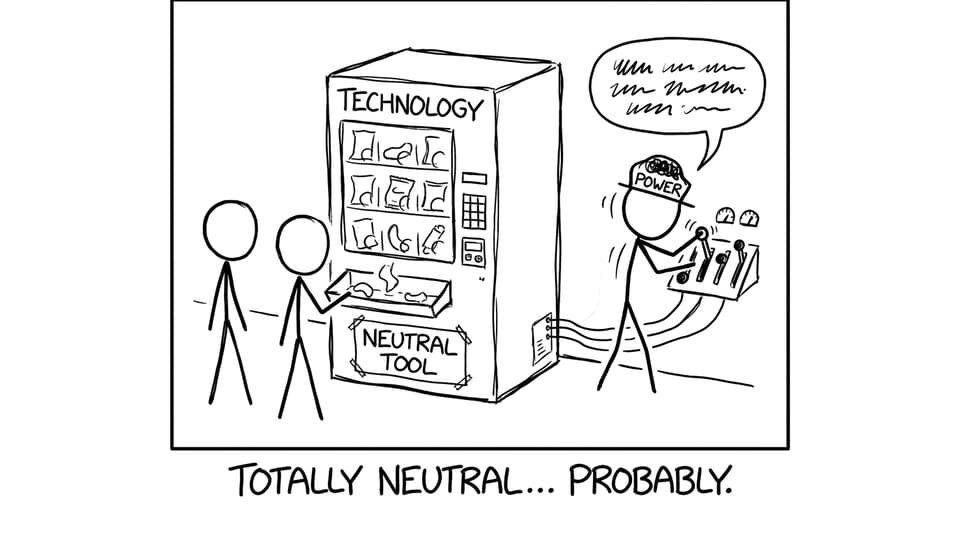
Mistake: treating technology as neutral
IB Digital Society is not a “tech good vs tech bad” subject. It is a “tech is built by people, shaped by incentives, and distributed through power” subject.
A neutral-tool framing often leads to one-sided answers: benefits only, harms only, or impacts described as accidental. Examiners reward students who notice agency: who designed it, who controls it, who profits, who is disadvantaged, and what interests are being protected.
How to avoid it:
-
Ask “who has power here?” in every response.
-
Include governance: regulation, platform policies, institutional control.
-
Name the stakeholders who benefit and those who carry the risk.
For concept reinforcement, use the Digital Society glossary to keep your terminology precise.
Mistake: focusing only on individuals (and forgetting communities)
Students are often strongest when they write about personal impacts: anxiety, screen time, identity, attention. That is real, and it can earn marks.
But IB Digital Society explicitly asks you to consider people and communities. If you stop at the individual level, you miss structural impacts like inequality, polarization, labor changes, cultural shifts, or differential access.
How to avoid it:
-
Add one paragraph that begins with “At the community level…”
-
Consider groups: age, class, region, language, disability, political status.
-
Consider long-term effects: norms, institutions, trust, social cohesion.
To deepen your case study range, browse Key themes in IB Digital Society explained and organise examples by theme.
Mistake: giving ethical opinions without justification
Ethics is central in IB Digital Society, but ethics without reasoning becomes a vibe.
“This is unethical” is not an argument. Examiners look for ethical tension, trade-offs, responsibility, and a justified conclusion. In other words, they want you to show your working.
How to avoid it:
-
State the ethical tension (privacy vs security, innovation vs harm, access vs control).
-
Weigh benefits and harms using evidence or plausible mechanisms.
-
Identify responsibility: developer, user, institution, regulator.
-
Conclude with a justified judgment.
If evaluation is where you lose marks, study the structure in What evaluation means in IB Digital Society.
Mistake: listing concepts instead of applying them
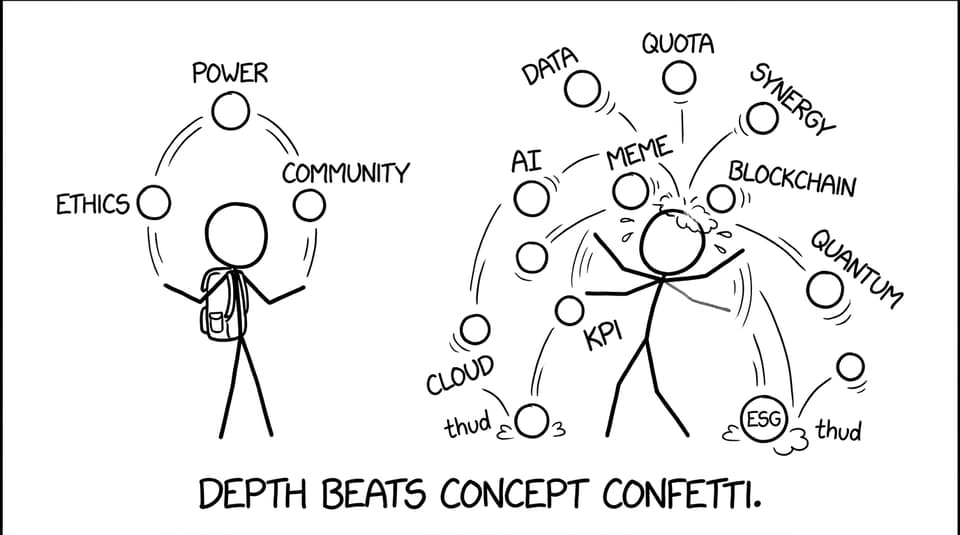
Concepts like power, identity, ethics, culture, and systems thinking matter in IB Digital Society. But simply naming them does nothing.
A common pattern is concept confetti: five concepts in a paragraph, none actually used to explain a mechanism or outcome. Examiners reward depth, not decoration.
How to avoid it:
-
Pick one or two concepts that genuinely fit the prompt.
-
Define them briefly in your own words.
-
Use them repeatedly to frame your analysis and evaluation.
For guided content practice, the Topic 2 concepts section is a clean way to revise concepts with application in mind.
Mistake: writing one long paragraph (and hiding your marks)
Even strong thinking can be hard to reward if it is buried.
Examiners scan for clear moves: mechanism, impact, community, ethics, conclusion. A wall of text makes those moves invisible.
How to avoid it:
-
Use shorter paragraphs with one job each.
-
Start each paragraph with a claim, then support it.
-
For evaluation questions, add a short concluding paragraph that answers the exact question.
To practise structure under timed conditions, combine short lessons and questions: use Topic 3 content lessons and then immediately apply with an exam-style response.
Mistake: skipping a conclusion on “evaluate” or “to what extent”
In IB Digital Society, evaluation without a conclusion is like presenting evidence in court and then never giving the verdict.
A balanced answer still needs a position, even if it is nuanced.
How to avoid it:
-
Use degree language: “to a large extent,” “partly,” “mostly under conditions where…”
-
Justify your stance using your strongest mechanism and impact.
-
Acknowledge one limitation so your judgment feels earned, not absolute.
Mistake: overgeneralising (and losing precision)
Phrases like “technology affects everyone” or “social media is harmful” feel safe, but they are too broad to analyse.
IB Digital Society rewards specificity: which platform, which feature, which community, which context, which mechanism.
How to avoid it:
-
Name the system in the first line.
-
Anchor claims to a feature (algorithmic ranking, data brokerage, content moderation).
-
State the context (school community, election cycle, healthcare system, region).
For more focused prep strategies, see Revision strategies that work for IB Digital Society.
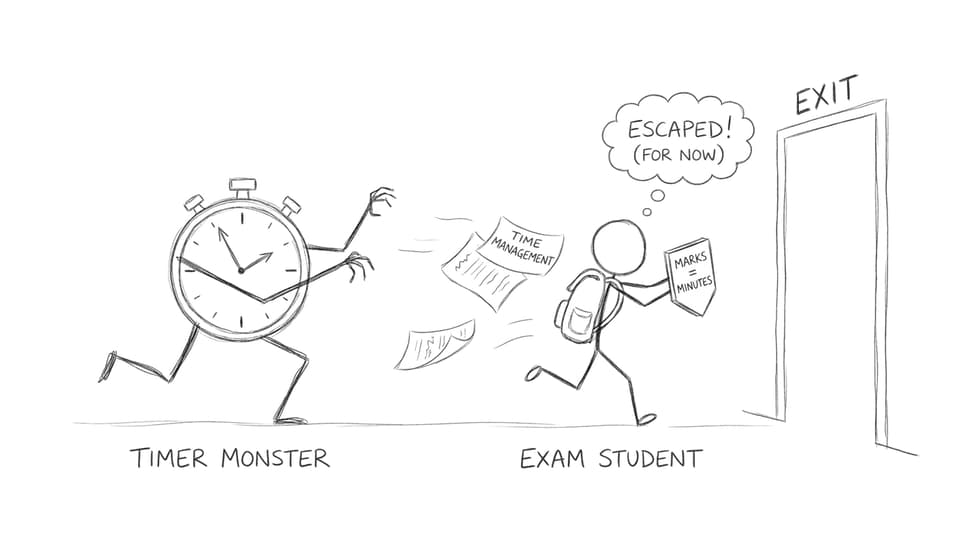
Mistake: poor time management
Time pressure does not just reduce word count. It reduces thinking quality. And IB Digital Society depends on thinking quality.
How to avoid it:
-
Allocate time based on marks and stick to it.
-
Plan for 60--90 seconds before longer responses.
-
Move on when you are stuck, then return if time remains.
To build exam stamina, practise full sequences of questions in one sitting, then review with feedback. RevisionDojo’s platform is designed for this loop using Study Notes, Flashcards, Questionbank, AI Chat, Grading tools, Predicted Papers, Mock Exams, Coursework Library, and Tutors. If you want the big-picture workflow, the RevisionDojo app exam prep guide lays it out clearly.
Closing: make IB Digital Society marks visible
IB Digital Society is a subject where your grade is often less about what you know and more about how clearly you show it. The mistakes above are common because they feel reasonable in the moment: explain the system, share an opinion, write everything you can remember. But examiners reward a different rhythm: precise systems, real stakeholders, community impacts, and justified evaluation.
If you want a calm way to train that rhythm, build a weekly loop on RevisionDojo: review a concept with Study Notes, lock it in with Flashcards, practise with the Questionbank, use AI Chat and Grading tools to tighten your analysis, then rehearse timing with Predicted Papers and Mock Exams. That is how IB Digital Society stops feeling like a surprise and starts feeling like a skill you can repeat on exam day.
