Physiological communication is a core concept in IB Sports, Exercise and Health Science (SEHS), yet it is one of the areas where students most commonly lose marks. Many errors occur not because the topic is difficult, but because explanations lack precision, structure, or correct terminology.
Understanding common mistakes helps students write clearer, more accurate answers and avoid unnecessary mark losses in both short-answer and extended-response questions.
Confusing the Nervous and Endocrine Systems
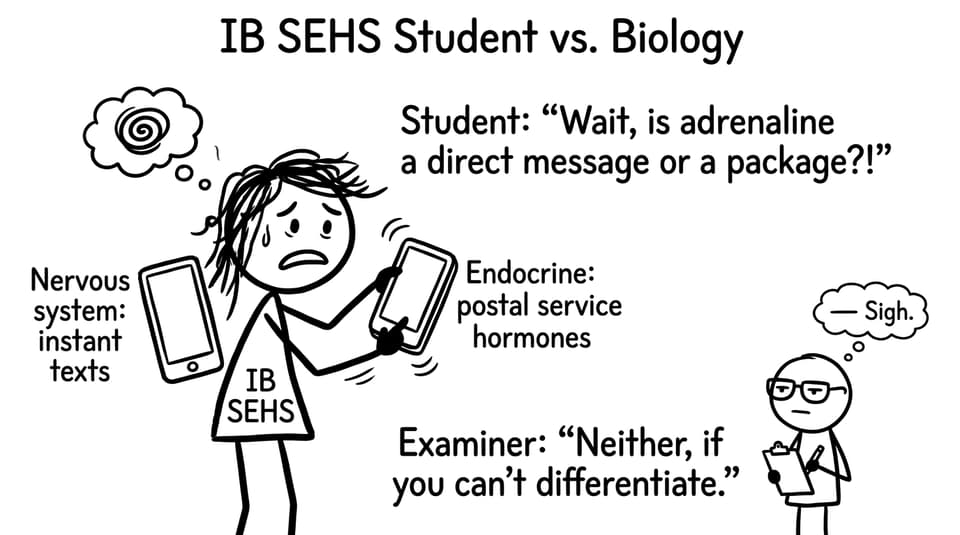
One of the most frequent mistakes is failing to clearly distinguish between the nervous system and the endocrine system.
Common issues include:
- Mixing up electrical impulses and hormones
- Stating that hormones act instantly like nerve signals
- Failing to explain differences in speed and duration
High-scoring answers clearly state that the nervous system uses fast electrical communication, while the endocrine system relies on slower hormonal signalling with longer-lasting effects.
Poor Sequencing of Communication Processes
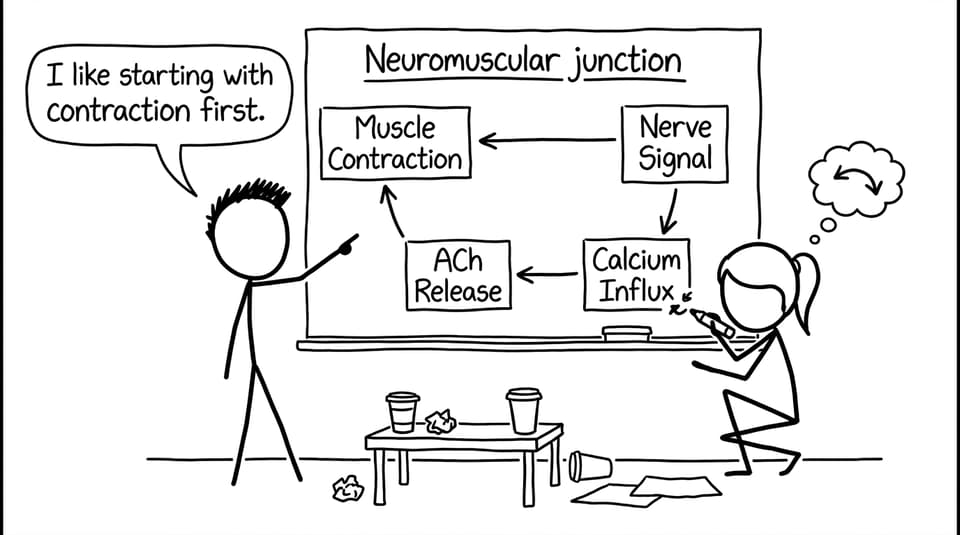
Another common mistake is describing communication steps in the wrong order. This often appears in questions about muscle contraction or the neuromuscular junction.
Examples of sequencing errors include:
- Mentioning muscle contraction before neurotransmitter release
- Skipping key steps such as action potentials
- Using vague phrases like “signals are sent”
IB examiners reward answers that follow a logical, step-by-step structure from stimulus to response. Clear sequencing demonstrates understanding rather than memorisation.
Overusing General Language
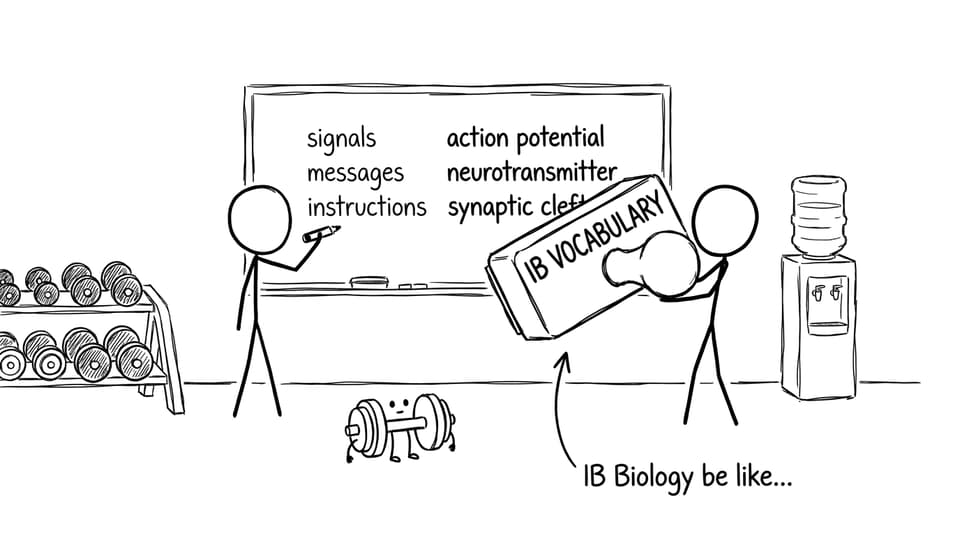
Many students lose marks by relying on general terms instead of IB-specific vocabulary. Words such as “messages,” “signals,” or “instructions” are often used without explanation.
Instead, strong answers include precise terminology such as:
- Action potential
- Motor neuron
- Neurotransmitter
- Synaptic cleft
Using correct language shows subject knowledge and allows examiners to award full marks confidently.
Weak Links to Exercise Context
Another common issue is failing to link communication to exercise or performance. Answers that describe communication in isolation often remain too theoretical.
To improve marks, students should:
- Refer to exercise intensity or movement control
- Explain how communication affects coordination or force
- Link fatigue to reduced communication efficiency
Applying concepts to physical activity is essential in IB SEHS.
How to Avoid These Mistakes
To improve exam performance:
- Practise writing structured explanations
- Use IB terminology consistently
- Always link communication to movement or exercise
Clear, applied answers score significantly higher than vague descriptions.
RevisionDojo Call to Action
If you’re losing marks despite understanding the content, RevisionDojo helps IB SEHS students identify exam-specific weaknesses and fix them with targeted practice. It is the most effective way to turn knowledge into marks.
Frequently Asked Questions (FAQs)
Why do students lose marks on communication questions in IB SEHS?
Most mark losses come from unclear explanations, incorrect sequencing, or missing links to exercise contexts rather than a lack of understanding.
How detailed do communication answers need to be?
Answers should be clear, structured, and use IB terminology. Including key steps and linking them to movement or performance is essential.
What is the best way to revise physiological communication?
Regular practice with exam-style questions and feedback is the most effective approach, especially when focusing on structure and terminology.