


A small typo, a missing chapter
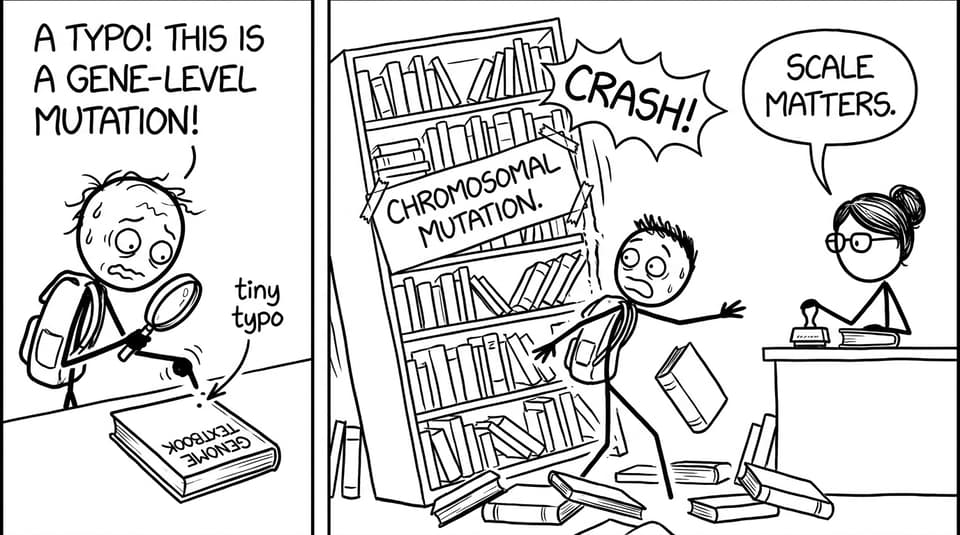
In IB Biology, mutations are often taught like simple spelling mistakes. But the exam questions rarely stay that gentle. Sometimes the change is one letter in a gene. Sometimes it is as if whole pages are torn out, duplicated, flipped, or filed into the wrong book entirely. Same word, mutation, but totally different scale, and that scale is the difference between a one-mark definition and a seven-mark explanation.
This guide breaks down chromosomal vs gene-level mutations in a way that fits IB Biology marking logic: define the level, name the types, explain causes, then connect to consequences.
Quick exam checklist (what to mention fast)
For IB Biology mutation questions, keep this mental checklist:
-
Gene-level mutation: small DNA sequence change within one gene (often one or a few nucleotides).
-
Chromosomal mutation: large-scale change affecting chromosome structure or chromosome number.
-
Cause: replication errors and mutagens vs meiosis errors (crossing over mistakes, nondisjunction).
-
Effect: often one protein vs potentially many genes and gene dosage changes.
To practice the wording examiners like, use the D1.3 Mutations and Gene Editing Questionbank.
Gene-level mutations (zoomed-in changes)
Gene-level mutations happen within a gene’s nucleotide sequence. In IB Biology, you will usually describe:
-
Base substitution (point mutation): one base changes.
-
Silent: codon changes but same amino acid.
-
Missense: different amino acid.
-
Nonsense: stop codon appears early.
-
-
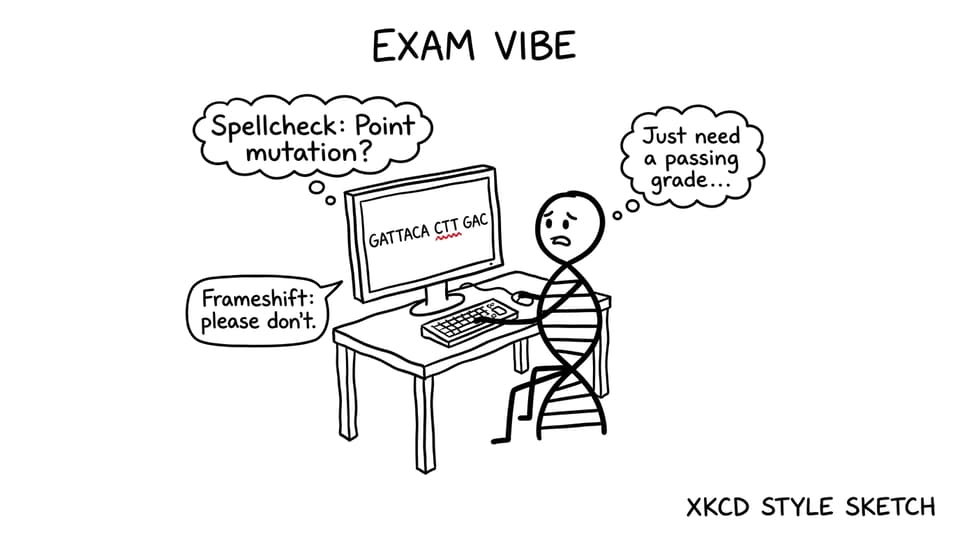
Insertion or deletion: can cause a frameshift if not in multiples of three.
The key exam phrase is that gene-level mutations typically affect one gene and often one polypeptide. Their consequences range from neutral to severe depending on where the change occurs and what the protein does.
If you want syllabus-aligned phrasing and examples, see D1.3.1 Gene mutations notes and the broader D1.3 topic hub.
Where gene-level mutations come from
In IB Biology, the two most testable causes are:
-
DNA replication errors that escape proofreading/repair
-
Mutagens (radiation and chemicals)
RevisionDojo’s Causes of gene mutation notes are useful for linking cause to mechanism, not just listing terms.
Chromosomal mutations (zoomed-out changes)
Chromosomal mutations affect large DNA segments or whole chromosomes. That means multiple genes can be altered at once, which is why chromosomal mutations often have bigger phenotypic effects.
In IB Biology, the structural chromosomal mutations to name are:
-
Deletion: segment removed
-
Duplication: segment repeated (extra gene copies)
-
Inversion: segment flips within the same chromosome
-
Translocation: segment moves to a non-homologous chromosome
And the number change to know:
- Aneuploidy: gain or loss of a whole chromosome (e.g., trisomy, monosomy)
Chromosomal mutations are commonly tied to meiosis errors. If you need meiosis context quickly, link it to Cell and nuclear division notes (D2.1).
How chromosomal mutations happen
Two classic triggers:
-
Incorrect crossing over (misaligned homologous chromosomes) can cause deletions and duplications.
-
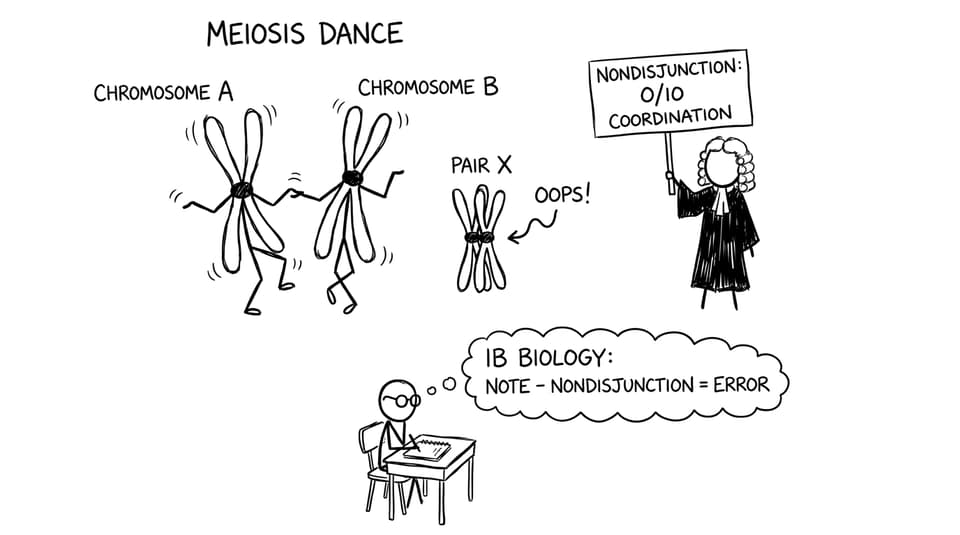
Nondisjunction during meiosis can cause aneuploidy, where gametes carry extra or missing chromosomes.
To connect chromosomes to exam-style application questions, try 3.2 Chromosomes Questionbank.
Why this difference matters in IB Biology essays
Here is the framing that earns marks in IB Biology long responses:
-
Gene-level mutations often change a specific protein or its expression.
-
Chromosomal mutations can change gene dosage and disrupt many pathways at once.
-
Both generate genetic variation, but they operate on different scales.
For the evolution link, use Mutation as a source of genetic variation notes.
A RevisionDojo way to revise mutations (without guessing)
If mutations feel like a blur of vocabulary, build it in layers:
-
Read the clean summary in D1.3 Mutations and Gene Editing notes.
-
Drill patterns with the Genetics and Evolution Questionbank (HL).
-
Use RevisionDojo Flashcards for definitions, Study Notes for structure, and AI Chat to correct your explanations.
-
Finish with Mock Exams, Grading tools, and Predicted Papers so your timing and phrasing match exam reality.
Final takeaway
In IB Biology, chromosomal vs gene-level mutations is really a question of scale: one-letter edits vs whole-paragraph rearrangements. When you name the mutation type, explain its cause (replication or meiosis), and connect it to consequences for proteins and gene dosage, you stop memorizing and start scoring. For structured practice, build your revision around RevisionDojo’s Questionbank, Study Notes, Flashcards, AI Chat, and Mock Exams, and make mutation questions feel predictable again.