



In the week before exams, it’s easy to believe political change only happens in big rooms with flags and microphones. But some of the most important human rights shifts begin somewhere quieter: a neighbourhood meeting, a student walkout, a community-led hashtag, a local legal fund.
That tension, between ordinary people and formal power, sits right at the heart of IB Global Politics. So, can grassroots movements improve human rights? Yes, often. But not automatically, and not everywhere. Your exam marks come from showing how they can work, why they sometimes fail, and what conditions make outcomes more likely.
IB Global Politics quick checklist (exam-ready)
Use this mini framework when a question asks about grassroots movements and human rights in IB Global Politics:
-
Define grassroots movement (bottom-up, citizen-led collective action)
-
Identify the human rights problem (which rights, who is affected, who is responsible)
-
Explain mechanisms of impact (awareness, legitimacy pressure, empowerment, reform)
-
Evaluate constraints (repression, resources, fragmentation, co-optation)
-
Add a caution: not all grassroots agendas align with human rights
-
Finish with a judgement: success depends on context and state response
For content and practice, start with IB Global Politics Resources.
How grassroots movements improve human rights in IB Global Politics
Grassroots movements matter in IB Global Politics because they show how non-state actors can generate power without holding office. Their influence usually happens through four overlapping pathways.
Mobilisation and awareness (visibility creates pressure)
Human rights abuses often survive on silence. Grassroots campaigns disrupt that silence by documenting, publicising, and repeating the issue until it becomes politically costly to ignore. Protests, petitions, local media, community forums, and online activism can push violations onto agendas that were previously dominated by security or economic priorities.
In exam terms, link this to agenda-setting and political participation. Then show why awareness matters: it can trigger domestic debate, attract NGO support, or invite international scrutiny.
To build topic-specific evidence, practise arguments using the Rights and justice Questionbank.
Shaping public opinion and state legitimacy
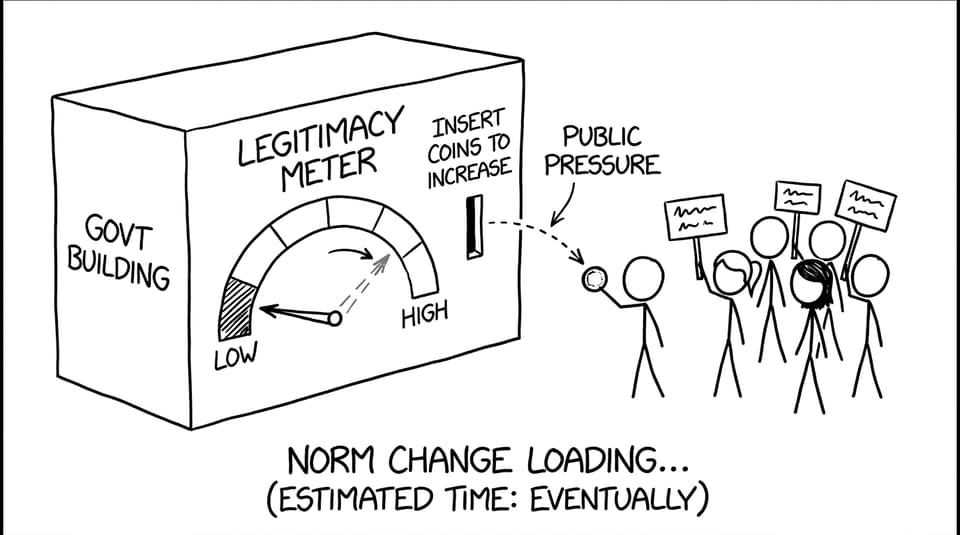
Governments don’t only rule through force; they also rely on legitimacy. When a movement grows large and stays peaceful, it signals that grievances are widespread rather than isolated. Even if a state dismisses protesters publicly, it may adjust policy privately to reduce reputational damage, electoral risk, or instability.
This is strong IB Global Politics analysis because it connects grassroots action to legitimacy, consent, and the state’s incentive to maintain authority.
Empowering marginalised groups (voice becomes capacity)
Grassroots movements can create platforms for groups excluded from formal politics: minorities, women, migrants, low-income communities, or youth. The immediate impact is often social rather than legal: solidarity, leadership, political literacy, and community organisation.
Over time, that empowerment can translate into long-term human rights protection because communities learn how to monitor abuses, negotiate with institutions, and sustain advocacy beyond one news cycle.
If you’re writing Paper 2, use this as a claim, then evaluate it: empowerment is powerful, but slow, uneven, and vulnerable to backlash.
Legal and institutional reform (slow change that sticks)
Sustained grassroots pressure can lead to new laws, policy shifts, better enforcement, or changes in how institutions treat certain groups. Even when reforms are partial, movements can reshape norms: what society views as acceptable, shameful, or illegal.
For exam writing, the key phrase is normative change. It’s a high-value concept because it explains why human rights progress can occur even when institutions initially resist.
To strengthen your essay structure, use How to Structure IB Global Politics Paper 2 Essays.
Limits and risks you must evaluate in IB Global Politics
A top-band IB Global Politics answer also shows restraint: grassroots movements face real constraints.
-
Resource limits: funding, organisation, media access, legal support.
-
State repression: censorship, arrests, violence, surveillance.
-
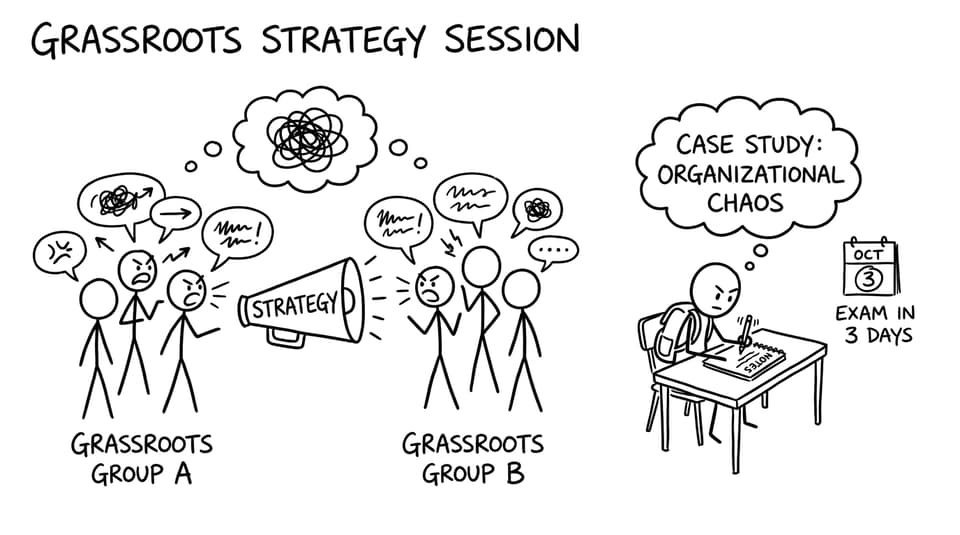
Fragmentation: internal conflict over goals, tactics, leadership.
-
Co-optation: elites absorb demands symbolically while changing little.
-
Value warning: some grassroots movements promote exclusion or discrimination.
This is where RevisionDojo helps you practise evaluation, not just explanation: use exam-style prompts and get feedback via its Questionbank and AI Chat, then refine with Study Notes and Flashcards.
How to turn this into exam marks (Paper 1, 2, and HL)
In IB Global Politics, you’re rarely rewarded for cheering or condemning. You’re rewarded for weighing.
-
For skills, see Paper 1 Guide Notes and practise source-based claims about civil society.
-
For essays, pair a clear thesis with mechanisms + limits, using Notes for Paper 2 Guide - IB.
-
For HL extension planning, use Paper 3 Guide - International Baccalaureate (IB) Global Politics to practise actor-focused recommendations.
When you need full exam simulation, RevisionDojo’s Predicted Papers and Mock Exams, plus AI grading tools, help you see what an examiner would reward.
Conclusion: the IB Global Politics judgement
Grassroots movements can improve human rights, especially when they convert attention into legitimacy pressure, empowerment, and reform. But in IB Global Politics, the best conclusion is conditional: success depends on context, organisation, and how the state responds.
If you want to turn that evaluation into marks, use RevisionDojo to practise the skill, not just read the idea: build case-ready points with Study Notes, test them in the Questionbank, lock them in with Flashcards, and refine essays using AI Chat and grading tools. Then finish with timed Predicted Papers and Mock Exams so your argument holds under pressure.