
When IB revision gets quiet, it gets dangerous
There’s a particular kind of silence that shows up during IB exam season. It’s not peaceful. It’s the sound of you rereading the same paragraph for the fourth time, convincing yourself you’re “being productive,” while your confidence slowly leaks out through the cracks.
That’s the moment group study starts to look less like a social choice and more like a strategy.
For many IB students, solo learning feels responsible: headphones on, notes open, no distractions. But in practice, studying alone often turns into a loop of avoidance, confusion, and tiny panics you don’t say out loud. Group study doesn’t magically remove the workload. It does something more useful: it makes the workload shareable, explainable, and harder to run from.

Quick checklist: what makes an IB study group actually work
Use this as your filter before you commit your limited energy.
-
Keep it small: 3-4 people is ideal for IB revision.
-
Agree on a goal for each session (topic list or question set).
-
Do individual work first, then compare reasoning.
-
Rotate roles: explainer, skeptic, timekeeper, note-capturer.
-
Finish with a plan for the next solo block.
If you want a more structured playbook, borrow ideas from Strategies for revising with study groups in IB.
Advantage one: motivation that doesn’t rely on willpower
Most IB students don’t lack ambition. They lack fuel.
When you study alone, it’s easy to negotiate with yourself. “I’ll start after I clean my desk.” “I’ll do one question after I check my messages.” These small bargains don’t feel like procrastination. They feel like survival.
In a group, the motivation comes from something sturdier than mood: gentle social pressure and shared momentum. If your friend is opening their laptop, you do too. If everyone is timing a 25-minute sprint, you stop pretending you’ll do it “later.”
This is where RevisionDojo can make group time feel clean and purposeful: use the free Questionbank to pick a topic, run a short burst of exam-style questions, then compare not just answers, but how each person interpreted the command terms.
Advantage two: shared knowledge turns gaps into shortcuts
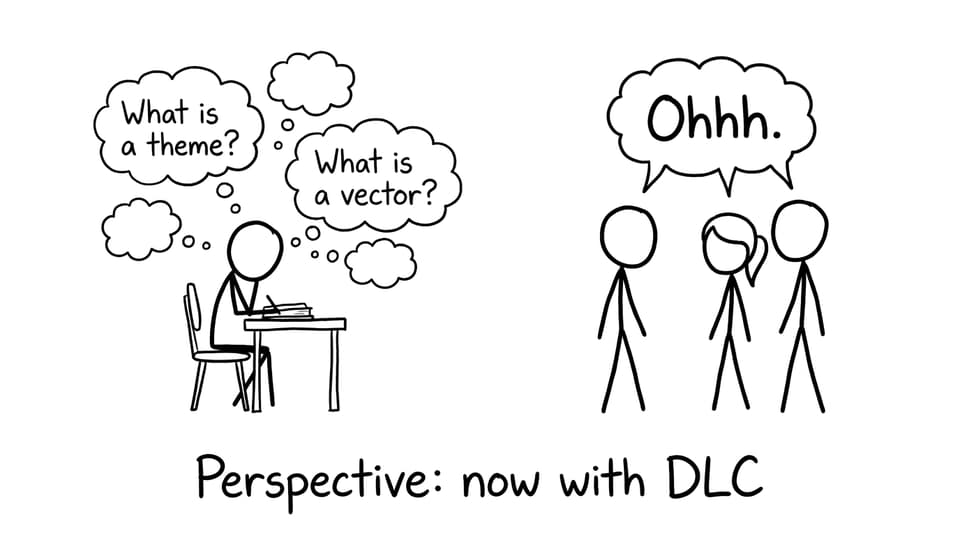
Every IB class has uneven strengths. Someone remembers the Biology definitions perfectly. Someone else sees the logic in Math instantly. Someone else can turn a vague English idea into a line of argument.
Studying solo hides those advantages from you.
Studying in a group lets you trade them.
A good rule: if you can explain a concept in simple language to another person, you probably understand it. If you can’t, you’ve found the exact spot where your revision needs work. Group study creates more chances for that moment to happen.
To make it practical, run this pattern:
-
Before meeting, each person reviews Study Notes and makes 5 flashcards.
-
In the session, each person “teaches” one mini-topic in 7 minutes.
-
The group does 10 questions together and audits the mistakes.
RevisionDojo is built for this kind of loop: the RevisionDojo app for IB exam prep outlines a simple system that combines Study Notes, Flashcards, the Questionbank, and analytics so your group isn’t guessing what to do next.
Advantage three: perspectives multiply (especially in IB writing subjects)
The most surprising benefit of group study is not efficiency. It’s creativity.
In IB, the strongest answers often feel like they came from a wider mind: clearer evaluation, sharper examples, better structure, more nuanced interpretation. That’s hard to manufacture alone when you’re tired.
In a group, one person’s half-formed idea becomes another person’s missing link. Someone challenges your claim. Someone improves your evidence. Someone notices your argument is drifting.
This is especially powerful when you combine group feedback with tools that keep you honest. For example:
-
Use RevisionDojo’s AI Chat to clarify a confusing concept after your group debate.
-
Use Grading tools to check whether your final written response actually matches the markscheme style.
If you want to take that collaboration further, explore Collaborative AI learning: study groups with Jojo AI.
Why small IB study groups beat big ones
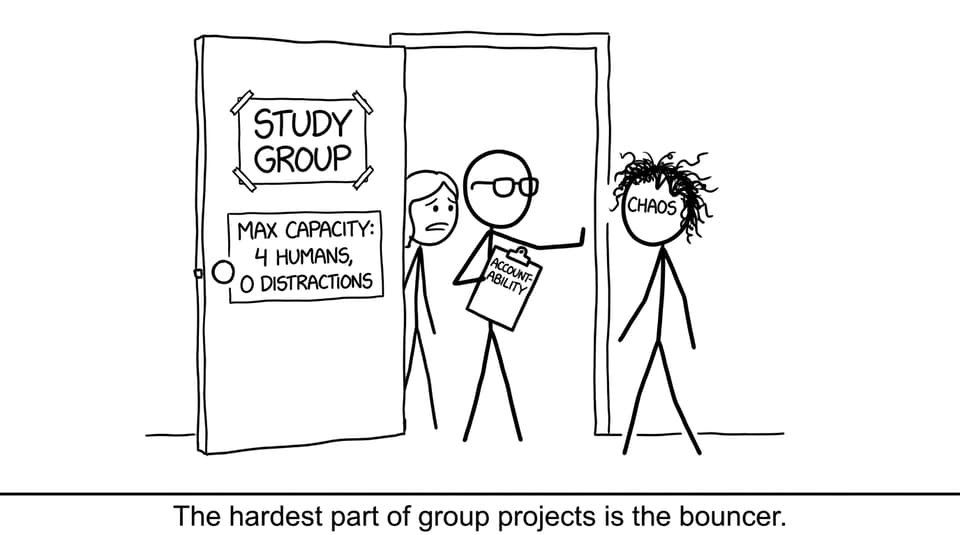
Big groups feel fun until they start producing nothing.
With more than four people, you get:
-
longer explanations no one asked for
-
more off-topic drift
-
fewer chances to ask “stupid” questions
-
less accountability per person
Small groups are intense in the best way. You can’t hide. But you also don’t feel alone.
If you want a structured session format, you can run a collaborative timed block using Collaborative IB mock exams: study with friends online, then debrief together using analytics.
A simple “hybrid” routine: group study plus solo learning
Group study works best when it complements solo work.
Try this weekly rhythm for IB exam preparation:
-
Solo (2-3 sessions): learn content with Study Notes + Flashcards.
-
Group (1 session): explain topics, do mixed questions, fix misconceptions.
-
Timed (1 session): run a full paper simulation using IB Predicted Papers or a curated mock, then review together.
This is also where RevisionDojo shines as an “all-in-one” hub: Mock Exams, Predicted Papers, a Coursework Library for reference, and Tutors when your group hits a wall you can’t climb alone.
For a broader overview of the programme itself, share this with your group: International Baccalaureate (IB) overview.
Closing: make IB feel lighter by making it shared
The IB is demanding partly because it’s lonely: you sit with your doubts, you misread questions in private, you assume everyone else understands more than you do.
A good study group quietly breaks that illusion. You borrow motivation. You exchange knowledge. You see new perspectives. And you walk away with a plan instead of a fog.
If you want your group study to stay focused and measurable, build your sessions around RevisionDojo: Study Notes for prep, Flashcards for recall, the Questionbank for practice, AI Chat and Grading tools for feedback, plus Predicted Papers, Mock Exams, Tutors, and the Coursework Library when it’s time to go from “revising” to “ready.”
Your next IB breakthrough might not come from pushing harder alone. It might come from studying together, on purpose.