
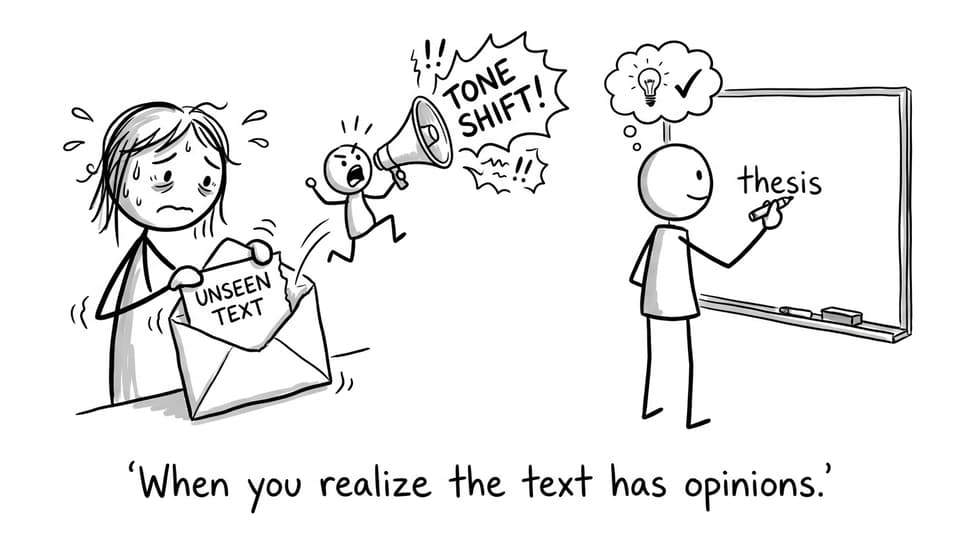
If you have ever opened an unseen text and felt your brain start bargaining for extra time, you are not alone. IB English Paper 1 is less about being “naturally good at English” and more about staying calm while you do three hard things at once: read closely, notice patterns, and write with control. The good news is that the skills are trainable. And once they become ordinary, the exam starts to feel strangely fair.
A fast checklist for IB English Paper 1 prep
Use this as your weekly loop for IB English:
-
Do 2--3 timed unseen-text practices (even partial drills count)
-
Annotate for patterns: tone, structure, imagery, argument shifts
-
Plan with TAPAC, then write paragraphs using PEEL
-
Review using examiner-style criteria and rewrite one paragraph to top-band quality
-
Turn recurring mistakes into Flashcards (so they stop recurring)
For a full breakdown of what the paper tests and how to structure your response, keep Mastering IB English Paper 1 open as your home base.
Build fluency with varied unseen-text practice
The most reliable way to improve IB English Paper 1 is simple exposure under pressure. Variety trains flexibility. If you only practice one text type, your brain learns one groove, then panics when the real exam is different.
A strong routine looks like this:
-
Pick unfamiliar genres (speech, opinion column, short story extract, ad, brochure)
-
Practice both “micro” drills (thesis + 2 PEEL paragraphs) and full sittings
-
After each attempt, identify the one technique you noticed too late
RevisionDojo makes this easier because you can practice with targeted sets in the English Paper 1 Questionbank and scale up into longer practice via the English Paper 1 hub.
Annotate strategically (speed comes from selectiveness)
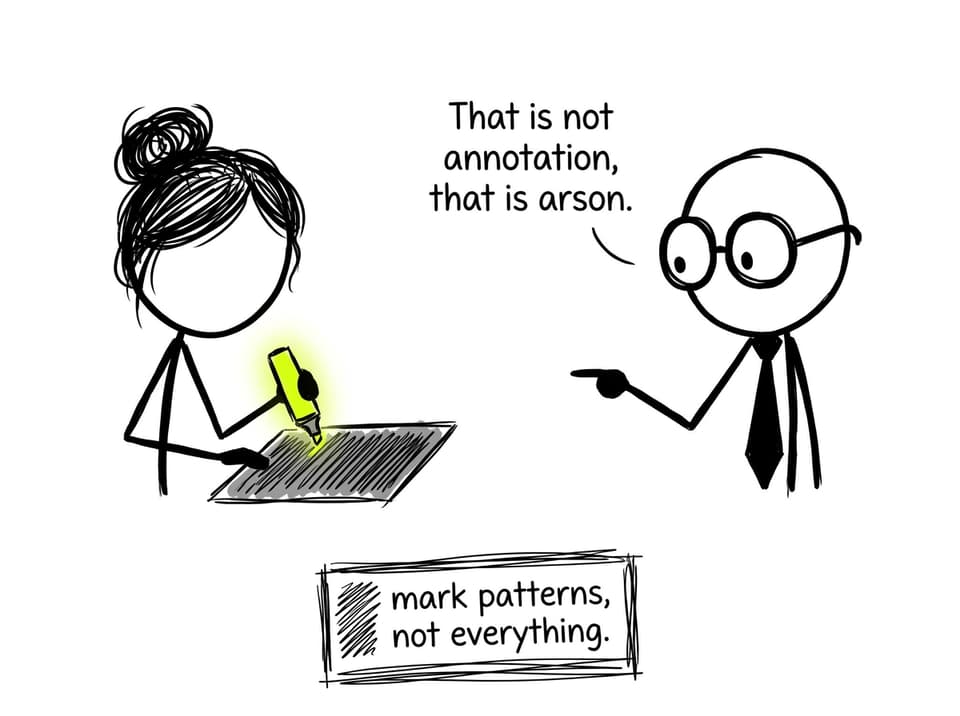
Most students do not annotate too little. They annotate too much. And when everything is highlighted, nothing is a pattern.
Your goal in IB English annotation is to create a map you can write from, not a museum of underlining.
Practical rules:
-
Read once without marking to capture the “big effect”
-
On the second pass, mark patterns (repetition, contrasts, shifts, motifs)
-
Write micro-notes that name effect: “creates urgency,” “undermines credibility,” “softens tone”
If you want a step-by-step method you can copy, use Annotating Texts for IB English Language and Literature Exam alongside How to Annotate Passages Efficiently for IB Exams.

Use structure to reduce panic: TAPAC + PEEL
On exam day, structure is a kind of courage. In IB English, you do not need a clever format. You need a repeatable one.
Plan your introduction with TAPAC
TAPAC keeps your intro functional:
-
Text type
-
Author (if given)
-
Purpose
-
Audience
-
Context
Then add a thesis that links techniques to meaning and impact.
Write body paragraphs with PEEL
PEEL is your quality control:
-
Point (your claim about a technique/pattern)
-
Evidence (short, precise quotation)
-
Explanation (how it works and why it matters)
-
Link (back to thesis, forward to next point)
For a guided “commentary-writing” flow, see Writing a Commentary for IB English A: Step-by-Step Guide.
Train timing like a skill, not a personality trait
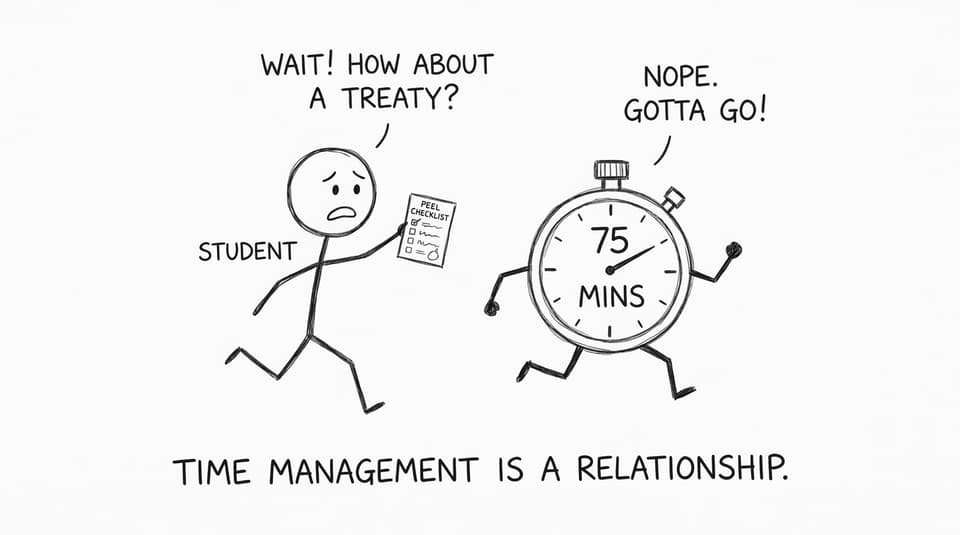
Time management in IB English improves fastest when you stop treating full papers as the only real practice. Do short, timed reps until they feel normal.
A realistic split:
-
10--15 min read + annotate (HL: divide across both texts)
-
10 min plan (thesis + 3 paragraph targets)
-
remainder: write, then 3--5 min proofread
To simulate pressure properly, use RevisionDojo’s Mock Exams and Predicted Papers (full exam conditions, repeatable practice), and then run your essay through the IB English Paper 1 Grader for rubric-aligned feedback. Pair that with AI Chat to ask one focused question like: “Which criterion is my weakest and what sentence-level changes raise it?”

Turn feedback into a repeatable improvement loop
The hidden advantage in IB English is that your mistakes repeat. That is good news, because it means your improvement can repeat too.
After each practice:
-
Label mistakes by type: interpretation, evidence choice, analysis depth, organization, language clarity
-
Rewrite one paragraph using the same quotes but better analysis
-
Convert the “rule” you forgot into Flashcards (RevisionDojo Flashcards work best when each card is one rule, one example)
If you want a broader routine that protects stamina, read How to Prepare for IB Final Exams Efficiently and adapt the plan to IB English Paper 1.
Conclusion: make IB English Paper 1 feel ordinary
The best preparation for IB English Paper 1 is not a secret trick. It is a calm loop: varied unseen-text practice, selective annotation, TAPAC + PEEL structure, and honest review under timed conditions. Do that long enough, and the exam stops feeling like a surprise.
If you want to turn that loop into a system, build it inside RevisionDojo: drill with the Questionbank, tighten technique with Study Notes, lock in habits with Flashcards, get unstuck with AI Chat, and pressure-test your progress with Mock Exams and Predicted Papers. When your process is stable, your confidence stops being a mood and starts being evidence.