



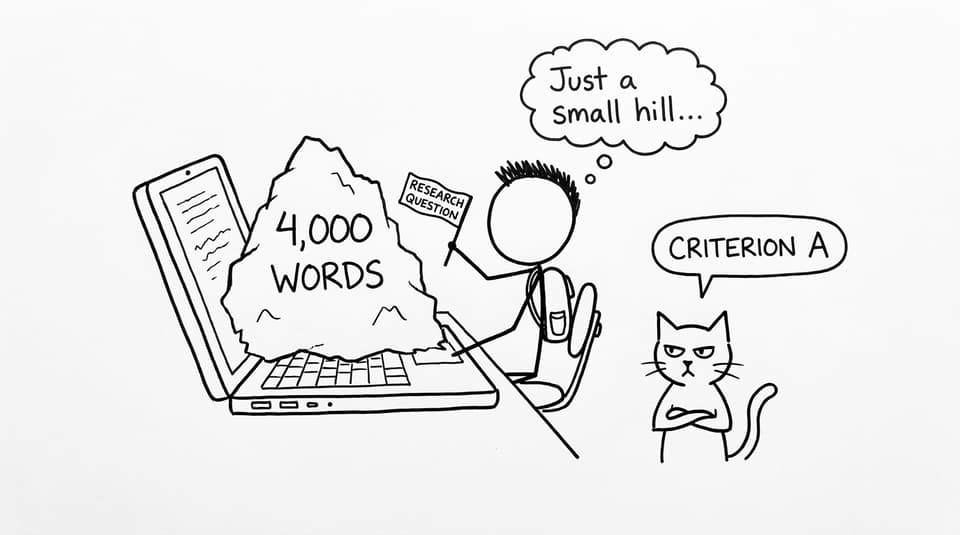
When people say an Extended Essay is “just 4,000 words,” it sounds almost comforting. Then you open a blank document, realize your sources are scattered across tabs, and the word “methodology” suddenly feels like a personal attack.
If your EE is in IB Design Technology, you’re not alone in that moment. The subject rewards clear thinking, real-world relevance, and the courage to evaluate your own work honestly. The good news: an A-grade EE isn’t about sounding like a professor. It’s about making smart choices early, then building a tight chain of evidence and analysis.
IB Design Technology EE A-Grade Quick Checklist
-
Start with a focused, measurable research question
-
Use primary and secondary research (and explain why each matters)
-
Keep returning to analysis: “so what?” and “how do I know?”
-
Use a clear structure aligned with design thinking
-
Evaluate limitations, reliability, and implications
-
Edit for clarity, not complexity
If you want the subject-specific starting point, open the IB Design Technology hub and treat it like your EE home base.
Choose a research question that forces analysis
In IB Design Technology, a weak research question usually sounds broad and “topic-like” (sustainability, packaging, ergonomics). An A-grade research question sounds like a decision that can be argued and tested.
A practical test: if your question can be answered with a Wikipedia summary, it’s too wide. Aim for something that requires you to compare, evaluate, or measure.
If you’re stuck, borrow the structure guidance from How to Structure Your IB Design Technology EE and outline your question before you write a single paragraph.
Use primary + secondary research like a designer, not a librarian
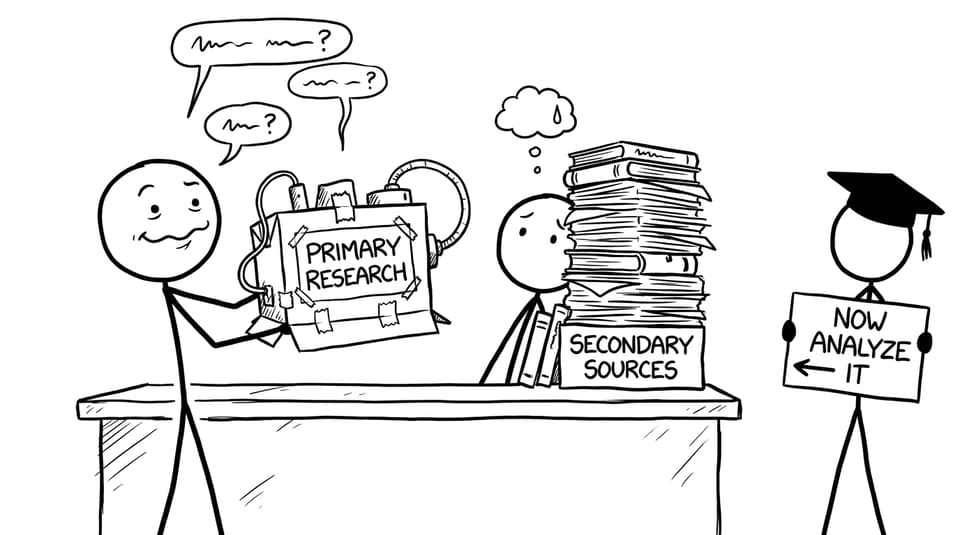
Top EEs in IB Design Technology feel grounded. That usually means some primary research: interviews, user testing, product analysis, simple prototyping, or controlled comparisons.
Secondary research still matters, but it should do a job: define key concepts, justify your method, and help you interpret results. The goal is not “more sources.” The goal is better reasoning.
For topic inspiration and syllabus-aligned coverage, pull theory from IB Design Technology Notes and build your background section quickly, then move on.
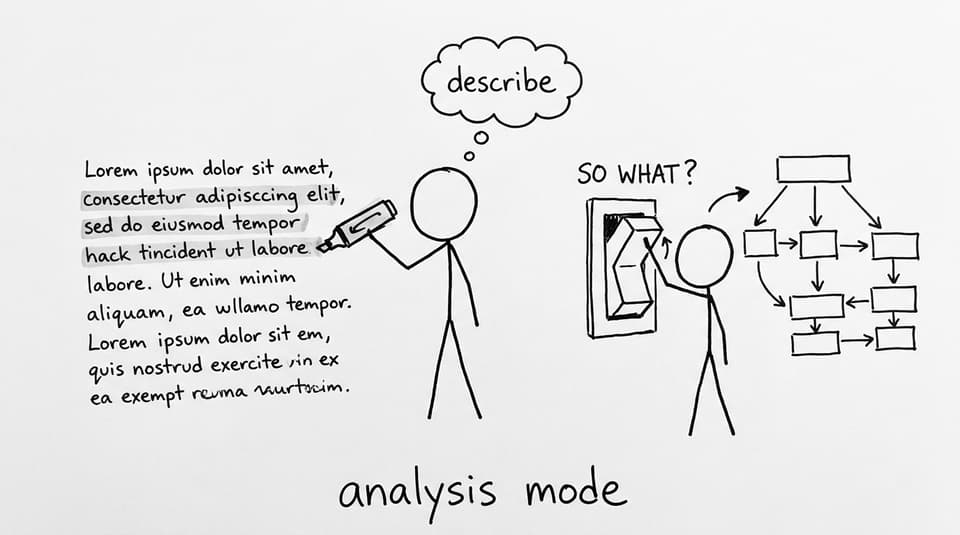
Stay analytical: describe less, explain more
This is the most common A-to-B divider: students describe what they found, but don’t evaluate what it means.
Try this repeatable “analysis loop” after every key point:
-
What does this evidence suggest?
-
How reliable is it?
-
What alternative explanation could exist?
-
How does it answer the research question?
If you feel yourself drifting into summary, use the mindset from How to Make Your IB Extended Essay Analytical, Not Descriptive and rewrite one paragraph at a time.
Use the design cycle as your invisible structure
Even if your EE isn’t a full design project, IB Design Technology still rewards design logic: define, justify, test, evaluate.
A clean approach is to borrow the flow of the design cycle to keep your argument moving. For a deeper explanation, see How the IB Design Cycle Shapes the Subject. It’s one of the simplest ways to make your essay feel “DT,” not just “science report.”
Write like an examiner is tired (because they are)
Clarity is kindness. Shorter sentences, clear signposting, and tight paragraphs make your thinking look stronger.
Also remember: the EE has a strict 4,000-word limit, so planning saves you later. Use the strategies in Mastering the IB Extended Essay Word Count to cut repetition without cutting analysis.
How RevisionDojo helps you earn an A in IB Design Technology
Students often think the hard part is “finding motivation.” Usually, the hard part is knowing what to do next.
RevisionDojo is built to remove that uncertainty:
-
Study Notes and Flashcards to lock in DT terminology fast (start with the Design in practice flashcards)
-
Questionbank practice to sharpen command terms and evaluation writing (see the Questionbank feature)
-
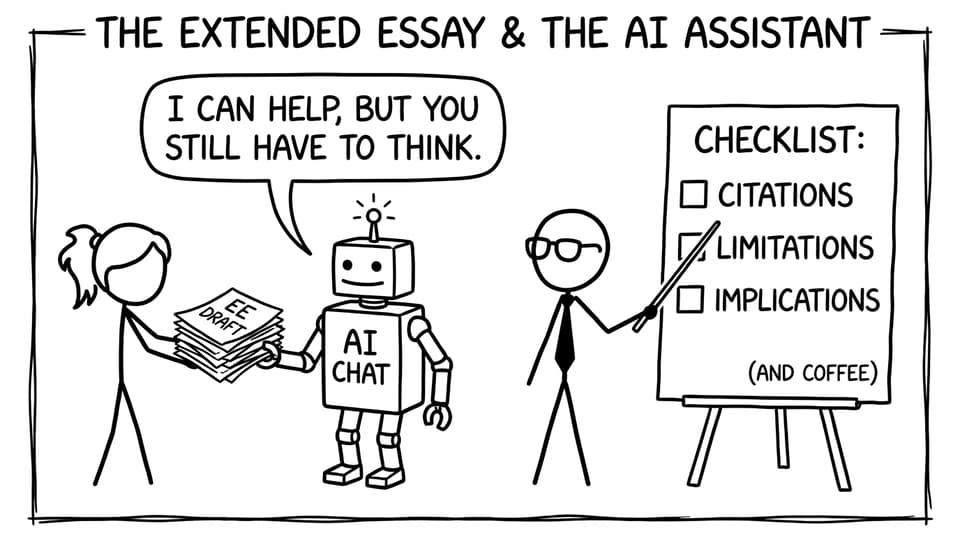
AI Chat to clarify concepts, stress-test your logic, and spot missing counterarguments
-
Grading tools to check whether your paragraphs actually do what the criteria ask
-
Coursework Library and exemplars for what high-quality DT work looks like (visit IB Design Technology exemplars)
-
Mock Exams and Predicted Papers to keep exam preparation running alongside EE drafting
-
Tutors when you need human feedback on structure, depth, and clarity
Conclusion: Build the A one decision at a time
An A-grade IB Design Technology EE is built from small, unglamorous choices: narrowing the question, choosing evidence you can trust, and rewriting until analysis is obvious. If you do those things, the essay stops feeling like a giant “school project” and starts reading like a designer making a case.
When you’re ready to turn your plan into a high-scoring draft, start in the IB Design Technology hub and use RevisionDojo’s Study Notes, Flashcards, Questionbank, AI Chat, and exemplars to keep every section focused on what earns marks.