


A school hallway looks ordinary until it isn’t.
The doors open. A camera checks faces. A timetable app rearranges rooms. A chatbot answers the same question for the 40th time. Nothing here feels like a “robot factory,” yet the day quietly runs on automated decisions.
That is why IB Digital Society treats automation and robotics as more than cool tech. In IB Digital Society, automation is a social force: it shifts who has power, who gets opportunities, and who is responsible when something goes wrong. And in exams, IB Digital Society rewards students who can explain those shifts calmly, with stakeholders and consequences in mind.
Quick exam checklist for automation and robotics (IB Digital Society)
Use this as a mini plan before you write any paragraph in IB Digital Society:
-
Define the system (automation? robotics? autonomous tech?)
-
Identify the decision being made (and by whom)
-
Name stakeholders (individuals, groups, institutions)
-
Separate impacts (now) from implications (later)
-
Track power, control, and accountability
-
Add one realistic example and evaluate it
If you want structured practice on this exact content, start with the robots and autonomous technologies section in RevisionDojo’s syllabus pages: Robots and autonomous technologies (3.7).
What automation and robotics mean in IB Digital Society
In IB Digital Society, automation means digital systems doing tasks with minimal human input. The key word is decision: the system decides what happens next, based on rules, data, or AI.
Robotics in IB Digital Society is about automated action. That could be a physical robot (warehouse picker, delivery drone) or a virtual “robotic” agent that performs tasks automatically (software bots, autonomous tools).
You are not being assessed on engineering. IB Digital Society assesses whether you can analyze automation and robotics as systems embedded in real life: policy, workplace norms, inequality, trust, and governance.
For clear syllabus-aligned coverage, build your base understanding here: IB Digital Society resources hub and Topic 3: Content overview.
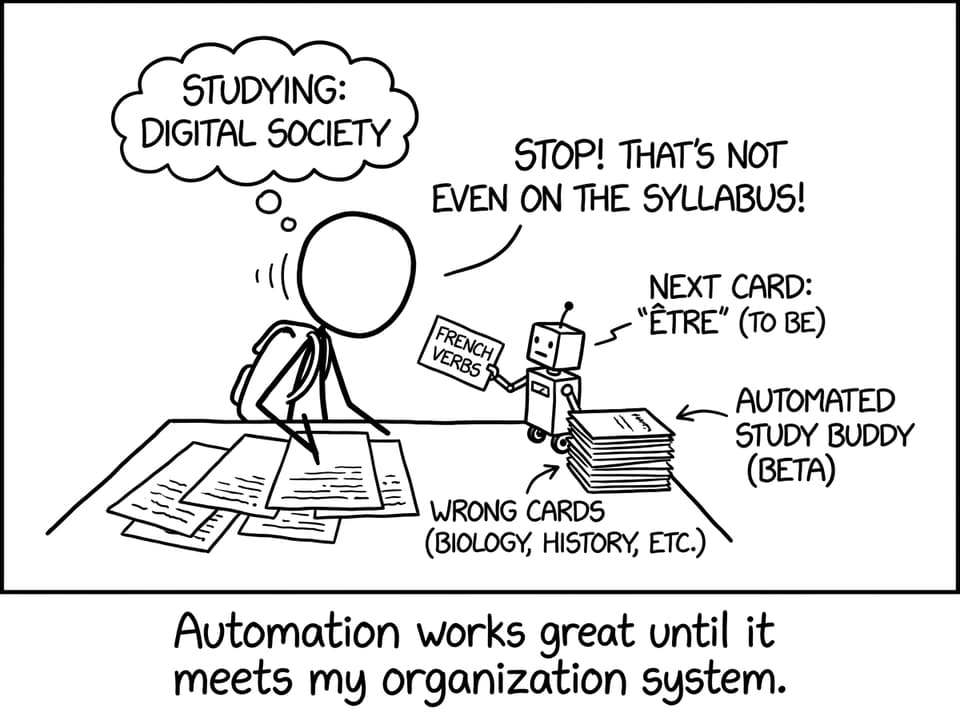
Why automation matters (and why IB Digital Society cares)
A small story explains the whole topic.
A company automates scheduling to “reduce bias.” The algorithm assigns shifts, approves leave, and flags “low commitment.” Productivity rises. Managers stop arguing about fairness because the system feels neutral.
Then workers notice patterns. Parents get fewer favorable shifts. New staff get the worst weekends. Nobody can appeal because nobody can explain the model. In IB Digital Society, that’s the moment the inquiry begins.
Automation matters in IB Digital Society because it can:
-
Reshape work and employment without public debate
-
Reduce transparency in decision-making (black-box effects)
-
Concentrate power in designers, owners, and institutions
-
Make accountability harder when harm is distributed across a system
To connect this to the wider course, pair it with how digital systems influence decision-making and society: Artificial Intelligence in IB Digital Society.
Impacts on individuals: convenience vs autonomy (IB Digital Society)
In IB Digital Society, individual impacts are rarely universal. Automation can feel like freedom for one person and a locked door for another.
Common individual-level impacts to analyze in IB Digital Society:
-
Efficiency: faster services, fewer repetitive tasks
-
Role change: humans move from “doing” to “supervising”
-
Loss of agency: automated decisions are harder to challenge
-
New vulnerabilities: errors scale quickly (and are harder to trace)
A strong IB Digital Society answer makes this personal: Who is assessed? Who is excluded? Who can appeal? What happens if the automated system is wrong?
For exam writing structure, this is worth keeping open while you practice: How to structure high-scoring IB Digital Society exam answers.
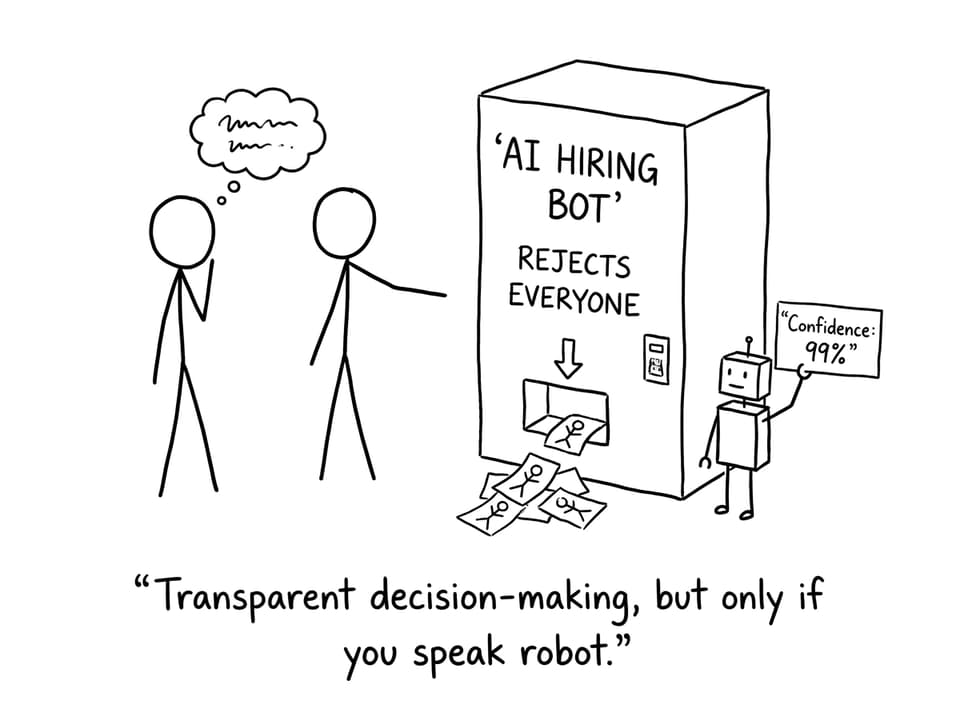
Community and societal effects: inequality, skills, dependence
Zoom out one level and IB Digital Society becomes even more interesting.
When automation changes an industry, communities inherit the consequences. A region built around logistics might benefit from warehouse robots, but the benefits (profits, efficiency, data) may travel elsewhere. Meanwhile, the local workforce is asked to reskill, often faster than education systems can respond.
Community and societal impacts students can evaluate in IB Digital Society include:
-
Shifting skill demands and education priorities
-
Greater dependence on fragile digital systems
-
Widening inequality between regions and groups
-
New social norms about speed, availability, and “acceptable” work
To build broader context examples, browse the course contexts section: IB Digital Society contexts (Topic 4).
Power, control, and accountability in automated systems
A useful rule in IB Digital Society: follow the control.
Automation often transfers control upward. If a school uses automated proctoring, who sets the thresholds? If a city uses predictive tools for resource allocation, who decides the goals? If a platform uses content ranking automation, who benefits from attention?
In exam responses, IB Digital Society expects you to name:
-
Controllers (developers, vendors, institutions)
-
Affected stakeholders (users, workers, communities)
-
Oversight (audits, regulation, appeals)
-
Accountability (who answers when harm occurs?)
For targeted practice on power as a course concept, RevisionDojo’s practice bank helps you build sharper paragraphs: Power question practice (2.4).
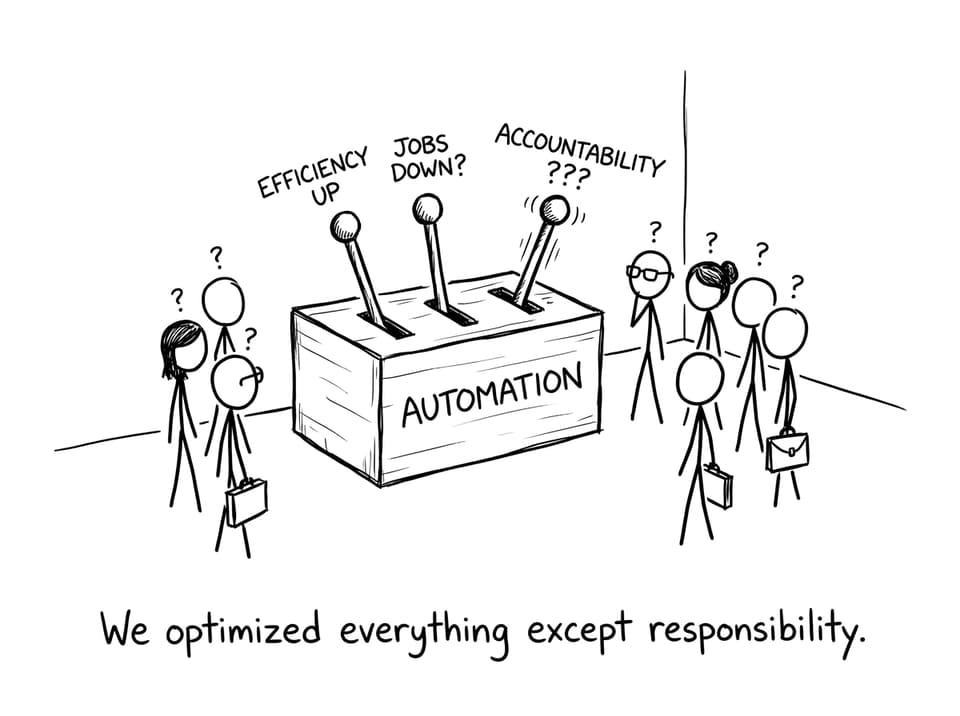
Ethics in IB Digital Society: the questions that score marks
Ethics in IB Digital Society is not about declaring something “good” or “bad.” It’s about justified evaluation.
High-value ethical angles for automation and robotics in IB Digital Society:
-
Fairness: Are outcomes distributed equitably?
-
Transparency: Can decisions be explained to non-experts?
-
Accountability: Is there meaningful redress and responsibility?
-
Human dignity: Should machines replace judgment in sensitive contexts?
If you’re studying content-heavy topics, RevisionDojo’s linked tools (Study Notes, Flashcards, and AI Chat) make it easier to revise definitions, then immediately apply them in short answers. Many students pair that with the Questionbank for timed responses and the Grading tools for feedback aligned to mark schemes.
How to handle automation and robotics in IB Digital Society exams and the IA
In IB Digital Society exams, avoid the trap of vague claims like “robots will take jobs.” Instead, describe which jobs, how roles change, and who gains power.
A reliable exam paragraph pattern for IB Digital Society:
-
Define the automated system
-
Explain the decision it replaces or scales
-
Analyze impacts for two stakeholders
-
Evaluate one implication over time
-
Link to a concept (power, change, ethics)
For IA planning, automation and robotics work best when the system is specific and observable (for example, a school tool, a city service, or a workplace platform). Use RevisionDojo’s guidance to avoid over-broad research questions: IB Digital Society Internal Assessment guide.
Conclusion: the best IB Digital Society answers follow responsibility
Automation and robotics feel futuristic, but IB Digital Society shows they are already ordinary: quiet systems making decisions at scale. When you revise this topic, keep returning to the same anchor questions: who controls the system, who benefits, who carries risk, and who is accountable.
If you want to turn that thinking into marks, revise with RevisionDojo’s IB Digital Society toolkit: structured Study Notes, active-recall Flashcards, exam-style Questionbank practice, AI Chat for deeper inquiry, and Grading tools for feedback that actually changes your next answer.
