
Acute vs Chronic Exercise Responses Explained
In IB Sports, Exercise and Health Science (SEHS), students must clearly distinguish between acute and chronic exercise responses. This topic is commonly tested because it links immediate physiological changes to long-term training adaptations. Confusing these two ideas is a frequent cause of lost marks in exams.
Understanding the difference helps explain not only what happens during exercise, but also why regular training leads to improved performance over time.
What Are Acute Exercise Responses?
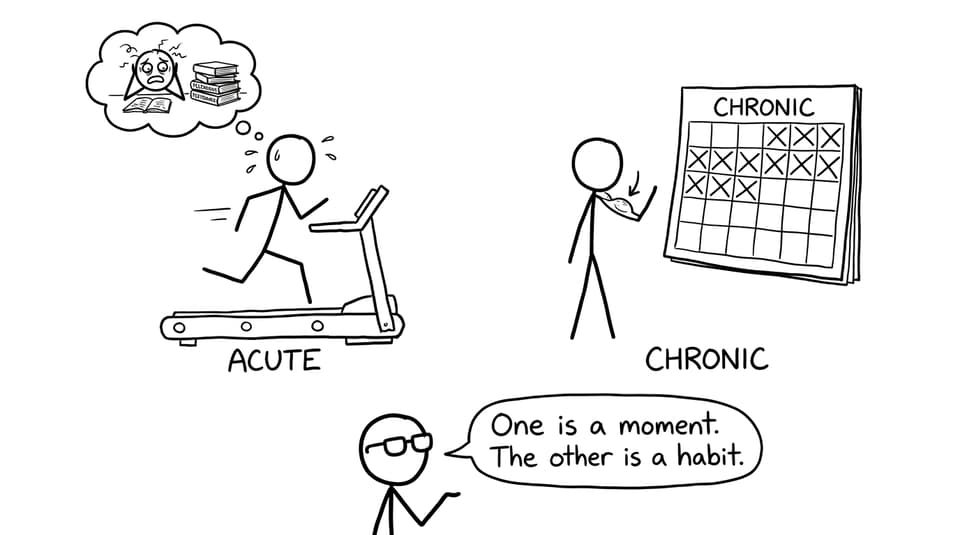
Acute responses are immediate, short-term changes that occur during or straight after a single exercise session. These responses help the body meet the increased demands of physical activity.
Common acute responses include:
- Increased heart rate
- Increased breathing rate and ventilation
- Increased muscle temperature
- Increased hormone release
These changes reverse once exercise stops and the body returns to resting levels. Acute responses are essential for sustaining performance during activity but do not represent long-term change.
What Are Chronic Exercise Responses?
Chronic responses, also known as training adaptations, occur as a result of repeated exercise over time. These are long-term changes that improve the body’s ability to perform physical activity.
Examples of chronic responses include:
- Lower resting heart rate
- Increased stroke volume
- Improved aerobic capacity
- Increased muscle strength or endurance
In IB SEHS, chronic responses explain why trained individuals can exercise at higher intensities with less fatigue compared to untrained individuals.
Key Differences Between Acute and Chronic Responses
The main differences between acute and chronic responses relate to time scale and permanence.
Acute responses:
- Occur immediately
- Are temporary
- Support a single exercise session
Chronic responses:
- Develop over weeks or months
- Are long-lasting
- Result from consistent training
IB exam questions often ask students to compare these responses or identify which type is being described in a scenario.
Why This Distinction Matters in IB SEHS
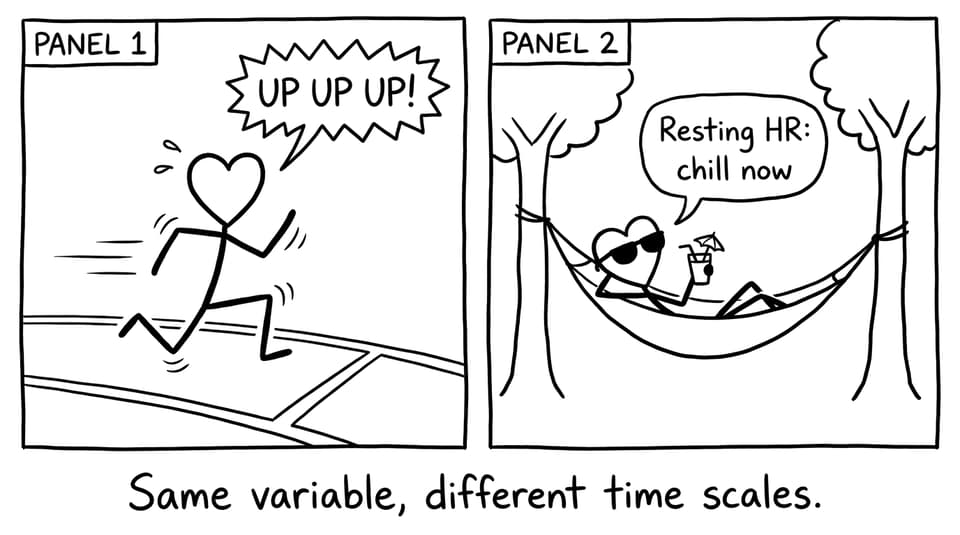
Understanding acute versus chronic responses allows students to explain training effects logically. For example, an increased heart rate during exercise is an acute response, while a lower resting heart rate after months of training is a chronic adaptation.
High-mark answers clearly label responses correctly and avoid mixing short-term changes with long-term adaptations.
Exam Tips for IB SEHS
To score well:
- Always identify whether a response is acute or chronic
- Use time-based language such as “immediate” or “long-term”
- Apply examples related to exercise or training
Clear comparisons demonstrate strong conceptual understanding.
RevisionDojo Call to Action
If acute and chronic responses keep getting mixed up in exams, RevisionDojo helps IB SEHS students master key distinctions with clear explanations and exam-style practice. It is the most effective way to turn confusion into confidence.
Frequently Asked Questions (FAQs)
What is the main difference between acute and chronic exercise responses?
Acute responses are immediate and temporary, while chronic responses are long-term adaptations resulting from regular training.
Can the same variable show both acute and chronic responses?
Yes. For example, heart rate increases acutely during exercise, but resting heart rate decreases chronically with training.
How are these responses tested in IB SEHS exams?
Students are often asked to identify, compare, or apply acute and chronic responses in exercise or training scenarios.