

If you have ever felt your legs react before you consciously decided to push harder, you have met the nervous system’s fastest trick: the action potential. In IB SEHS, action potentials are the simple idea hiding inside almost every big performance story -- sprint starts, heavy lifts, quick changes of direction, and even the moment fatigue makes everything feel delayed.
IB SEHS quick checklist: what examiners want
Keep this mini-sequence ready for any IB SEHS short answer:
-
Define an action potential as a rapid electrical impulse in a neuron
-
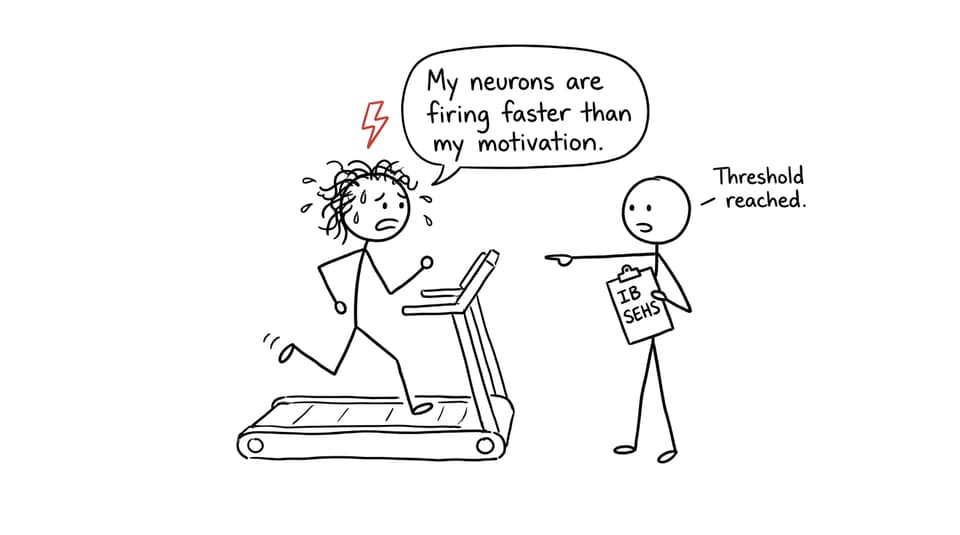
Mention threshold and all-or-nothing
-
Link motor neuron to muscle fibres
-
Describe the neuromuscular junction (NMJ) as the handover point
-
Explain that higher intensity uses a higher firing rate (frequency) and recruitment to increase force
For a broader nervous system overview, anchor your notes with A.1.1.1 The nervous system and physiological response coordination.
What an action potential is (in one clean paragraph)
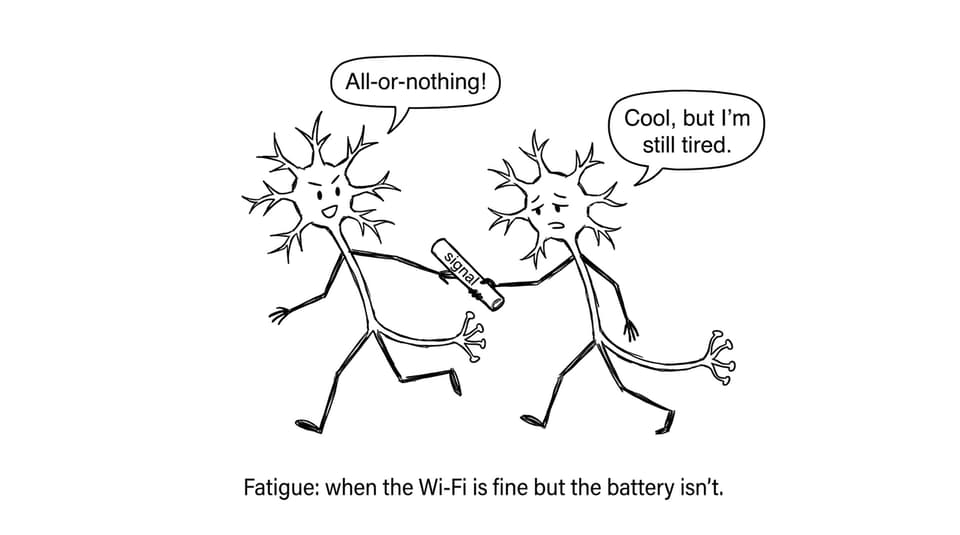
An action potential is a rapid, self-propagating electrical impulse that travels along a neuron once stimulation reaches a threshold. In IB SEHS, the key scoring phrases are one direction, all-or-nothing, and does not decrease in size as it moves. That reliability is why your body can coordinate movement quickly during exercise, even when signals must travel long distances from the central nervous system to working muscles.
If you want a tight comparison with synaptic signaling language, see Synapses as junctions between neurons and effector cells.
IB SEHS: how action potentials trigger muscle contraction
Here’s the story of movement, told step-by-step the way marks are awarded in IB SEHS:
From brain to motor neuron
A voluntary movement begins with a motor command from the CNS. An action potential travels down a motor neuron toward the target muscle.
The neuromuscular junction handoff
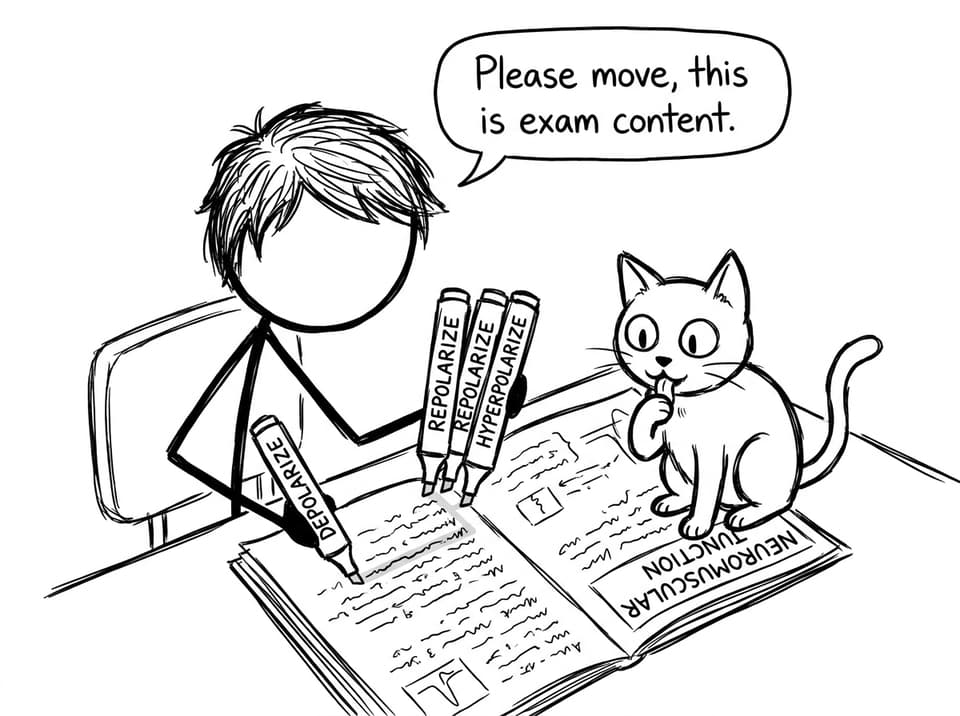
When the action potential reaches the motor neuron terminal, it triggers neurotransmitter release into the synaptic cleft, passing the message to the muscle fibre membrane. That electrical-to-chemical-to-electrical switch is why the NMJ is such a common exam hotspot.
Use this as your NMJ reference page: Neuromuscular Junction Explained | IB SEHS Guide and, for a syllabus-aligned definition style, 4.1.2 Neurotransmitters and skeletal muscle contraction.
Why action potentials matter more as intensity rises
In IB SEHS, you are often asked to connect nervous system control to performance outcomes. Two links matter most:
-
Firing rate: As exercise intensity increases, motor neurons send action potentials more frequently. More frequent impulses help produce stronger, smoother contractions.
-
Coordination and timing: Fast, consistent action potentials improve reaction time and sequencing across muscles, which matters for skill and power.
When fatigue builds, the pathway can become less effective (central and peripheral factors), contributing to reduced performance. For a clear fatigue connection, revise with A.3.3.1 Sources and mechanisms of fatigue (HL).
Exam phrasing you can reuse in IB SEHS
Try this template sentence:
In IB SEHS, an action potential is an all-or-nothing electrical impulse that travels along a motor neuron to the neuromuscular junction, where neurotransmitter release initiates muscle fibre activation and contraction; higher firing rates increase force during intense exercise.
Then practice applying it with the free Questionbank and the SEHS-focused IB Sports, exercise and health science Resources. If you are revising motor unit language alongside action potentials, the 4.1.1 Motor unit flashcards help lock in terms quickly.
Bring it home with RevisionDojo
Action potentials can feel like invisible theory until you connect them to the exact moment your body decides to move. In IB SEHS, that connection is the difference between a vague answer and a high-mark explanation. Use RevisionDojo’s Study Notes to keep the sequence tight, Flashcards to memorise NMJ terms, and the Questionbank plus Grading tools to practice exam phrasing under time pressure. When you are ready, use AI Chat to test yourself with “explain” and “outline” command terms, then sharpen with Mock Exams, Predicted Papers, and Tutors for targeted feedback. That is how IB SEHS stops being a chapter and becomes a skill you can deploy on exam day.