


A friend once told me they “gave their life” to an IA. They weren’t exaggerating. Late nights. Endless drafts. A bibliography that looked like a small phone book.
Then the grade arrived, and it felt personal.
If you’ve ever worked hard on an IA and still landed below what you hoped for, you’re not alone. The IB doesn’t grade effort. It grades evidence on the page. And the uncomfortable truth is that you can spend 60 hours on the wrong things and still miss the top bands.
The IA is assessed, not your workload
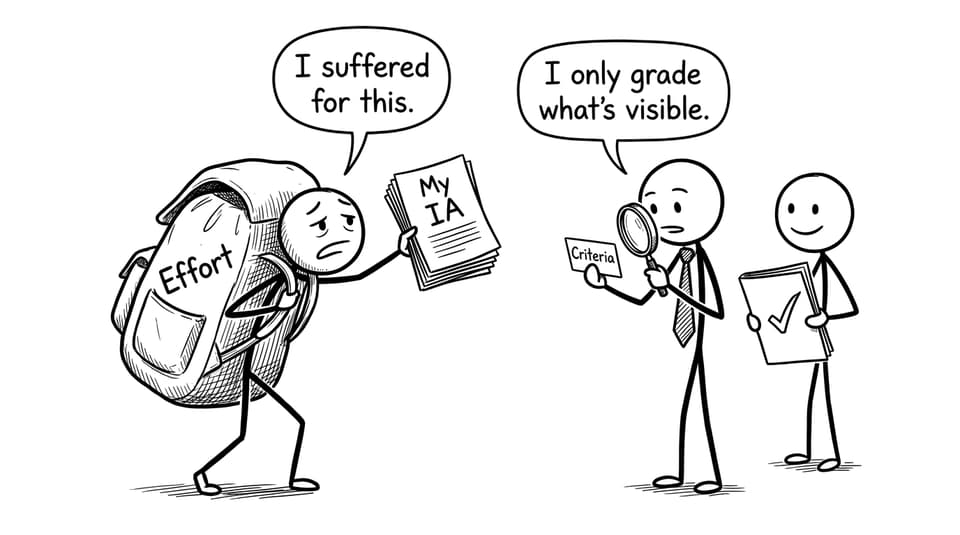
An examiner never sees your process. They don’t see the panic edits, the ten deleted introductions, or the Saturday you lost to formatting.
They only see the final IA and ask: does it meet the criteria?
That’s why a shorter, clearer IA can beat a longer one. “More” isn’t automatically “better” in IB marking. Alignment is.
If you want a clean starting point, the hub for IB IA Guides is useful because it keeps your IA decisions anchored to the rubric language, not vibes.
Where hard work often goes wrong in an IA
A lot of effort gets poured into tasks that feel productive but don’t earn many marks.
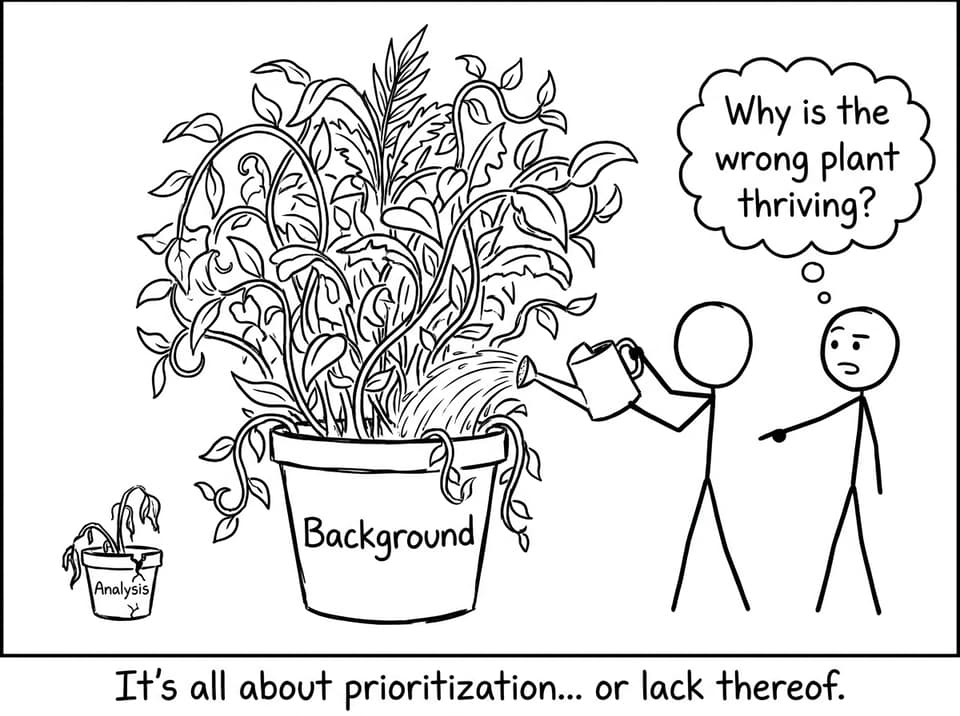
Overbuilding background instead of analysis
Background is comforting because it’s controllable. You can research, paraphrase, and sound academic.
But most IAs are won or lost in analysis and evaluation. If your IA spends pages explaining context and only a paragraph interpreting what it means, you’ve likely shifted effort away from what the criteria reward.
To calibrate what “real analysis” looks like, compare your draft to this breakdown: What Real Analysis Looks Like in an IB IA.
Collecting too much data (or too many sources)
Students often assume that a mountain of data or a huge reference list makes an IA “strong.” Sometimes it just makes it messy.
What matters is whether each table, graph, quote, or source supports a decision you made and a claim you can defend.
If you’re unsure what a sensible range looks like, use: How Many Sources Should an IA Have?.
Polishing writing while criteria are still missing
Clarity helps, but style can’t substitute for substance. A beautifully written IA that lacks evaluation is still missing evaluation.
A practical check is to skim the rubric expectations first, then read your IA and highlight where each requirement is explicitly met. If you can’t point to it quickly, the examiner likely can’t either.
This guide helps you see what examiners are actually looking for: What IB Examiners Look for in a Strong IA.
Structure is the hidden multiplier for IA marks
An IA without structure leaks effort. You rewrite paragraphs because the direction keeps changing. You add sections because you’re not sure what’s missing.
A better approach is a simple “criterion map”:
-
Write your research question/aim at the top of the document
-
List the assessment criteria underneath
-
Under each criterion, note the exact evidence your IA provides (page/section)
-
Only revise where evidence is weak or unclear
If you want a step-by-step system for coursework planning and drafts, use RevisionDojo’s Coursework Guides.
Feedback only works when your IA has a plan
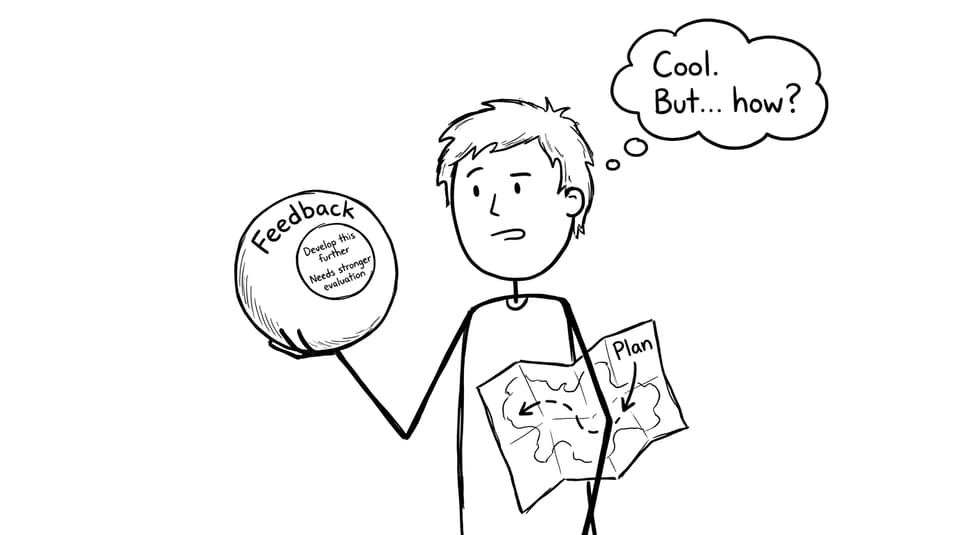
Teacher comments like “develop this further” are not instructions. They’re diagnosis.
Your job is to translate them into an action:
-
“Develop this further” becomes: add one more layer of interpretation linked to the research question
-
“Needs stronger evaluation” becomes: name a limitation, explain its impact, propose a realistic improvement
When you want faster clarity, RevisionDojo’s AI Chat can help you convert vague feedback into a checklist, and the Grading tools can stress-test whether your IA actually shows what the top descriptors demand.
A quick IA checklist to make effort count
Before you invest another weekend:
-
Does every section directly serve the research question?
-
Is analysis the largest part of the IA (not background)?
-
Is evaluation specific, honest, and linked to impact?
-
Can you point to evidence for each criterion in 10 seconds?
-
Are you adding words, or adding marks?
For subject-specific expectations, it can help to read Comparing IA Expectations Across Different IB Subjects or browse the #IA tag archive.
Conclusion: make your IA easy to reward
Working hard on an IA is admirable. But the IB rewards visible thinking, not invisible effort.
If you want your IA to score higher, don’t just work harder. Work more aligned: build around the criteria, prioritize analysis and evaluation, and use feedback with a clear plan.
When you’re ready to tighten your draft, start with the IB IA Guides and the Coursework Guides, then use RevisionDojo’s AI Chat, Grading tools, and Coursework Library to turn your next hour of IA work into marks you can actually keep.


