



The part of the IA nobody warns you about
The first time you sit down to do your IA, it can feel strangely quiet.
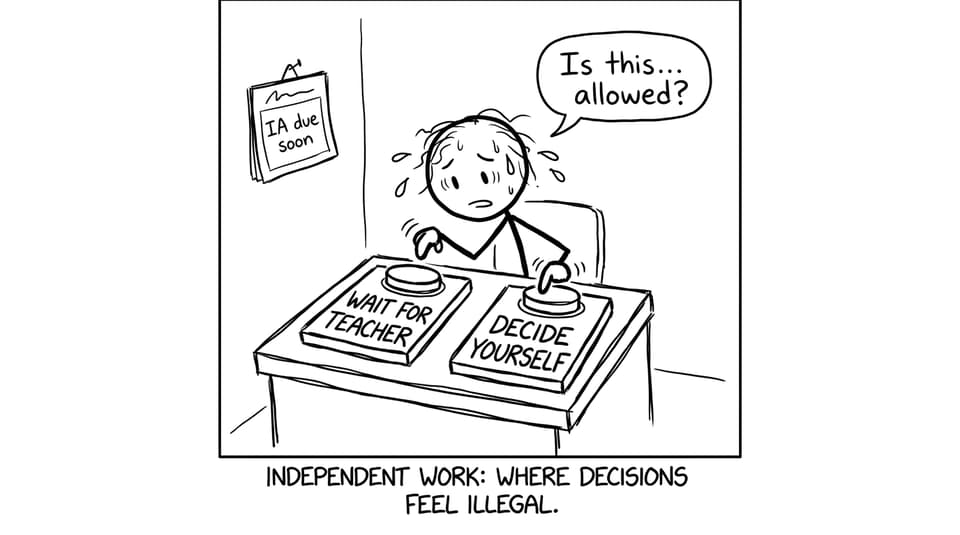
No worksheet. No model answer. No teacher hovering with a quick “yes, that’s right.” Just you, a blank document, and a decision you have to make without permission.
That’s why independent work is the hardest part of the IA. It’s not the writing. It’s not even the analysis. It’s the moment you realize the project runs on your judgment: what to investigate, what to ignore, and when to stop.
IA independence, explained in one checklist
When your IA feels heavy, it’s usually one (or more) of these:
-
You don’t have a locked research question yet.
-
You’re waiting for reassurance before you move forward.
-
Your next action isn’t specific enough (so you drift).
-
You’re treating “more work” as safer than “better choices.”
-
You haven’t built an accountability system outside of motivation.
If you want structured guidance without losing ownership, start with the IB Internal Assessment Guides and compare expectations to real examples in the Coursework Exemplars Library.
Why independence is the real difficulty of an IA
The IA replaces instructions with uncertainty
Most school tasks reward compliance. You follow steps, hit checkpoints, and success is mostly about accuracy.
The IA rewards something rarer: decision-making.
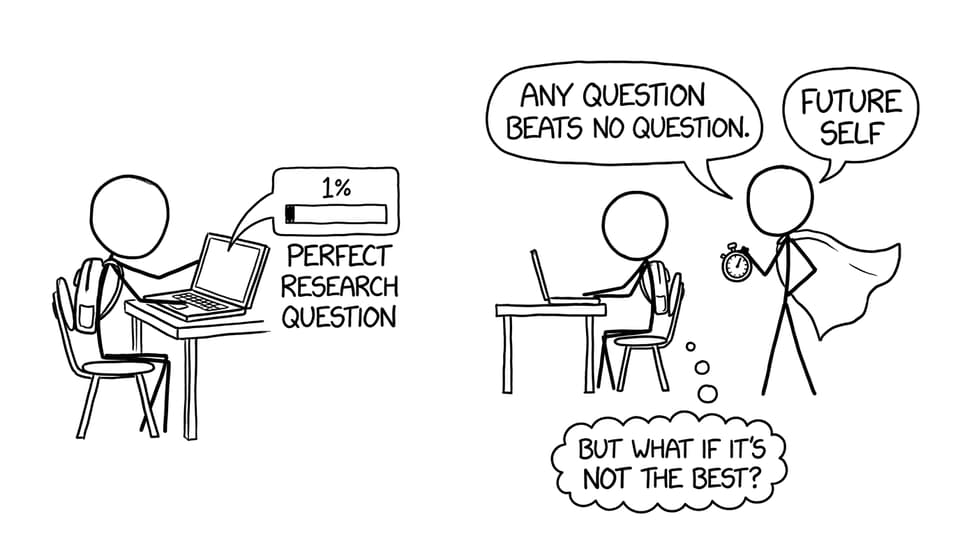
You choose the research question, the method, the evidence, and the evaluation depth. And because there’s no single “correct” route, you’re forced to live with uncertainty. Many students respond by looping: rewriting the same paragraph, reformatting headings, changing the question again.
A calmer way to break that loop is to use a research-question process that forces commitment. This guide helps: Refine Your IA Research Question for Clarity and Focus.
The IA demands accountability you haven’t had to practice
The IA doesn’t care if you “felt busy.” It cares if you produced evidence and met criteria.
And independent work has a brutal feature: nothing happens unless you make it happen.
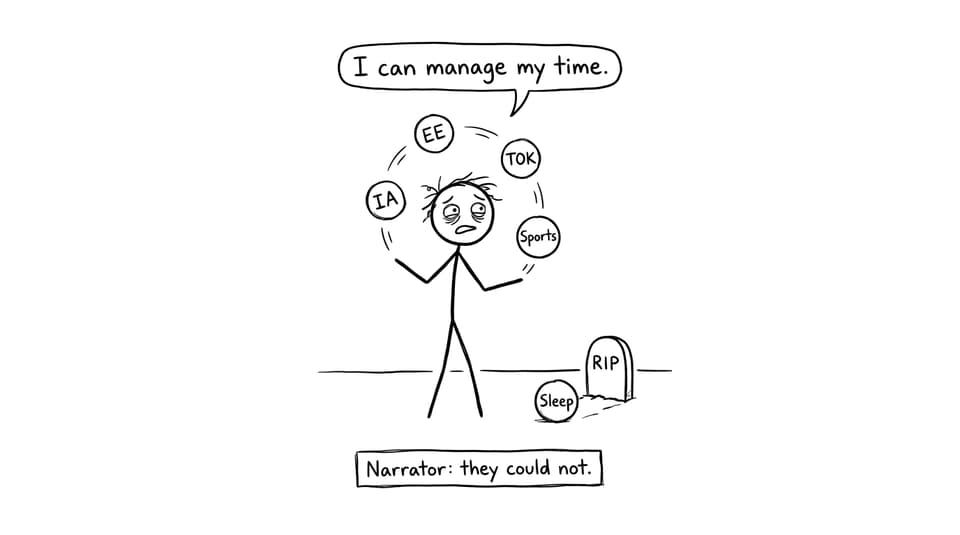
No daily homework check means you need your own deadlines, your own tracking, and your own definition of “done.” A practical move is to build a weekly rhythm: one session to produce (data/draft), one session to evaluate (rubric check), one session to refine (rewrite with purpose).
If you want feedback that turns independence into a system, not a personality trait, use an IA grader early. RevisionDojo’s IB IA Grading Service is designed for criterion-by-criterion clarity.
The IA forces judgment, not effort
Here’s the trap: when you’re unsure, you add more.
More quotes. More background. More graphs. More pages.
But strong IA work is often the opposite. It’s selecting the right evidence, then explaining why it matters. Examiners reward justified choices. They don’t reward “I didn’t want to risk leaving anything out.”
To build that judgment, it helps to study how top work balances concision and evaluation. That’s exactly what the Coursework Exemplars Library is good for: seeing what “enough” looks like.
The RevisionDojo way to make IA independence manageable
Independence gets easier when you stop relying on motivation and start relying on loops:
-
Use AI Chat to clarify criteria questions fast, before you waste an hour.
-
Use Grading tools to check rubric alignment while the draft is still flexible.
-
Use the Coursework Library to calibrate structure and depth.
-
Keep your exam engine alive with Study Notes, Flashcards, and the Questionbank.
-
Protect time with Mock Exams and Predicted Papers, so the IA doesn’t quietly steal your exam grade.
-
If you need a human voice, add Tutors for targeted checkpoints.
A solid starting point for your opening section is: IA Introduction Structure: A Step-by-Step Guide.
Conclusion: the IA is training you to trust your own thinking
Independent work feels uncomfortable because it removes the training wheels. But that’s the point: the IA is assessing whether you can manage ambiguity, make justified choices, and own your final decisions.
If you want to make the independence part easier, don’t wait to feel confident. Build structure.
Start with the IB Internal Assessment Guides, check quality against the Coursework Exemplars Library, and use RevisionDojo’s AI Chat plus Grading tools to turn “I hope this is right” into actionable next steps. Then keep your exam momentum with Study Notes, Flashcards, and the Questionbank so your IA strengthens your final grade instead of competing with it.