



You finish your IA and feel oddly proud. The sources are credible. The data is real. The bibliography looks like it could bench press your laptop.
Then the grade lands somewhere in the middle.
That moment hurts because it feels unfair: if you did “good research,” why didn’t the IA score well?
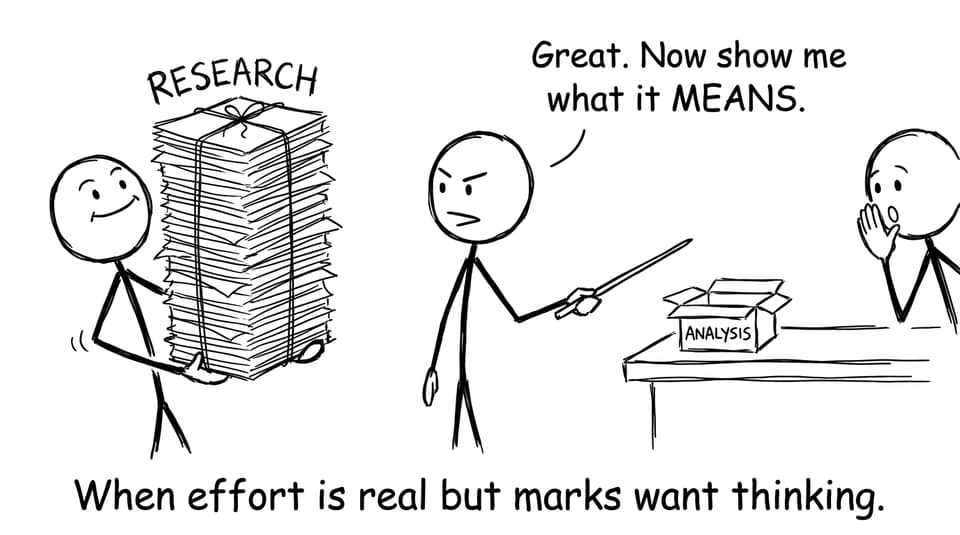
Here’s the quiet truth the IB never says loudly: good research is assumed. What earns marks is what you do with it.
The IA checklist: what actually moves your score
Before you add one more quote or dataset, run this quick IA check:
-
Does every paragraph prove something linked to your research question?
-
Do you explain why each piece of evidence matters (not just what it says)?
-
Is the best thinking (analysis + evaluation) getting the most space?
-
Could a strict marker find top-band evidence fast?
-
Is your conclusion a judgment, not a summary?
If any of those feel shaky, your “good research” might be functioning as decoration instead of leverage.
Why “good research” is expected in an IA
In IB coursework, research quality is baseline. A competent IA should already include relevant sources, traceable citations, and appropriate data. That’s not what separates a 4 from a 7.
What separates them is whether your research becomes a chain of reasoning.
A helpful way to think about it:
-
Research quality = where the information came from.
-
Research use = how the information advances your argument.
Markers reward the second far more than the first.
If you want to see what “rubric-shaped” work looks like, start with IB IA Guides and compare a few formats in the Coursework Exemplars Library.
When an IA becomes descriptive (and marks leak away)
Most low-scoring “well-researched” IA drafts share one pattern: they read like an informative report.
You’ll see:
-
paragraphs that summarize sources instead of interpreting them
-
charts that are presented without commentary on significance
-
findings that aren’t tied back to the research question
Description is safe. Analysis is vulnerable. But IB grades the vulnerable part.
When you analyze, you make claims that can be questioned. You take a position. You explain mechanisms, tradeoffs, limitations, and implications. That is exactly what the criteria are designed to reward.
Too much research can quietly weaken your IA
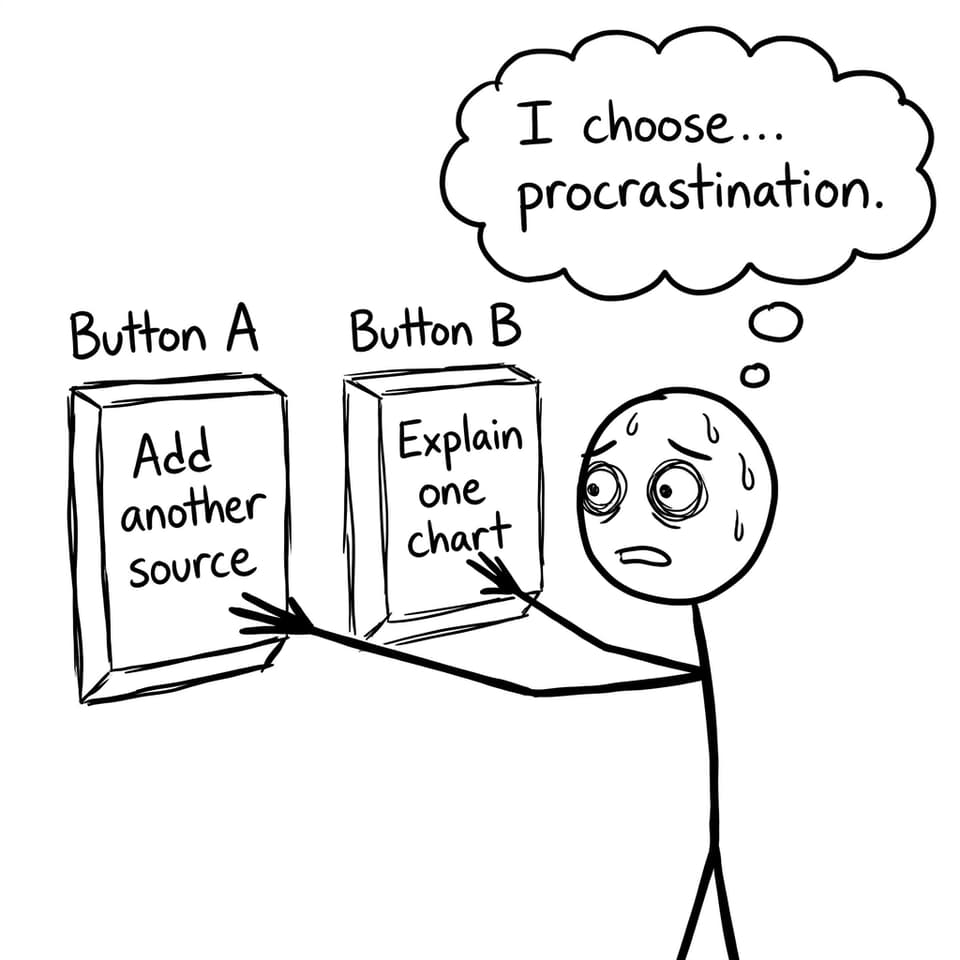
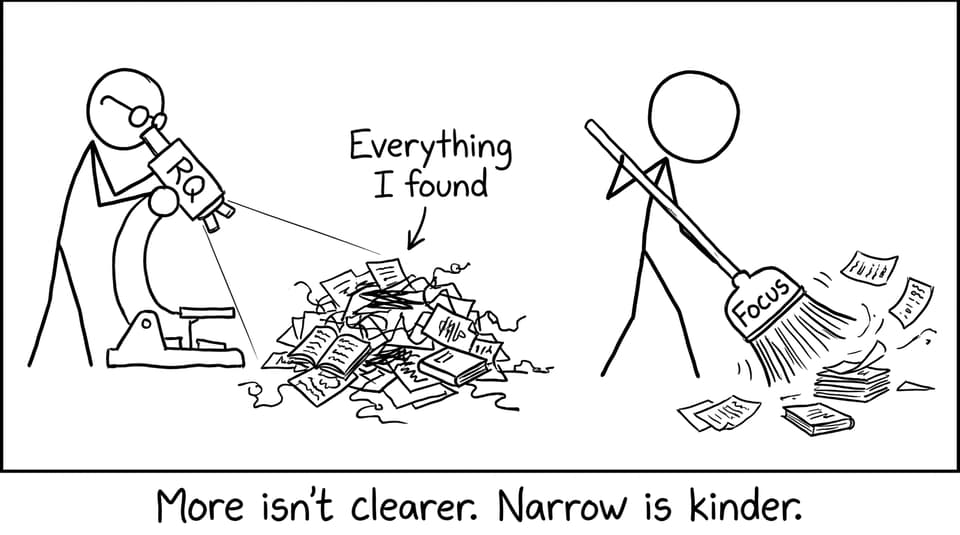
A surprising reason a strong IA scores low: too many sources widen the target.
More research can:
-
dilute your focus (you start chasing interesting side facts)
-
reduce depth (you mention five ideas instead of developing one)
-
make evaluation generic (“possible errors include human error…”)
A smaller set of strategically chosen evidence, deeply explained, usually scores higher than a large set lightly connected.
If you’re unsure what “enough” looks like, use this guide as a reality check: How Many Sources Should an IA Have?
The turning point: convert research into marks
Here’s a practical move that upgrades almost any IA draft:
After every key piece of evidence (quote, statistic, result, graph), force yourself to write three sentences:
-
Meaning: What does this show?
-
So what: Why does it matter for the research question?
-
Therefore: What claim can you now justify?
Do this consistently and your IA stops sounding like a folder of notes and starts sounding like an investigation.
For science students, this often means adding interpretation around patterns, reliability, and significance. This breakdown helps: Using Statistical Analysis Effectively in an IB Science IA
How RevisionDojo helps your IA stop losing easy marks
The fastest improvement comes from tightening your workflow:
-
Use How to Write a Strong IA Research Question to narrow scope early.
-
Follow How to Plan an IB IA Without Falling Behind so analysis doesn’t get left to the last weekend.
-
Run a rubric reality check with the IB Coursework Grader (this is where “good research” gets translated into criterion evidence).
-
Use IB Internal Assessment Feedback to see what high-quality comments focus on.
-
Study structure patterns inside the IB Coursework Guides.
And because exams don’t pause while your IA is happening, RevisionDojo keeps the rest of IB manageable too: Study Notes, Flashcards, AI Chat, Questionbank, Mock Exams, Predicted Papers, Tutors, and Grading tools all fit into one system.
Closing: make your IA a thinking document
A high-scoring IA isn’t the one with the most research. It’s the one where every piece of research is doing work: supporting a decision, sharpening an interpretation, strengthening an evaluation.
If you want your next IA draft to feel clearer (and score higher), start by tightening your research question, then build analysis that a marker can’t miss. Use RevisionDojo as your control panel: IA guides, the Coursework Library, AI Chat, and Grading tools for coursework, butand Questionbank, Study Notes, Flashcards, Mock Exams, Predicted Papers, and Tutors to keep exam prep moving at the same time.