
A hook you can feel in your own wallet
The first time inflation really makes sense is rarely in a textbook. It’s in the small shock of noticing the same snack costs more, the same bus ride feels pricier, and your “safe” savings somehow buys less than it did a few months ago. For IB students, that lived experience is gold, because it’s exactly what examiners want you to explain with calm clarity.
In this post, you’ll get Revision Tips you can use to write sharper IB Economics answers on why high inflation is harmful, with the kind of chains of reasoning that earn marks.
Revision Tips checklist: what to mention in your answer
Use this quick checklist before you write:
-
Define high inflation as a rapid, sustained rise in the general price level
-
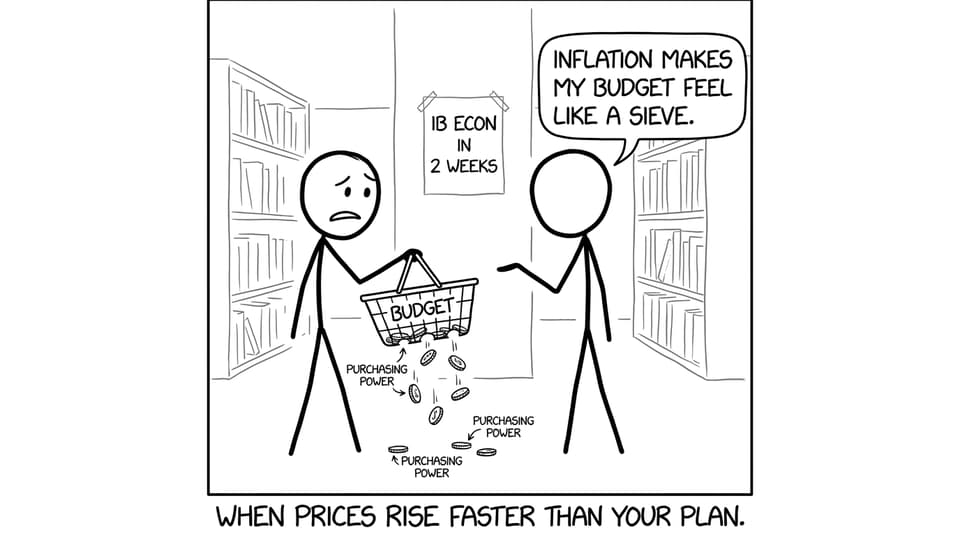
Explain purchasing power falling (real income effect)
-
Add uncertainty: planning and budgeting become harder
-
Show how savings can be eroded if interest rates don’t keep up
-
Link to business investment and long-run growth
-
Add efficiency: price signals get distorted
-
Finish with equity and stability: inequality and social tension can rise
If you need a fast refresher on definitions and measurement, use How Is Inflation Measured? - IB Economics.
Why high inflation is harmful for households
High inflation is harmful because it quietly shrinks what your income can actually do. In IB language, your nominal income might stay the same, but your real income falls as prices rise faster than wages. That matters most for households on fixed incomes, or families that can’t easily renegotiate pay.
High inflation also makes planning expensive. When prices change quickly, budgeting becomes guesswork: should you save, spend, lock in a long-term contract, or wait? That uncertainty isn’t just annoying; it changes behaviour, often pushing people toward short-term decisions that are worse for long-term wellbeing.
For a syllabus-aligned base, see The Meaning of Inflation, Disinflation and Deflation and build your definitions from there.
Why high inflation is harmful for businesses and growth
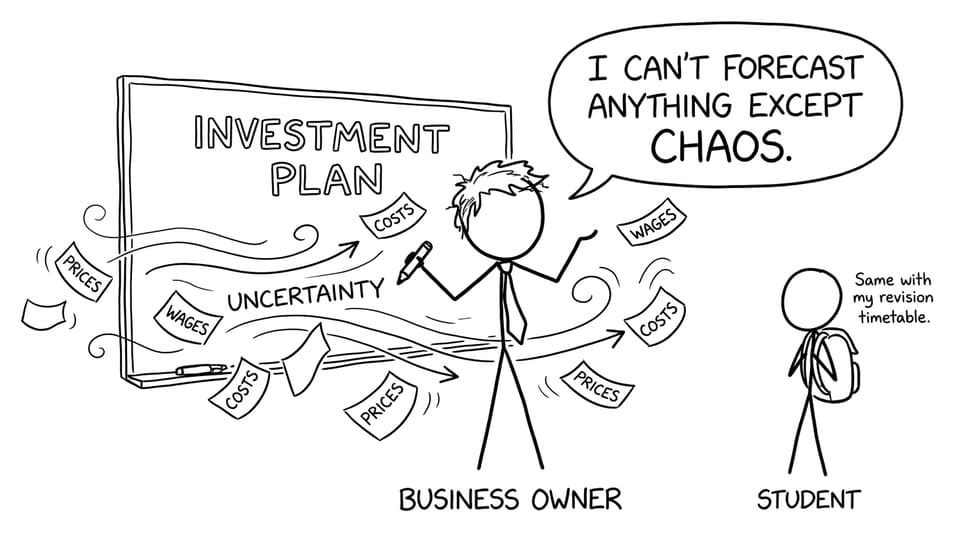
Businesses don’t just “raise prices” and move on. High inflation is harmful because it makes tomorrow harder to predict. Firms struggle to forecast costs, set wages, price outputs, and evaluate whether an investment will still be profitable in a year.
That uncertainty can delay investment, reduce productivity growth, and weaken long-run expansion. In an exam answer, this is a strong evaluation path: high inflation increases risk, and risk often reduces long-term decision-making.
To connect inflation to broader macro objectives, revise the trade-offs in Potential Conflict Between Macroeconomic Objectives (Notes).
Why high inflation is harmful to efficient decision-making
In theory, prices help allocate resources: they tell consumers what’s scarce and tell firms what to produce. High inflation is harmful because it makes those signals noisy. When everything is rising, it becomes harder to tell whether a price increase reflects genuine demand, higher costs, or just general inflation.
That confusion can lead to misallocation: firms invest in the wrong places, consumers substitute for reasons unrelated to real scarcity, and long-term contracts become riskier. Over time, efficiency falls, and so does potential output growth.
If you want to score better by linking causes to consequences, pair this with What Causes Inflation?.
Policy response and the recession risk
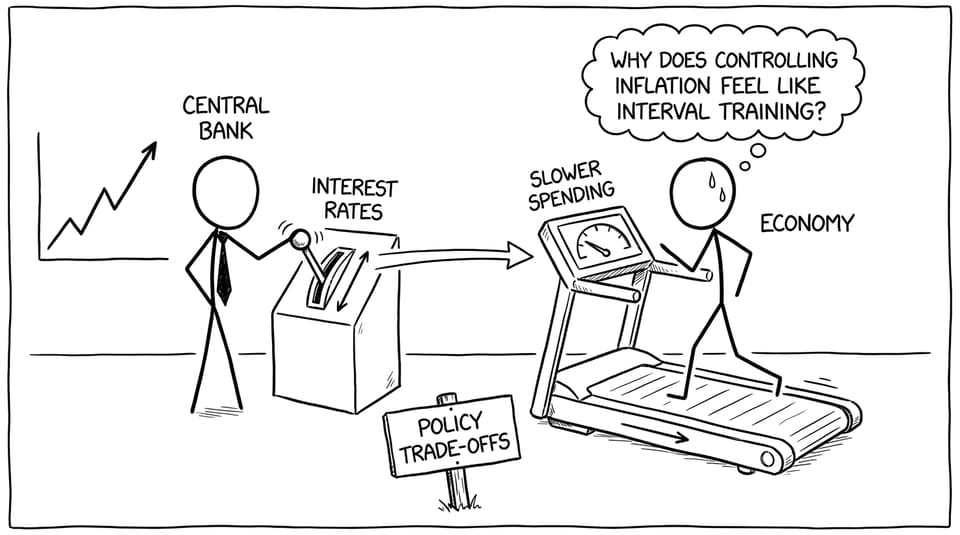
Another reason high inflation is harmful is that it often triggers tighter policy. Central banks may raise interest rates to reduce spending and bring inflation down. But higher rates raise borrowing costs for households and firms, which can slow growth and increase unemployment.
That’s the IB-friendly trade-off: controlling inflation can come with short-run pain, and if tightening is aggressive, the economy can slide toward recession.
For the policy angle, connect your answer to Monetary Policy and Inflation Targeting.
How to turn this into marks (fast)
These Revision Tips work best when you practise the explanation under time pressure:
-
Use DEED-style chains (define, explain, example, diagram where relevant)
-
Add one evaluation line: “depends on wage growth, indexation, credibility, and expectations”
-
Practise with exam-style prompts using the IB Economics Questionbank
If you want more structured routines, browse All #Revision Tips Posts and for deeper Econ coverage see All #IB Economics Posts.
Conclusion: use Revision Tips to make inflation answers easy
High inflation is harmful because it erodes purchasing power, increases uncertainty, weakens investment, distorts price signals, and can fuel instability. For IB students, the real win is turning those ideas into clean chains of reasoning you can repeat under exam pressure.
Build your answer muscle with RevisionDojo’s Study Notes, Flashcards, AI Chat, and Grading tools, then pressure-test it using Mock Exams, Predicted Papers, and the Questionbank. If you’re stuck, the Tutors and Coursework Library help you close gaps quickly. Take these Revision Tips, practise once today, and make “high inflation is harmful” one of the easiest explanations you can write.